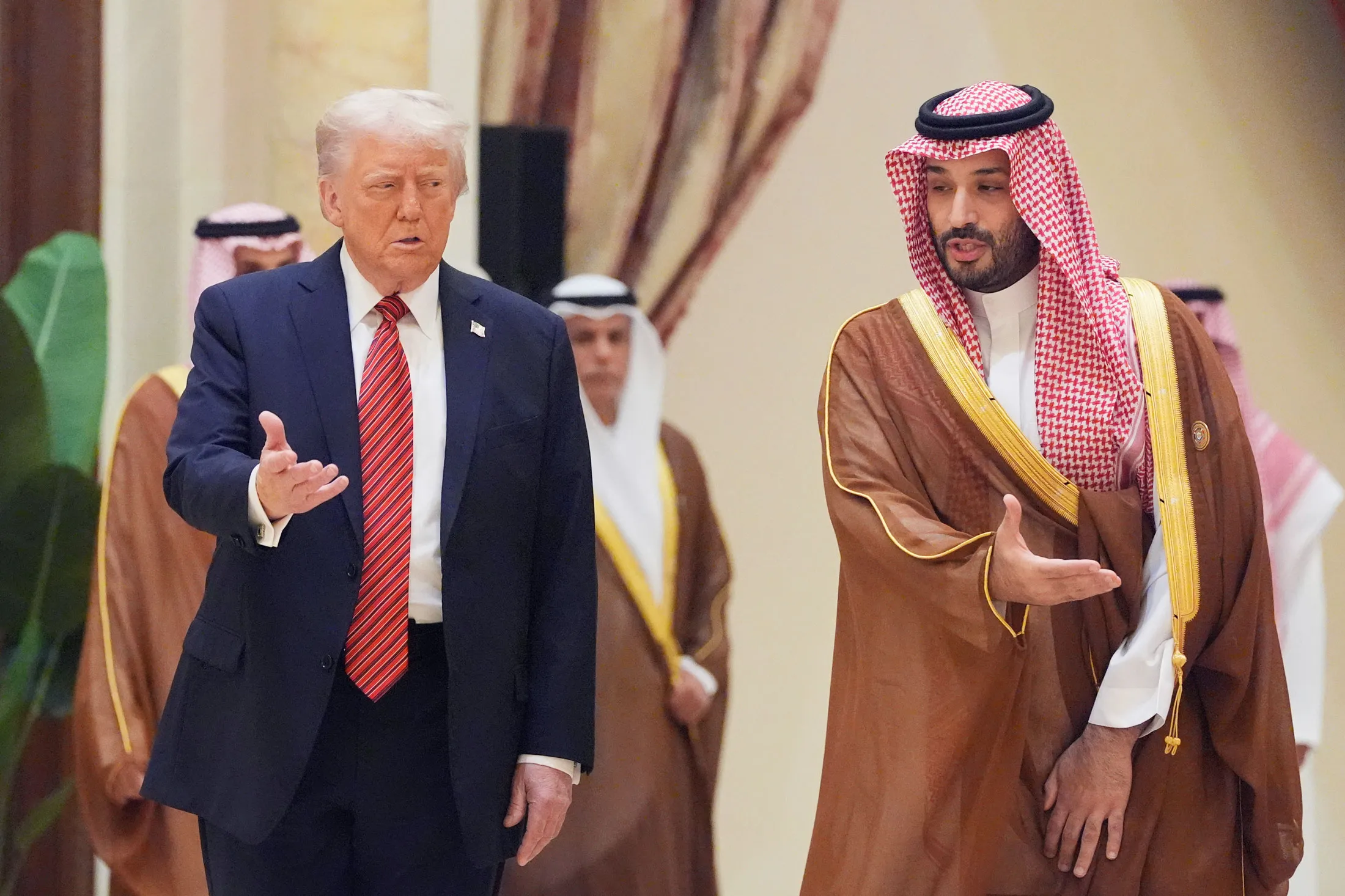
Donald Trump’s renewed embrace of Saudi Crown Prince Mohammed bin Salman is opening a new era in US-Saudi relations, marked by ambitious security and economic pacts—even as core supporters in the MAGA movement voice their disapproval. The White House’s high-profile hosting of the crown prince, his first such visit since the murder of Jamal Khashoggi, signals Trump’s intent to build strategic alliances far beyond mere transactional diplomacy. This realignment touches on sensitive human rights concerns, military technology transfer, and the evolving chessboard of Middle Eastern geopolitics—all against the backdrop of partisan divisions at home.
The timing of bin Salman’s visit is historic. Seven years after his last appearance in Washington—ending with the watershed Khashoggi killing—he returns as the effective leader of Saudi Arabia, seeking to rehabilitate his global reputation. Trump’s open praise and ceremonial welcome mark a decisive shift from the cautious distance of previous years, signaling that strategic interests now overshadow lingering moral qualms.
US officials describe preparations for the visit as unprecedented in pomp and diplomacy: military honor guards, a bilateral summit in the Oval Office, and a high-profile dinner drawing business elites and policymakers. For the crown prince, the optics matter. This trip signals not only his reintegration into US officialdom but also the consolidation of his authority ahead of his expected accession to the throne.
Security Pact: A NATO-Lite Model
Central to the discussions is a prospective US-Saudi security arrangement modeled loosely on NATO guarantees. The framework falls short of a full treaty—thus sidestepping difficult Senate ratification—but signals a deepened commitment to Saudi security against threats within the volatile region. The US already extended such an executive order-style guarantee to Qatar; now Trump is weighing a similar executive assurance for Riyadh, reflecting the increasing militarization and polarization of the Gulf.
Washington and Riyadh are finalizing deals involving advanced F-35 stealth fighter jets and other US-made military technology. If approved, Saudi Arabia would become the first Arab nation—and only the second country after Israel—to possess the prized fifth-generation warplanes, raising both diplomatic opportunity and risk. The sale is being directly linked to Saudi progress on normalization with Israel, a cornerstone goal of Trump’s Abraham Accords initiative.
The Push for Israeli-Saudi Normalization
Trump’s regional strategy aims to recruit Saudi Arabia into the Abraham Accords, following the UAE, Bahrain, Morocco, and Sudan. The stakes are high: Israeli officials remain wary, demanding stringent basing restrictions and robust security assurances to preserve their qualitative military edge—a policy codified by Congress. Saudi diplomats, meanwhile, insist normalizing ties with Israel will only follow a credible and irreversible pathway to Palestinian statehood.
Recent ceasefire arrangements in Gaza have spurred moderate optimism about a broader diplomatic breakthrough, with trilateral negotiations anticipated if initial sticking points are resolved. Trump has staked his legacy on expanding the Accords, but the lack of Israeli flexibility on Palestinian statehood continues to frustrate Saudi negotiators—highlighting persistent obstacles amid growing urgency for a new regional security architecture.
AI Chips, Investment, and Economic Deals
Beyond defense matters, the agenda includes potential Saudi investment in US technology, especially artificial intelligence. American chip manufacturers are courting Saudi capital for ambitious digital infrastructure projects, while Saudi officials seek to anchor their “Vision 2030” modernization plans with American expertise and hardware. The Kennedy Center forum, timed to coincide with the official visit, will convene business leaders from both nations to explore joint ventures—a symbolic showcase of economic diplomacy.
A $600 billion Saudi investment pledge, announced during Trump’s May visit to Riyadh, is still pending implementation but highlights the scale of opportunity. These economic deals not only strengthen bilateral ties but also diversify Saudi Arabia’s economic portfolio, aligning its ambitions with Silicon Valley and Wall Street—a marked departure from oil-centered relations.
MAGA Dissent: The Populist Critique
Trump’s outreach to Saudi Arabia is not without controversy at home. Many prominent MAGA figures, including Congresswoman Marjorie Taylor Greene, have openly criticized Trump’s prioritization of foreign affairs and defense pacts over domestic policy—a core tenet of the “America First” movement. These critics claim investments in foreign military and technology projects detract from urgent issues like border security, crime, and the economic plight of rural America.
I really wish President Trump would come to terms with the fact that Qatar is not our ally.
— Laura Loomer (@LauraLoomer) November 9, 2025
I would also really like to see the Emiratis and the Saudis pledge to triple their investment commitments into the US to wedge out Qatar under the condition that President Trump… https://t.co/NLBopirvIu
Some argue that entanglements with controversial leaders—especially one implicated in the Khashoggi murder—betray the moral clarity they see as part of the original MAGA ethos. This internal dissent signals a fundamental tension within today’s Republican Party: the balancing act between pragmatic geopolitics and the anti-globalist fervor of its grassroots base.
Human Rights and the Khashoggi Shadow
The specter of Jamal Khashoggi’s killing hangs over the proceedings, as advocacy groups and international observers warn against “whitewashing” Saudi abuses for the sake of economic or strategic gain. US intelligence assessments in 2018 implicated bin Salman directly in the operation, a charge he has adamantly denied. While Trump has pointedly praised the kingdom’s partnership, critics assert that renewed engagement rewards impunity—possibly undermining American credibility abroad.
Trump is welcoming MBS, the Saudi crown prince, to the White House. This is the dictator who had a U.S. columnist murdered for criticizing the Saudi royal family.
— Sen. Bernie Sanders (@SenSanders) November 17, 2025
Sadly, we have a president who prefers the Saudi model — an autocracy run by a trillionaire family — to democracy.
For Trump, strengthening ties with Saudi Arabia serves a grander vision: securing peace, prosperity, and influence in the Middle East through robust alliances. He views Riyadh as pivotal—not just for stabilizing oil markets, but for containing Iranian ambitions, resolving the Israeli-Palestinian conflict, and advancing US economic interests. The push for trilateral deals linking security, normalization, and technology reflects a nuanced, multi-dimensional approach, albeit one fraught with political and ethical tradeoffs.
Calculated Risk, Uncertain Outcomes
Trump’s overtures to Saudi Arabia mark a clear break from conventional American caution. By privileging strategic calculation over moral posturing, he hopes to lock in a legacy of regional transformation—but risks alienating domestic allies in the process. The outcome hinges on whether Riyadh will reciprocate American expectations on normalization and whether bipartisan consensus at home can be sustained as global commitments grow.
Recent economic pledges, defense arrangements, and investment in advanced technology demonstrate the depth of potential cooperation—yet the specter of Khashoggi, rising populist opposition, and complex Middle Eastern rivalries ensure Trump’s gambit remains as perilous as it is ambitious. What emerges from this week’s summit could reshape the US-Saudi relationship for a generation, but only if both leaders are willing to confront the hard realities beneath the ceremonial glamour.