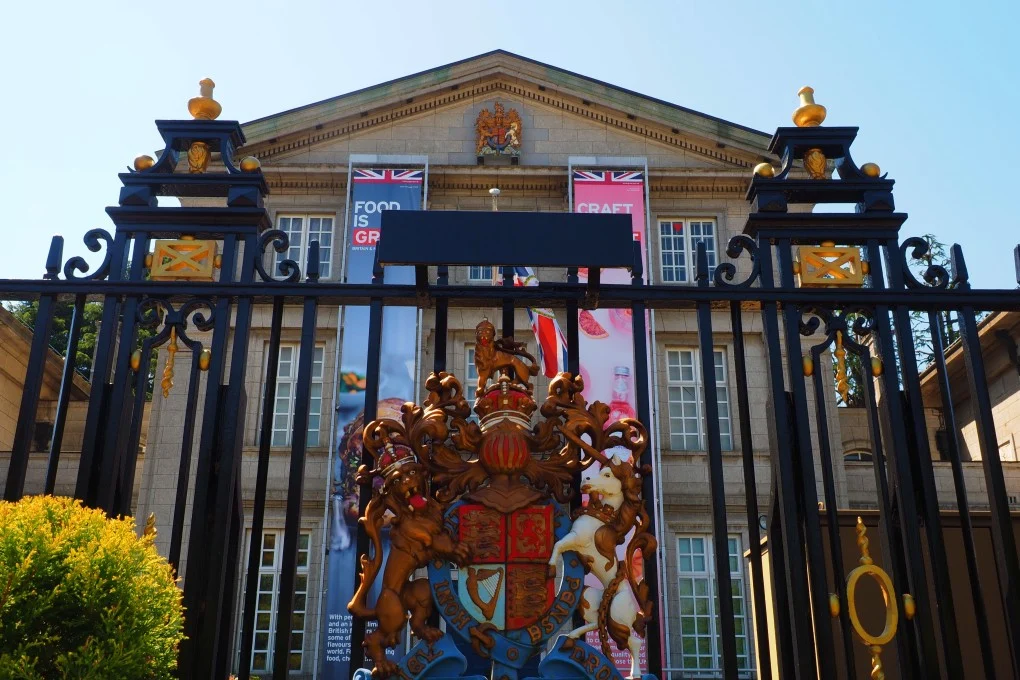
Britain’s plan to “rationalise” its £2.5 billion overseas estate may look like prudent housekeeping in an era of tight budgets. In reality, it risks becoming a strategic blunder that further hollows out the country’s global influence just as it struggles to redefine its place after Brexit. Selling embassies, cutting staff and downsizing presence abroad is not merely about bricks and mortar: it is about retreating from the spaces where power, persuasion and presence are exercised.
At first glance, the Foreign Commonwealth and Development Office’s (FCDO) predicament seems self-inflicted but understandable. Hundreds of properties are in disrepair, nearly a sixth are deemed operationally unsafe, and the maintenance backlog alone stands at £450 million. The impulse to offload assets, particularly high-cost holdings like a £12 million New York diplomatic apartment, is politically tempting. For a government under pressure to demonstrate fiscal discipline, luxury flats for diplomats make for easy headlines and even easier targets.
Yet diplomacy is not conducted solely through video calls and spreadsheets. Physical presence matters. Embassies are not just administrative offices; they are symbols, meeting places and staging grounds for influence. Hosting spaces, cultural venues and strategically located missions play a crucial role in shaping perceptions, facilitating relationships and projecting national identity. In the brutal arithmetic of modern geopolitics, visibility often translates into credibility.
Britain’s current trajectory looks less like rationalising and more like retrenching. Selling off high-profile compounds in Bangkok and Tokyo may free immediate cash, but as the Public Accounts Committee has warned, such moves deplete long-term strategic assets. Once these spaces are gone, they are almost impossible to reclaim without enormous future expense. This is a one-way door decision masquerading as financial tidiness.
What makes this especially worrying is the context. Britain is not cutting back solely on property; this is part of a wider erosion of its soft power. International aid has been slashed, with collateral damage to institutions such as the BBC World Service, long considered one of the most effective tools of British global influence. Now, with redundancies potentially affecting up to 30 percent of UK-based FCDO staff, the human architecture of diplomacy is being dismantled alongside its physical one. Less staff, fewer embassies, reduced aid: together they form the blueprint of a country quietly scaling back its ambition.
Supporters of the rationalisation argue that this is simply modernisation – adapting to a world where diplomacy is increasingly digital and where resource allocation must reflect new priorities. There is truth in the idea that not every grand embassy building is essential in an era of remote communication. But this rationale collapses when it becomes a default retreat instead of a strategic recalibration. Downsizing without a clear vision of where Britain wants to exert influence is not reform; it is drift.
The irony is that Britain’s global voice depends more than ever on visible engagement. Faced with assertive China, a resurgent Russia, and shifting alliances across Africa and the Indo-Pacific, presence is power. Embassies provide intelligence, relationships and local insight that cannot be replicated from London. Trade deals, security cooperation and crisis diplomacy all hinge on sustained engagement on the ground. If Britain vacates these spaces, others will move in.
There is also a domestic contradiction at play. Politicians regularly invoke the rhetoric of “Global Britain,” portraying the post-Brexit era as one of renewed international dynamism. But rhetoric without infrastructure is hollow. You cannot project global leadership while systematically dismantling the tools required to exercise it. The sale of embassies and staff reductions suggest not a global pivot, but a slow withdrawal from the very arenas where influence is contested.
To be clear, reform is necessary. The FCDO estate is bloated and poorly maintained, and ignoring that reality would be irresponsible. But reform must be guided by strategy, not short-term budget optics. High-impact locations and properties should be assessed not solely as financial burdens, but as strategic assets. The question should not be “What can we sell?” but “Where must Britain remain visible and influential for the next 20 years?”
Olivia O’Sullivan’s warning captures the central dilemma: cost-saving must be balanced with the benefits of high-impact spaces for projecting power. The problem is that, so far, the balance appears skewed overwhelmingly toward austerity. Diplomatic presence is being treated as a luxury when it is, in fact, infrastructure of statecraft.
History suggests that great powers rarely decline in a single, dramatic moment. Instead, their influence ebbs through a series of decisions framed as practical and unavoidable. Britain’s current embassy sell-off risks becoming just such a moment: a quiet but consequential step in narrowing its global horizon.
If Britain is serious about remaining a meaningful international actor, it must resist the temptation to turn its diplomacy into a balance-sheet exercise. Embassies are not merely properties to be liquidated; they are the physical expression of a nation’s commitment to engage with the world. Selling them off may solve today’s budget headaches, but it could cost Britain tomorrow’s voice.