There was a time—not so long ago—when logging onto Twitter felt like slipping into a crowded bar where everyone was witty, well-read, and improbably on the pulse of whatever mattered. Yes, it was chaotic and self-serious and occasionally cruel. But if you curated carefully, the hellscape was heaven-adjacent: great reporting, live feeds from protests, film critics on a tear, epidemiologists demystifying ventilation, comedians doing tight five after tight five. It was the closest the internet ever came to fulfilling its utopian promise: connection without borders, discourse without gatekeepers, culture in real time.
That version of the internet wasn’t perfect, but it was alive. It was participatory. It was, crucially, not yet owned—at least not fully—by a few men who see communication not as a public good but as a revenue stream.
Then came the backlash era, one platform at a time. Twitter became X in a billionaire fever dream; Facebook hardened into a mall where every store sells the same conspiracy-laced leggings; Amazon went from convenient marketplace to digital fiefdom; Instagram became a QVC network powered by cortisol. We didn’t entirely flee. We grumbled. We refreshed. We scrolled. We stayed.
This is the tragedy at the core of what writer and activist Cory Doctorow has named, with surgical vulgarity, enshittification.
It is not merely that things get worse online. It is that they get worse in an exquisitely predictable sequence.
- A platform treats users well—not out of benevolence, but because it needs them. Life feels frictionless: cheap shipping, free speech, an endless feed of interesting people and ideas.
- Then it treats business partners well—courting advertisers, creators, retailers, publishers. Everyone wins, briefly.
- Finally, it turns on both, extracting maximum profit while providing minimum service. We stay not because we are satisfied, but because all exits are blocked.
This is the trapdoor beneath the modern internet: platforms are most delightful precisely when they are least profitable. Once growth plateaus, the extraction begins.
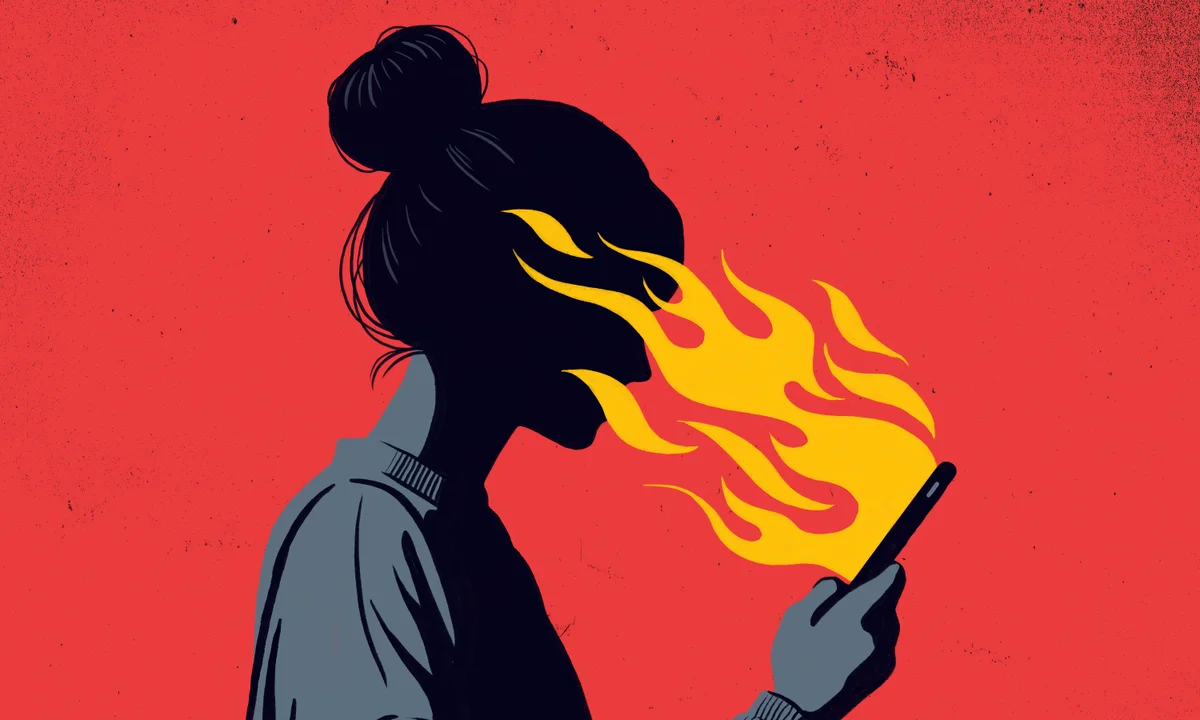
The result is less a market than a medieval economy with Stanford hoodies: a tiny lordly class of tech rentiers extracting tribute from their digital serfs. We do not use platforms anymore so much as lease access to them—at escalating cost, reduced functionality, and declining dignity. Algorithms determine what we see, who we speak to, what we buy, how we express ourselves, and increasingly, whether we can express ourselves at all.
What was once participatory culture is now a subscription tier.
It is tempting—especially for those who benefit from this arrangement—to shrug and call the whole situation capitalism. But “that’s just the market” no longer holds when the market is deliberately collapsed into monopoly. What Doctorow and others argue is that the era of Facebook, X, Apple, Google, and Amazon is not capitalist in any traditional sense. It is technofeudal: we do not compete in a marketplace; we toil in someone else’s walled garden.
And like the tenants of any feudal system, we are told our dependency is inevitable.
There is no alternative.
You need the network effect.
You have nowhere else to go.
Sound familiar?
Yet the bleakness of the diagnosis should not obscure the radical simplicity of the cure.
Doctorow’s proposal is not to blow up the internet, but to restore it: competition, interoperability, antitrust enforcement, and tech labor power.
- Competition: Stop rewarding scale for its own sake. Break the platforms that are too big to be accountable.
- Interoperability: Let systems talk to each other. The future of digital life should not hinge on whether your messaging app is compatible with your aunt’s phone or your government’s records.
- Regulation: Not moral panic cosplay, not performative hearings about “screen time,” but legally enforced constraints on monopolies and mergers.
- Tech-worker power: The people who build the platforms hate the sludge they are forced to produce. The stifling of their expertise is not just a labor issue—it’s a cultural one.
If that sounds quaint, recall that the internet we once loved was not the product of visionary billionaires but of open protocols, civic-minded geeks, and a belief—half idealism, half arrogance—that humans deserved to connect freely.
That world existed. It was not a hallucination.
And if it existed once, it can exist again.
Social platforms frequently ask if we are still there, still watching, still scrolling. Perhaps the more urgent question is the one we should ask in return:
Are you still serving us? Or are we simply feeding you?
The tragedy of the current digital moment isn’t that it is inhospitable or corrosive or stupid—though it is all three—but that it used to be otherwise. We remember the alternative. We lived it. Which means we can demand it back, not as nostalgists but as citizens of a digital commons that has been seized and can be reclaimed.
The enshittoscene is not destiny. It’s a business model. And business models can be broken, rebuilt, and replaced.
Welcome to the age of user exodus, worker revolt, and antitrust renaissance. We don’t have to check out of Hotel Crapifornia—we simply have to build a door.
And this time, we keep the key.