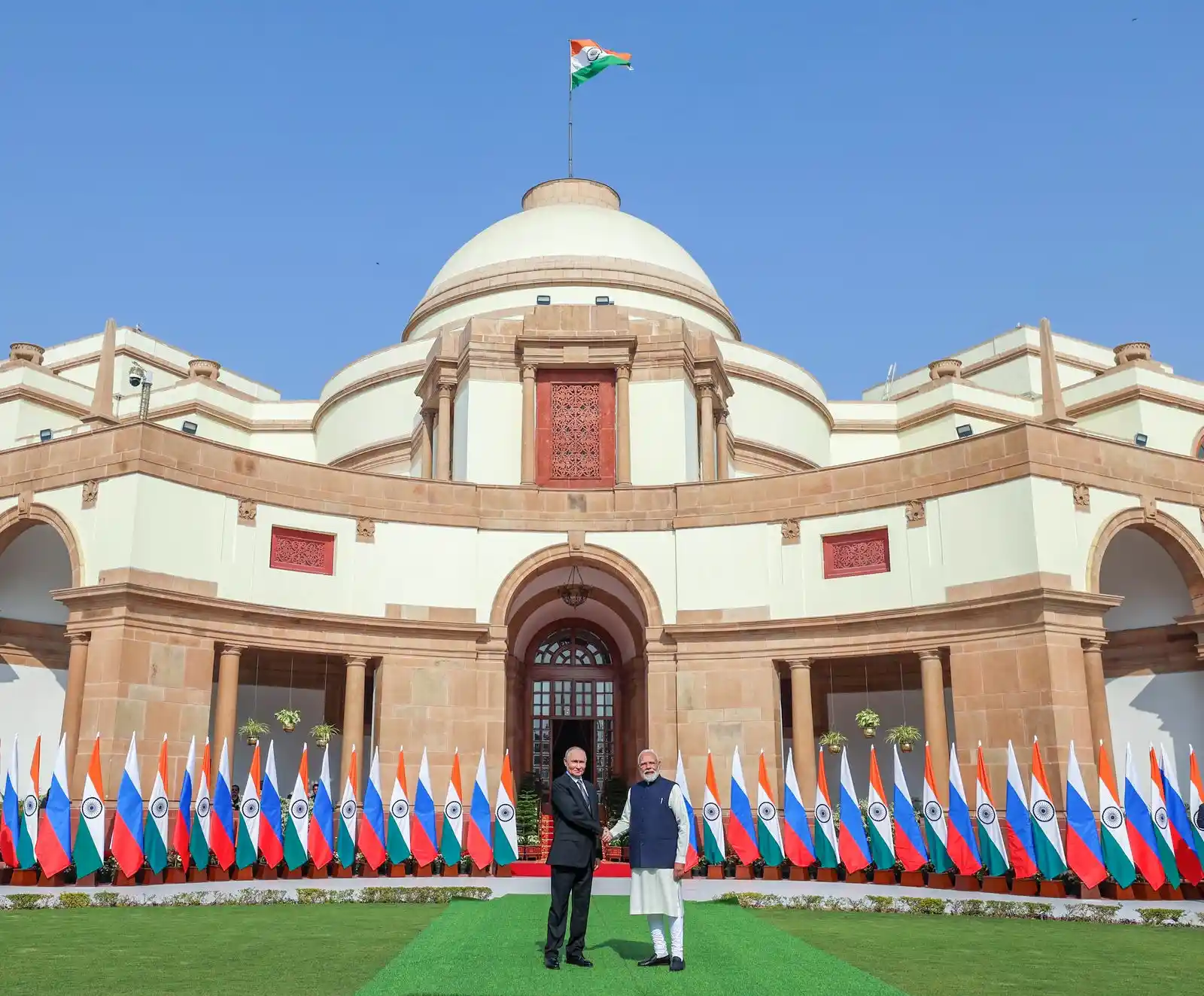
Russian President Vladimir Putin and Indian Prime Minister Narendra Modi exchanged warm embraces and signed 16 bilateral agreements during Putin’s state visit on December 4-5, 2025. The headlines buzzed with talk of defense deals, nuclear energy pacts, and an ambitious five-year framework to push bilateral trade toward $100 billion by 2030. Yet, amid the pomp of elite diplomacy, a quieter revolution was unfolding, one that extends far beyond the marble halls of Rashtrapati Bhavan. Tucked into the summit’s outcomes was India’s announcement of gratis 30-day e-tourist visas and group visa exemptions for Russian citizens, waiving the previous ₹2,500 fee (about $30) and biometric hurdles. This isn’t just bureaucratic fine print; it’s a deliberate invitation to ordinary people, fostering a grassroots momentum that humanizes the Indo-Russian alliance in an era of geopolitical frost.
Picture this: A young Russian influencer, bundled against the Himalayan chill, live-streams a sunrise yoga session from Rishikesh, her feed exploding with likes from Indian followers. Or an Indian family, armed with Tolstoy quotes, wanders Moscow’s Arbat Street, snapping selfies at the State Museum of Leo Tolstoy, where Gandhi’s nonviolence philosophy found early echoes. These aren’t hypotheticals, they’re the emerging faces of a “people’s corridor” that’s digitizing historic ties for a Gen Z audience. As Western nations erect visa walls to isolate Russia over Ukraine, India is betting on cultural porosity as the true multipolar wildcard. It’s a reminder for American readers: In a world of strained alliances, empathy built through travel and education might prove more enduring than sanctions or summits.
From Elite Handshakes to Grassroots Momentum
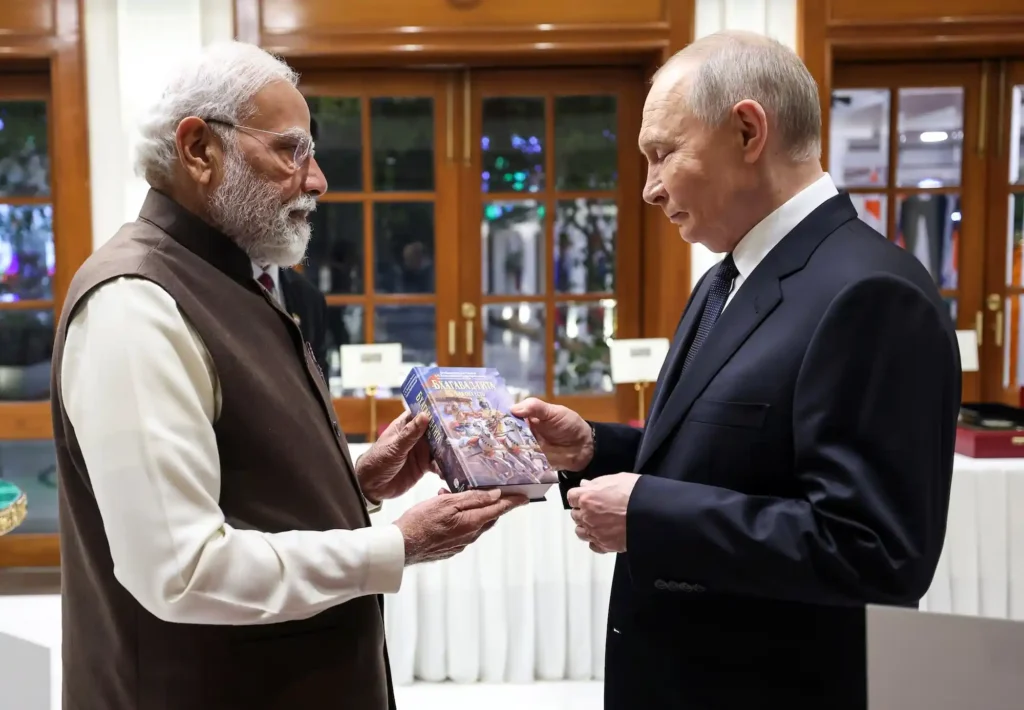
The 23rd India-Russia Annual Summit wasn’t short on spectacle. Modi hosted Putin with a red-carpet airport welcome and a private banquet, underscoring the “deep affection” between their peoples. But the real shift lies in how these high-level talks are trickling down to everyday interactions. The new visa policy, single-entry for individuals or groups, requiring only a return ticket and proof of funds, with rollouts promised “very soon” via India’s e-visa portal, directly stems from the summit’s focus on migration and people-to-people ties. Overstays will face penalties under the updated Immigration and Foreigners Act, but the emphasis is on ease, not enforcement.
This move is already catalyzing a tourism boom. Russian arrivals in India surged 25% in 2024, climbing from around 160,000 in 2023 to an estimated 200,000, making Russians a top non-traditional source behind only the U.S. Overall foreign tourist arrivals in India rose modestly by 5% year-over-year, but the Indo-Russian spike stands out, driven by expanded direct flights. In 2024-25, Russia granted additional permits to Indian carriers like IndiGo and Air India, boosting weekly frequencies and adding routes between Moscow, Delhi, and Mumbai. Pre-2022 levels of over 100 weekly flights are nearing recovery at 80-plus, slashing layover times and cutting costs by 20-30%. For Russians seeking sun-soaked escapes from their harsh winters, destinations like Goa and Kerala have become havens, injecting vitality into India’s post-pandemic recovery.
Cultural festivals are amplifying this thaw. Take the Bharat Utsav in Moscow from July 5-13, 2025, held at Manezhnaya Square. Drawing an astonishing 825,000 attendees, it showcased yoga sessions, Bharatanatyam and Odissi dances, Rajasthani folk performances, Bollywood screenings, and stalls brimming with Indian cuisine and crafts from states like Delhi, Maharashtra, and Kerala. Organized by the Indian Embassy, it built on five Indian troupe visits to Russia in 2023, including productions like “Warrior Women of India.” On the flip side, Moscow’s 2024 tourism haul reached 26 million visitors, generating $2.65 billion in revenue, with Indians emerging as the second-largest non-CIS source, 40,800 visited the city alone in the first half of 2025, a 40% jump year-over-year. Russians, in turn, contributed over $1 billion to India’s tourism economy in 2024.
This isn’t mere optics; it’s a calculated response to global isolation. Amid the Ukraine conflict, Russia has faced plummeting Western tourism, but India offers a lifeline. Bilateral trips totaled around 400,000 in 2024, up 43% from 2023, with projections exceeding 450,000 in 2025. As Putin pledged uninterrupted oil supplies during the summit, these people flows underscore a partnership that’s weathering geopolitical strains through shared experiences.
| Metric | 2023 | 2024 | 2025 (H1 Proj.) | YoY Growth |
|---|---|---|---|---|
| Russian Tourists to India | 160,000 | ~200,000 | N/A | +25% |
| Indian Tourists to Russia | 120,000 | >200,000 (proj.) | 40,800 (Moscow alone) | +67% (overall) |
| Bilateral Trips (Total) | ~280,000 | ~400,000 | >450,000 (proj.) | +43% |
Echoes of History, Digitized for Gen Z
This burgeoning corridor echoes the Indo-Soviet exchanges of the 1950s, but with a modern, viral twist. Back then, Nikita Khrushchev’s 1955 visit to India kickstarted a cultural offensive: The 1951 Indo-Soviet Cultural Society facilitated artist swaps, literature translations, and youth festivals. Tolstoy’s “Letter to a Hindu” in 1908 had already inspired Gandhi’s nonviolence, and by 1957, the Moscow World Youth Festival drew 30,000 Indians, fostering anticolonial solidarity that influenced Indian politics and cinema. The 1960 Cultural and Scientific Agreement formalized these bonds, turning print-era exchanges into symbols of Third World unity.
Fast-forward to today, and that analog warmth is supercharged for Gen Z. Student flows are a prime example: Indian enrollment in Russian universities hit 31,444 in 2024, up 34% from 2023, with over 15,000 pursuing affordable MBBS degrees, Russia now the top non-Western destination amid Western visa delays. Projections for 2025 include 30,000-plus Indians, bolstered by Russia’s 10,000 slots and 200 scholarships. Reciprocally, Russians are trickling into India via programs like the Indian Technical and Economic Cooperation (ITEC) scholarships, 17 in 2024-25, part of India’s 59,000 international students, many in engineering and cultural studies.
Social media amplifies it all. Russian influencers like Evgenia Belskaia, based in Goa with over 100,000 Instagram followers, vlog about “susegad” lifestyles and masala chai rituals, bridging cultural gaps. Iuliia Aslamova shares “cringe-to-normal” Indian habits, like street bargaining, while Yulia, an 11-year resident of India, praises the “different level” of hospitality. For Indians, Moscow’s Tolstoy Museum draws crowds, a 40% surge in visitors tracing Gandhi-Tolstoy links. With 83% of Indian Gen Z as content creators and 50% of travelers swayed by social media, these digital narratives challenge stereotypes, turning potential adversaries into relatable friends.
| Exchange Type | 1950s Peak | 2024–25 Equivalent |
|---|---|---|
| Cultural Societies/Visits | Indo-Soviet Society: 100s of artist swaps | Bharat Utsav: 825K attendees; 5 Indian troupes (2023) |
| Literature Impact | Tolstoy translations; Gandhi correspondence | Tolstoy Museum: 40K+ Indian visits (H1 2025) |
| Youth/Student Flows | 1957 Festival: 30K Indians | 31K Indians in Russia (+34%); IG/TikTok vlogs |
The Multipolar Wildcard – Empathy Over Sanctions
Contrast this openness with the West’s “visa walls.” In November 2025, the EU banned multi-entry Schengen visas for Russians across 25 states, citing Ukraine-related sabotage risks, and slashed issuance from 4 million in 2019 to 500,000 in 2024. The U.S. maintains a “Do Not Travel” advisory, warning of conscription risks for dual nationals. These measures aim to enforce isolation, but they’ve halved Western tourism to Russia.
India’s approach fosters “soft multipolarity.” Amid EU import bans worth €65 billion and G7 sanctions, Indo-Russian tourism rose 43% in 2024, sustaining trade goals by bypassing Western chokepoints. Russians evade isolation through affordable Indian e-visas (now free), while Indians discover non-Western heritage. This “anticolonial solidarity 2.0” proves cultural flows can disrupt narratives of Russia as a pariah.
| Visa Policy | Western (EU/U.S.) | Indo-Russian |
|---|---|---|
| Russians to West | Single-entry only; + scrutiny; 87% drop (2019–2024) | Free 30-day e/group; no biometrics; imminent rollout |
| Impact on Flows | Tourism halved; security focus | +25–40% surge; empathy-building |
| Geopolitical Lens | Isolation/enforce Ukraine stance | Thaw/multipolar bridge |
As Putin departed Delhi, the summit’s legacy isn’t in missiles or memos but in the millennials meditating by the Ganges or families forging bonds across Arbat alleys. This digitized corridor, once rooted in 1950s print, now thrives on viral reels and student swaps, humanizing rivals in a fractured world. For U.S. policymakers gazing at multipolar shifts, it’s a nudge: Porosity isn’t weakness, it’s resilience. In challenging times, empathy might just be the wildcard that thaws the frost.