President Donald Trump’s drive to secure a settlement in the Ukraine-Russia war is increasingly defined by frustration — with Kyiv, with European partners, and with what he views as needless diplomatic delay standing between Washington and a broader reopening to Moscow.
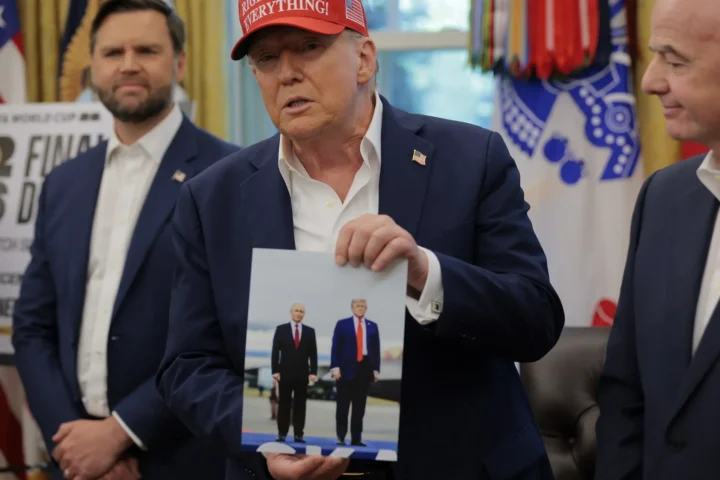
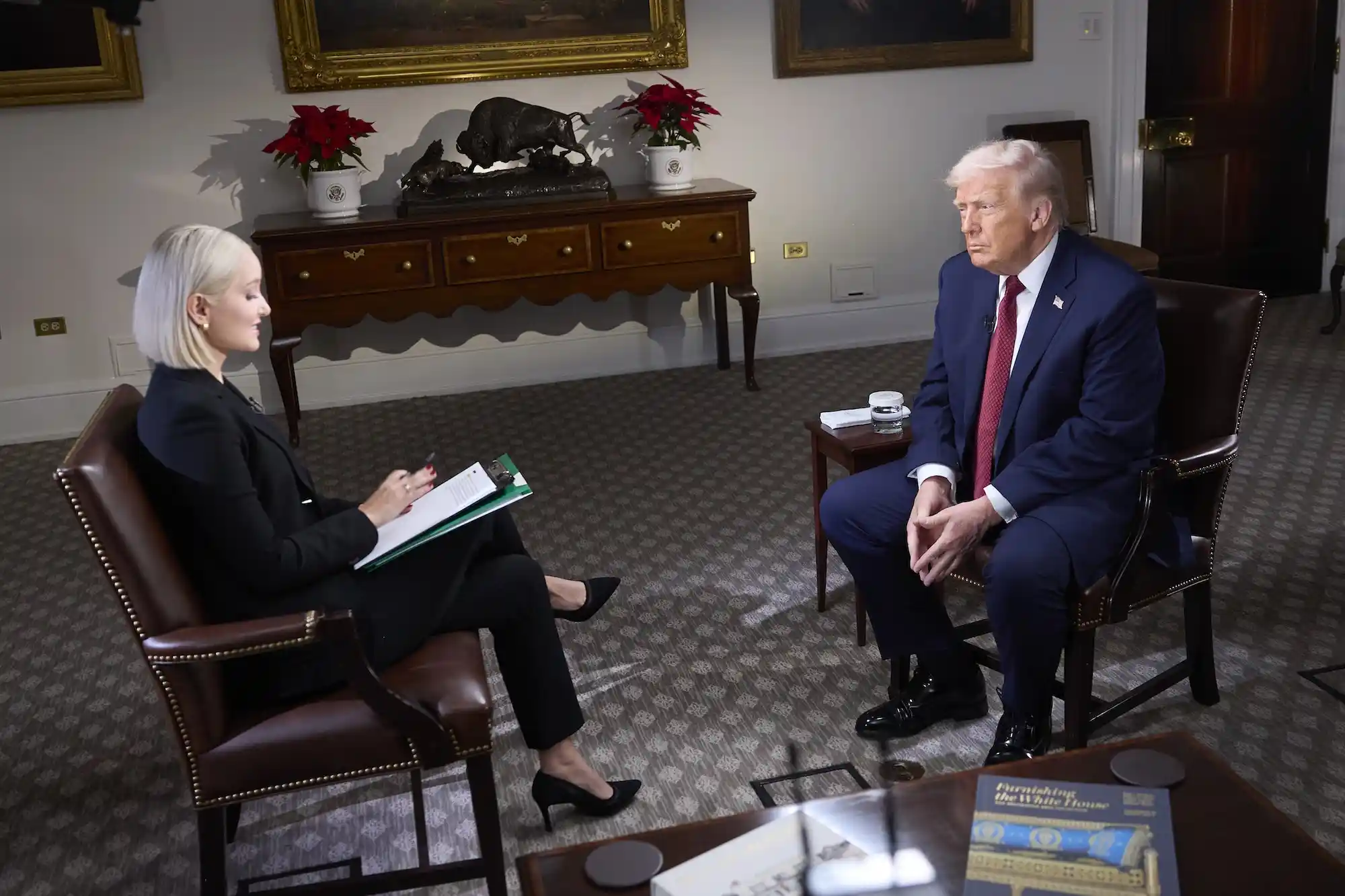
In a wide-ranging interview at the White House, Trump openly criticized European leaders as “all talk” and insisted that Ukrainian President Volodymyr Zelenskyy must “play ball,” arguing that Russia currently maintains “the upper hand” in the conflict. The president has repeatedly called for Russia’s return to the G7 and has expressed a strong interest in restoring economic engagement with the Kremlin.
Yet in Kyiv, Zelenskyy appeared unmoved. Meeting Monday with leaders of Britain, France and Germany, he confirmed that the U.S.-drafted 28-point peace plan has been trimmed to 20 points, assuring reporters that any provisions deemed “openly anti-Ukrainian” have been removed. Zelenskyy reiterated that he will not accept additional territorial concessions beyond what Russian troops currently occupy in the eastern Donbas.
With Moscow signaling little readiness to soften its demands, negotiations remain at a standstill. Meanwhile, Trump’s impatience is fueling anxiety in European capitals, particularly among countries already struggling to finalize a nearly $200 billion EU-backed loan for Kyiv using frozen Russian assets.
“There’s some truth to what he says,” admitted one senior European official, referring to Trump’s accusation that Europe fails to deliver. “We are stepping up now, but we’ve been slow to acknowledge that we are the solution to our own problem.”
NATO allies have increased their defense spending targets, and have launched a new initiative to jointly purchase U.S. weaponry for Ukraine. But diplomatic progress remains fragile, and European officials concede that if Belgium blocks the bloc’s proposed Ukraine financing package, the continent’s credibility will suffer.
Calls for Restraint — and Resistance
Across Europe, Trump’s overt lean toward Moscow continues to stun diplomats who reject his assertion that Russia holds decisive battlefield momentum. “If Russia was so strong, the war would have ended in a day,” a second diplomat said. “Rewarding aggression is not peace — it is an invitation to repeat it.”
National Security Adviser Jake Sullivan argued that Russia has failed to achieve its core military objectives and warned that U.S. disengagement could tip the conflict in Moscow’s favor.
“If the United States throws Ukraine under the bus, then Ukraine faces a much more difficult reality,” Sullivan said.
Trump has blocked additional military aid for Kyiv while sharply criticizing his predecessor for delivering billions in assistance in the months after Russia’s 2022 invasion.
Power, Business and Peacemaking
Trump’s pursuit of a deal with Russian President Vladimir Putin is being interpreted by many observers as less about traditional diplomacy and more about transactional ambition. Fiona Hill, who serves on Trump’s National Security Council, noted that key figures in the talks — including Trump’s son-in-law Jared Kushner and Russian investment chief Kirill Dmitriev — approach negotiations with a business mindset.
“Putin knows Trump wants a deal,” Hill said. “The frame is commercial, not diplomatic.”
Former diplomat Richard Haass offered an even blunter assessment, saying peace cannot be secured merely by insisting on it. “You need to build pressure and incentives,” he said. “They have failed to do that.”
A Strategic Break With Europe
Trump’s national security agenda, released last week, underscores a philosophical pivot away from Europe. The document devotes more space to warning of Europe’s cultural and political decline than to the security risks posed by Moscow, Beijing or Pyongyang. Asked if Europe would remain a reliable U.S. ally, Trump replied, “It depends,” criticizing what he called Europe’s “politically correct” immigration stance.
NATO leaders, having agreed to boost defense budgets to 5 percent of GDP over the next decade, insist they are responding. But Ukraine faces its fourth winter at war with dwindling ammunition and exhausted troops.
For now, European governments say they will continue to engage with Trump’s team, even as they bristle at his messaging and methods. “They cannot simply stand up to him,” said Liana Fix of the Council on Foreign Relations, noting that Europe remains militarily dependent on the United States despite years of warnings.
The result is a diplomatic paradox: Trump is seeking rapid peace on terms favorable to Putin, while allies warn that such a deal risks emboldening Russia far beyond Ukraine. And as winter deepens and patience thins on all sides, the political stakes — for Kyiv, for Europe, and for Washington — have rarely been higher.