The U.K.–India free trade agreement, finalized earlier this year, may appear modest on paper. Foreign cars still account for just 0.1 percent of India’s imports. Yet the symbolism of New Delhi agreeing to slash auto tariffs from a punishing 100 percent to 10 percent over time — and to reduce duties on scotch whisky from 150 percent to 40 percent — is profound. It signals not merely a trade concession, but a philosophical shift: India is willing to open selectively, pragmatically, and on its own terms.
That, ultimately, is the lesson Brussels seems unwilling — or unable — to absorb.
Once fully implemented, the U.K. deal is expected to boost bilateral trade by more than 50 percent over the next decade and a half, even as India absorbs short-term pain in sensitive domestic sectors. Crucially, London achieved this breakthrough not by browbeating New Delhi into compliance with abstract principles, but by recognizing India’s political red lines. British negotiators insulated Indian agriculture — the country’s most politically volatile sector — while extracting concessions in areas like automobiles, spirits, and luxury goods that carry little electoral risk for the ruling government.
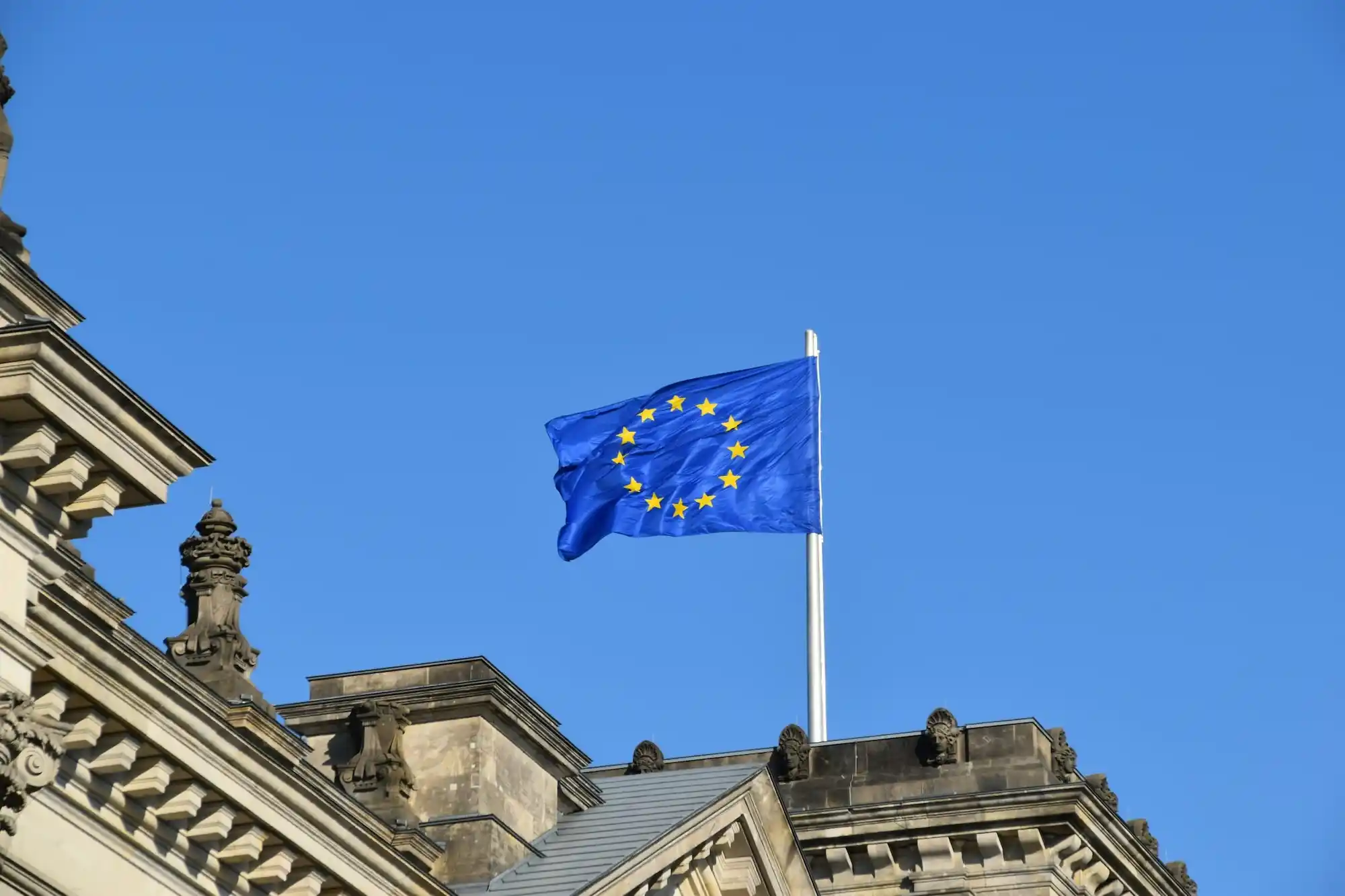
This flexibility stands in sharp contrast to the European Union’s approach. Despite years of negotiations and repeated deadline extensions — most recently to Jan. 26 — the EU-India free trade agreement remains stuck. The reasons are no mystery. Brussels continues to press for greater access to India’s agricultural market and insists on the application of its Carbon Border Adjustment Mechanism (CBAM), a carbon tax that New Delhi views as economically punitive and morally inconsistent with global climate equity principles.
For India, agriculture is not just another negotiating chip. Nearly half of its population depends on farming for their livelihood, and farmers constitute one of the country’s most powerful voting blocs. This political reality was underscored in 2021, when mass farmer protests forced Prime Minister Narendra Modi to repeal agricultural reforms and issue a rare public apology. Any trade deal that appears to undermine farmers is politically radioactive.
This context also reframes India’s past trade disputes. Former officials and trade experts have argued that U.S. tariffs imposed under President Donald Trump were less about geopolitics — such as India’s purchase of Russian oil — and more about New Delhi’s refusal to open its markets to American agricultural products. Modi himself has been unequivocal: India “will never compromise” on the interests of its farmers, dairy producers, or fishermen.
The European Union’s insistence on agriculture, then, is not merely tone-deaf; it is strategically self-defeating.
Compounding this friction is Brussels’ growing protectionism. Recent decisions to curb rice imports from India and impose steel tariffs of up to 50 percent outside quota limits have rattled Indian negotiators. These moves appear especially contradictory given the EU’s simultaneous claim to champion open, rules-based trade. To Indian policymakers, such actions look less like principled regulation and more like last-minute pressure tactics.
Nothing has exacerbated these tensions more than the EU’s CBAM. Designed to prevent “carbon leakage” by taxing emissions-intensive imports, the mechanism disproportionately affects developing economies whose industrial bases remain reliant on fossil fuels. India argues — with some justification — that CBAM violates the principle of Common But Differentiated Responsibilities (CBDR), which recognizes that countries with vastly different historical emissions and levels of development cannot be held to identical standards.
The Secretary of India’s Ministry of Steel, Sandeep Poundrik, has gone so far as to describe CBAM as a greater threat to Indian exports than Trump-era tariffs. Former Indian trade negotiator Sangeeta Godbole has warned that an EU-India FTA could leave New Delhi worse off if carbon provisions are not reconsidered, noting that nearly 80 percent of Indian exports to the EU already face tariffs below 1 percent. From this perspective, Brussels has far more to gain — and far less to lose — from a deal.
Again, the comparison with Britain is instructive. While India failed to secure an outright exemption from the U.K.’s carbon tax, it preserved the right to retaliate if environmental levies nullify the agreement’s benefits. That safeguard matters. It reflects an understanding that climate policy cannot be divorced from development realities, and that trust is built through mutual flexibility rather than unilateral standards.
European officials counter that they, too, face domestic political constraints. Trade Commissioner Maroš Šefčovič has openly acknowledged pressure from European farmers, particularly after protests over the EU’s Mercosur deal. But this argument rings hollow in New Delhi. India, after all, has demonstrated a willingness to make painful concessions — on cars, liquor, and textiles — where its most vulnerable populations are not at risk. What it seeks is reciprocity in political sensitivity, not exemption from all obligations.
There is also a deeper strategic irony at play. The EU increasingly views India as a potential alternative to China as it seeks to “de-risk” supply chains in critical sectors. Yet Brussels worries that an FTA with India could inadvertently benefit Beijing, given India’s own dependence on Chinese components — including nearly half of those used in Indian semiconductors. This hesitation ignores a basic reality: without deeper integration, India will remain dependent on China. Trade agreements are not rewards for economic maturity; they are tools to create it.
The truth is uncomfortable but unavoidable. India — despite its rapid growth — remains home to hundreds of millions living below the poverty line. It needs access to the world’s largest single market to attract investment, upgrade manufacturing, and generate jobs. But the reverse is also true. Europe needs India to diversify supply chains, anchor its Indo-Pacific strategy, and uphold a multipolar economic order that does not orbit Beijing.
Trade deals are not moral treatises. They are political bargains shaped by power, pragmatism, and priorities. The U.K., unburdened by the EU’s internal complexity, has demonstrated what such pragmatism looks like in practice. Brussels, by contrast, risks allowing regulatory absolutism to undermine its strategic interests.
If Europe truly wants India as a partner rather than a petitioner, it must learn the lesson London has already internalized: flexibility is not weakness. It is leverage.