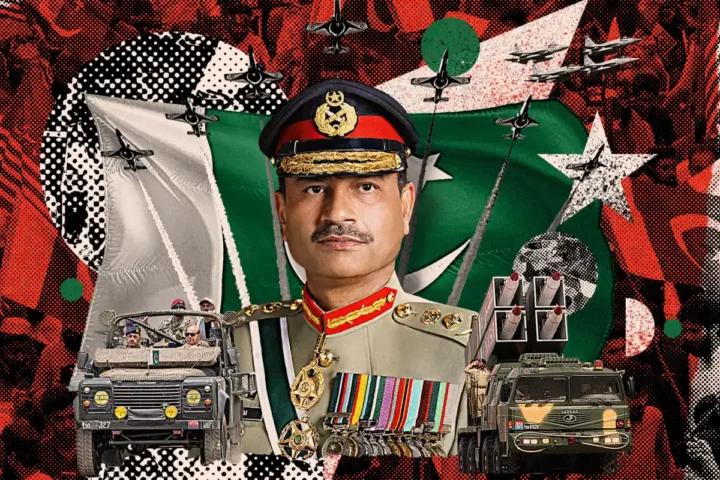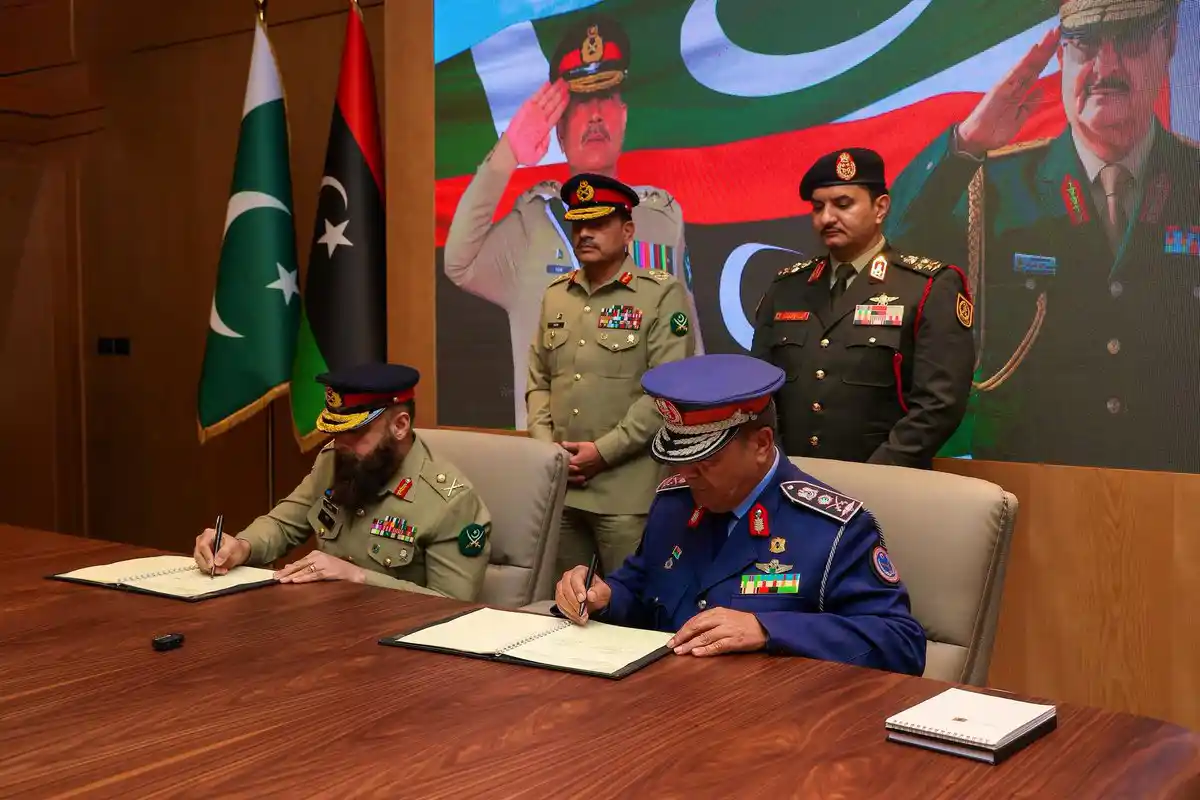
Pakistan has reportedly inked a $4 billion arms deal with the Libyan National Army (LNA), led by the controversial warlord Khalifa Haftar. This agreement, brokered during a visit by Pakistan’s Chief of Army Staff, General Asim Munir, to meet with Haftar’s son, Major General Saddam Haftar, includes the supply of advanced weaponry such as JF-17 fighter jets, tanks, artillery, and other military hardware. At face value, it marks Pakistan’s largest-ever weapons export, a boon for its cash-strapped defense industry. But beneath the surface, this pact is a massive misstep, one that flouts international law, perpetuates Libya’s bloody civil war, exposes Pakistan to severe backlash, and erodes the fragile architecture of global security. At a time when arms proliferation fuels endless conflicts, this deal exemplifies how short-term economic desperation can lead to long-term catastrophe.
The most glaring issue is the blatant violation of the United Nations arms embargo on Libya, imposed in 2011 amid the chaos following the NATO-backed overthrow of Muammar Gaddafi. This embargo, enforced by the UN Security Council, prohibits the transfer of weapons to any Libyan faction to prevent escalation in a country already fractured by rival governments, militias, and foreign meddling. The LNA, based in eastern Libya, is not the UN-recognized Government of National Unity (GNU) in Tripoli; it is a renegade force that has repeatedly defied international calls for unity and disarmament. By arming Haftar’s group, Pakistan is not just skirting the edges of legality; it is driving a tank through the heart of it. Critics argue that such deals “kill the UN embargo,” rendering multilateral efforts to stabilize Libya utterly meaningless. If a nuclear-armed nation like Pakistan can ignore these restrictions with impunity, what message does that send to other rogue actors? It normalizes the idea that arms embargoes are mere suggestions, paving the way for a world where might makes right and international norms are discarded like spent cartridges.
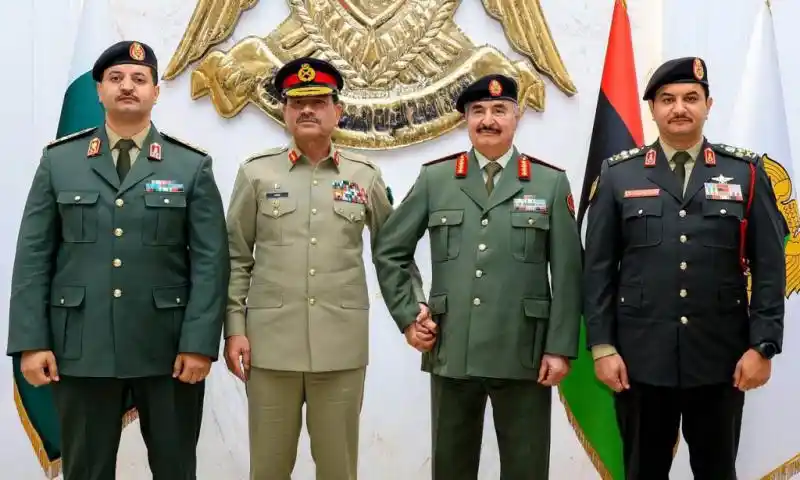
This deal doesn’t just breach law; it actively prolongs Libya’s agony. The North African nation has been mired in civil strife since 2011, with Haftar’s LNA clashing against the GNU and various militias in a proxy war involving powers like Russia, Turkey, Egypt, and the UAE. Supplying JF-17 jets and other hardware to the LNA will tilt the balance, enabling more aerial strikes, ground offensives, and civilian casualties in a conflict that has already displaced hundreds of thousands and turned Libya into a haven for human trafficking and terrorism. Haftar, often labeled a “warlord,” has been accused of war crimes, including indiscriminate bombings and the use of foreign mercenaries. Arming him isn’t defense diplomacy, it’s complicity in chaos. As one analyst put it, this pact risks “prolonging Libya’s internal conflict” and turning the country into an even bloodier quagmire. Libya’s instability has ripple effects: it spills over into the Sahel, exacerbating jihadist insurgencies in Mali and Niger, and fuels migration crises that strain Europe. By injecting more weapons into this tinderbox, Pakistan is stoking a fire that could engulf the entire region, all for a quick buck.
Pakistan strikes $4 billion deal to sell weapons to Libyan force, officials say
— Shaukat Javed (@shaukatpsp) December 24, 2025
Pakistan acted like a middle power trying to play a great-power game without great-power shields.
Seems Pakistan betting on the wrong horse because Libya’s political future is unsettled. If power…
From Pakistan’s perspective, the deal is a desperate economic play masquerading as strategic outreach. Islamabad’s defense exports have been a bright spot in an otherwise beleaguered economy, plagued by inflation, debt, and political turmoil. The $4 billion influx could shore up foreign reserves and boost military industries co-developed with China, like the JF-17 program. But this short-sighted gain comes at an exorbitant cost. Pakistan has long positioned itself as a proponent of UN frameworks and non-interference. Aligning with a non-recognized faction like the LNA undermines that moral high ground, making Pakistan appear hypocritical on the global stage. If Libya’s power dynamics shift toward the GNU, as they might in ongoing reconciliation talks, Pakistan could lose the deal entirely, along with any diplomatic leverage. Worse, it invites sanctions from the UN or Western powers, who back the Tripoli government and view Haftar as a spoiler. The U.S. and EU have already scrutinized similar violations by Russia and the UAE; Pakistan, reliant on IMF bailouts and Western aid, can ill afford to join that list.
Moreover, the deal exposes Pakistan to reputational damage that could isolate it further. General Munir’s military-led government has faced domestic criticism for prioritizing defense deals over democratic reforms, and this pact only amplifies accusations of adventurism. Internationally, it aligns Pakistan with autocratic regimes, straining ties with allies who support the UN process. Pakistan is clearly betting on the wrong horse in Libya’s unsettled politics, risking being seen as a “partisan” rather than a neutral player. This isn’t the first time Pakistan has waded into controversial arms sales. Recall the secret deal to supply weapons to Ukraine via the U.S., which bolstered the military junta but alienated the public. Such moves portray Pakistan not as a stabilizing force but as a mercenary state, willing to export instability for profit. In a multipolar world, where China and the U.S. vie for influence, Pakistan’s “quiet diplomacy” with Haftar could backfire, drawing it into unwanted proxy conflicts.
The ethical dimensions are equally damning. Arms deals with factions like the LNA perpetuate a cycle of violence where civilians pay the price. Libya’s war has seen atrocities on all sides, and bolstering one group only ensures more bloodshed. Recent events, like the suspicious plane crash killing Libya’s army chief, Mohamed Al-Haddad, who reportedly opposed the deal, raise chilling questions about foul play and the shadowy forces at work. Was this a coincidence, or a calculated elimination to clear the path? Such speculations, fueled by social media whispers, underscore the deal’s toxic underbelly. For Pakistan, a country grappling with its own internal divisions and accusations of military overreach, associating with Haftar’s regime sends a dangerous signal: that force trumps legitimacy. It risks normalizing warlordism, where generals export not just weapons but a worldview of rule by firepower.
Geopolitically, this pact threatens broader instability. Libya’s oil-rich landscape is a prize for regional powers, and arming the LNA could escalate tensions with Turkey (a GNU backer) or even draw in NATO remnants. For Africa, it exacerbates the spillover of arms into sub-Saharan conflicts, where Libyan weapons have already fueled insurgencies. In South Asia, it empowers Pakistan to play a role in escalating tensions with India and Afghanistan, where resources are better spent on national development, rather than distant adventures. Critics warn that Pakistan’s military, vulnerable in prolonged conflicts due to economic fragility, is overextending itself. As one expert noted, deals like this turn conflict zones into “markets,” sustaining power imbalances rather than resolving them.
Logistically, the deal’s feasibility is dubious. How will Pakistan navigate airspace, maritime routes, and international monitoring to deliver these arms? Past embargoes have seen shipments intercepted, and with global scrutiny intensifying, this could end in embarrassment or worse, seized assets. Pakistan’s internal politics add another layer: with elections looming and public discontent rising, the military’s focus on such deals could spark domestic backlash.
Pakistan’s arms deal with the LNA is a folly born of desperation, one that betrays international commitments, fuels endless war in Libya, and jeopardizes Islamabad’s standing. It prioritizes profit over peace, inviting sanctions, isolation, and ethical condemnation. The UN must enforce its embargo rigorously, while Pakistan should pivot toward diplomacy that builds bridges, not battlefields. If this pact proceeds, it won’t just arm a warlord, it will arm the forces of global disorder. The world cannot afford another failed state propped up by foreign guns.