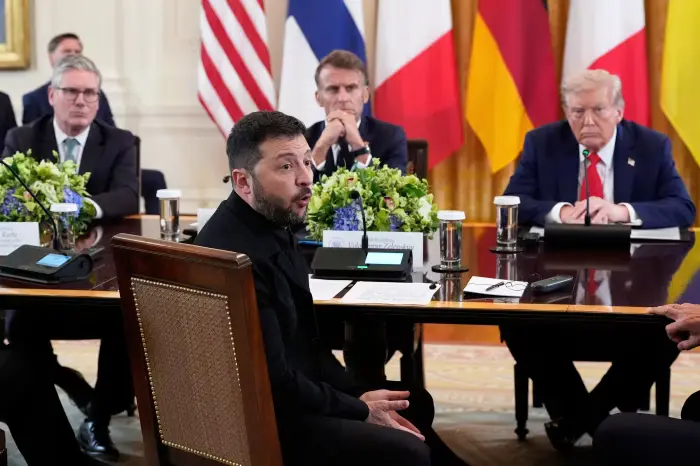
As Ukrainian President Volodymyr Zelenskyy heads into a high-profile meeting with U.S. President Donald Trump in Florida, the optics are dramatic and the substance potentially historic. Missiles and drones have just rained down on Kyiv, plunging parts of the capital into darkness and killing civilians. Against that backdrop, Zelenskyy’s message is blunt: Ukraine cannot agree to peace without ironclad, legally binding security guarantees—and only one man, in his view, can ultimately deliver them.
This moment crystallizes the central dilemma of the war’s possible endgame. Peace is no longer a theoretical aspiration; it is an active negotiation. But the terms of that peace—who enforces it, who guarantees it, and who decides when it is legitimate—are deeply contested. Zelenskyy’s trip underscores both Ukraine’s vulnerability and its strategic clarity: without enforceable guarantees, any ceasefire risks becoming merely a pause before the next Russian assault.
The overnight barrage of roughly 40 missiles and nearly 500 drones was not just another chapter in Russia’s campaign of terror. It was a message. Moscow has consistently used escalation to shape diplomacy, reminding Ukraine and its partners that Russia retains the capacity to impose pain at will. Zelenskyy is using that reality to argue that Ukraine’s security cannot rest on promises, goodwill, or vague assurances. The lesson of the past decade—from Crimea to the Donbas to the full-scale invasion—is that Russia exploits ambiguity. Ukraine, therefore, seeks certainty.
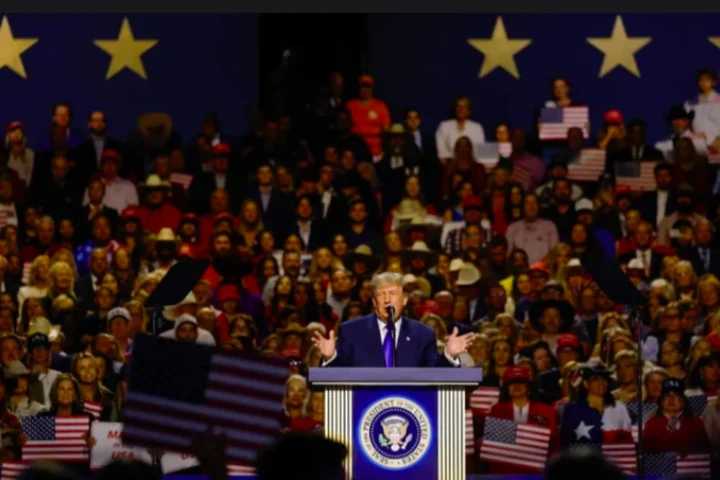
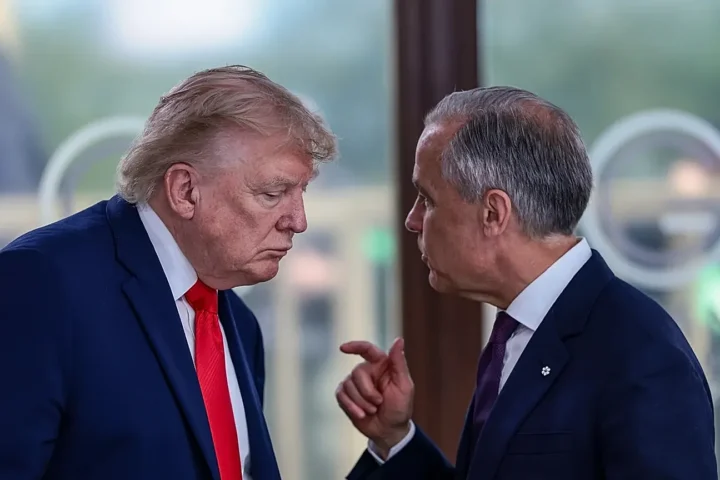
Yet certainty is precisely what Trump appears reluctant to grant. His comment that Zelenskyy “doesn’t have anything until I approve it” is revealing. It frames peace not as a multilateral process grounded in international law, but as a transaction subject to presidential discretion. This approach may appeal to Trump’s self-image as a dealmaker, but it places Ukraine in an asymmetric and precarious position. Security guarantees that depend on personal approval rather than institutional commitment are, by definition, fragile.
Zelenskyy’s insistence on legally binding guarantees is rooted in bitter experience. The Budapest Memorandum of 1994, which saw Ukraine give up its nuclear arsenal in exchange for assurances from major powers, failed spectacularly when Russia violated Ukraine’s sovereignty and the guarantors proved unwilling or unable to respond decisively. From Kyiv’s perspective, the difference between “assurances” and “guarantees” is not semantic; it is existential.
Trump’s skepticism also reflects a broader tension in U.S. policy. On one hand, there is fatigue—political, financial, and strategic—with a war that has dragged on for nearly four years. On the other, there is the recognition that a poorly structured peace could undermine not only Ukraine’s security but the credibility of American power. If Washington endorses a settlement that leaves Ukraine exposed, it sends a signal far beyond Eastern Europe: security commitments are negotiable, conditional, and reversible.
Zelenskyy’s proposed 20-point peace plan, including a demilitarized zone and discussions over the Zaporizhzhia nuclear power plant and the Donbas region, suggests a willingness to engage in difficult compromises. But compromise without protection is capitulation by another name. A demilitarized zone, absent credible enforcement, could become a strategic liability—a buffer that Russia probes, violates, and eventually absorbs. Control of nuclear infrastructure and contested territories raises similarly thorny questions: who administers them, who guarantees safety, and what happens when agreements are breached?
Trump’s role as “decider-in-chief,” as Zelenskyy describes it, is thus both an opportunity and a risk. The opportunity lies in Trump’s desire to claim a signature foreign policy achievement. Ending the war could be framed as proof of his negotiating prowess. The risk is that speed and spectacle may be prioritized over durability. A deal that collapses within years—or months—would not only endanger Ukraine but stain the very legacy Trump might seek to build.
The issue of elections in Ukraine further complicates the picture. Trump’s call for new elections echoes a familiar critique: that democratic legitimacy must be refreshed, even in wartime. Zelenskyy’s pushback is grounded in reality. Conducting free and fair elections under martial law, amid displacement, occupation, and constant Russian interference, is a logistical and moral minefield. Elections held without security would be vulnerable to manipulation and could fracture Ukrainian society at a moment when cohesion is vital.
Zelenskyy’s openness to elections, conditional on security guarantees from the U.S. and Europe, is telling. It signals confidence rather than insecurity. He is not clinging to power; he is insisting on legitimacy that can withstand scrutiny. This stance contrasts with Russia’s approach, where elections serve as instruments of control rather than expressions of popular will. If democracy is to mean anything in Ukraine, it cannot be reduced to a box-checking exercise under fire.
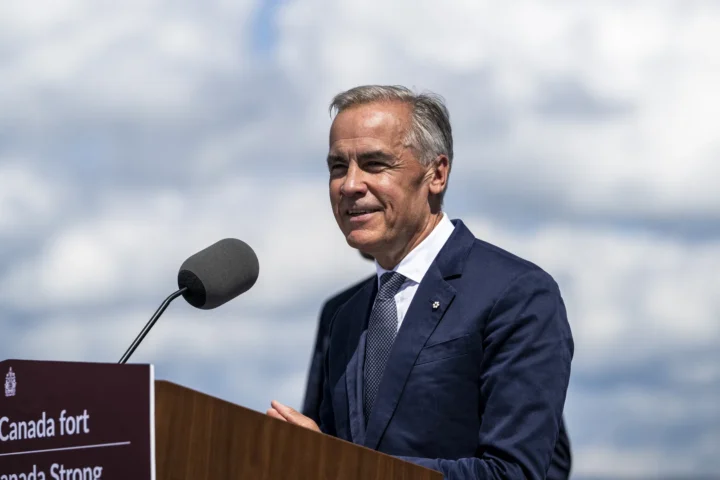
The broader European dimension looms large as well. Zelenskyy’s stop in Canada and virtual consultations with European leaders highlight a critical fact: peace in Ukraine is not a bilateral U.S.-Ukraine affair. It is a continental security issue. Europe has the most at stake and, increasingly, the most to lose if the outcome is dictated by Washington alone. Any credible security guarantee will require European buy-in, resources, and long-term commitment.
This is where Trump’s unilateral framing becomes problematic. By positioning himself as the sole arbiter, he risks sidelining allies whose participation is essential for enforcement. Security guarantees that exclude Europe would be hollow; guarantees that include Europe but lack U.S. backing would be incomplete. The challenge is to construct a framework that binds multiple actors in ways that outlast individual leaders and electoral cycles.
At its core, this moment is a test of whether the international system can still produce meaningful security arrangements in the face of revisionist aggression. Ukraine is asking not for charity, but for structure: clear commitments, defined consequences, and mechanisms that deter future attacks. Trump, meanwhile, appears to view peace as a personal negotiation, one that can be approved, amended, or withheld at will.
The danger is not merely that Ukraine might accept a bad deal. It is that the world might normalize the idea that force reshapes borders and that peace is whatever the most powerful broker declares it to be. Zelenskyy’s insistence on guarantees is, in this sense, not only about Ukraine’s survival but about the principles that govern international order.
As missiles fall on Kyiv and diplomats gather in Florida, the stakes could hardly be higher. A durable peace will require more than signatures and handshakes; it will require commitments that are costly to break and impossible to ignore. Zelenskyy knows this. The question is whether Trump—and the system he represents—is prepared to move beyond approval and toward obligation.