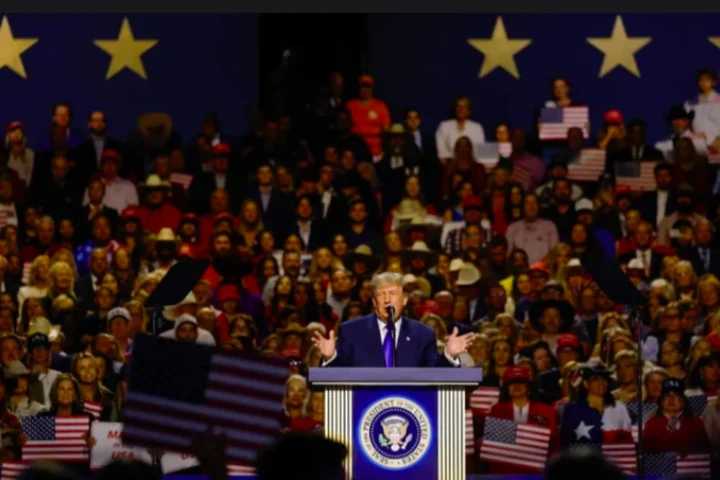
In a bold escalation of his long-standing fixation on acquiring Greenland, U.S. President Donald Trump announced on January 17, 2026, that he would impose tariffs on eight European nations unless they facilitate a deal for the United States to purchase the vast Arctic territory from Denmark. The move, detailed in a lengthy post on Truth Social, targets Denmark, Norway, Sweden, France, Germany, the United Kingdom, the Netherlands, and Finland, key NATO allies, with a 10% tariff on all goods exported to the U.S. starting February 1, rising to 25% on June 1, “until such time as a Deal is reached for the Complete and Total purchase of Greenland.” This provocative strategy has ignited a firestorm of criticism across Europe, with leaders from London to Paris decrying it as an unacceptable assault on alliances and sovereignty.
The announcement comes amid heightened U.S. concerns over Arctic security, where melting ice caps are opening new shipping routes and exposing valuable resources like rare earth minerals. Trump framed the tariffs as a necessary lever to counter what he perceives as growing threats from Russia and China in the region. “If we don’t take Greenland, Russia or China will take Greenland,” he has repeatedly argued, echoing sentiments from his first term when he first floated the idea of buying the island in 2019. Back then, Danish officials dismissed the proposal as “absurd,” but Trump’s return to the White House in 2025 has revived the ambition with renewed vigor. Greenland, an autonomous territory of Denmark with a population of just over 56,000, holds strategic importance due to its U.S.-operated Thule Air Base and vast untapped mineral reserves critical for green energy technologies.
European leaders, however, see this not as a security imperative but as economic coercion bordering on neo-colonialism. UK Prime Minister Keir Starmer was among the first to respond, labeling the tariffs “completely wrong” and emphasizing that Greenland’s future “is a matter for the Greenlanders and the Danes.” Starmer’s statement, issued shortly after Trump’s post, highlighted the irony of penalizing allies for upholding NATO’s collective security. “Applying tariffs on allies for pursuing the collective security of NATO allies is completely wrong,” he said, adding that the UK would pursue the matter directly with the U.S. administration. This reaction underscores Starmer’s efforts to maintain strong transatlantic ties while navigating post-Brexit realities, where the UK remains deeply intertwined with EU trade policies.
Our position on Greenland is very clear – it is part of the Kingdom of Denmark and its future is a matter for the Greenlanders and the Danes.
— Keir Starmer (@Keir_Starmer) January 17, 2026
We have also made clear that Arctic Security matters for the whole of NATO and allies should all do more together to address the threat…
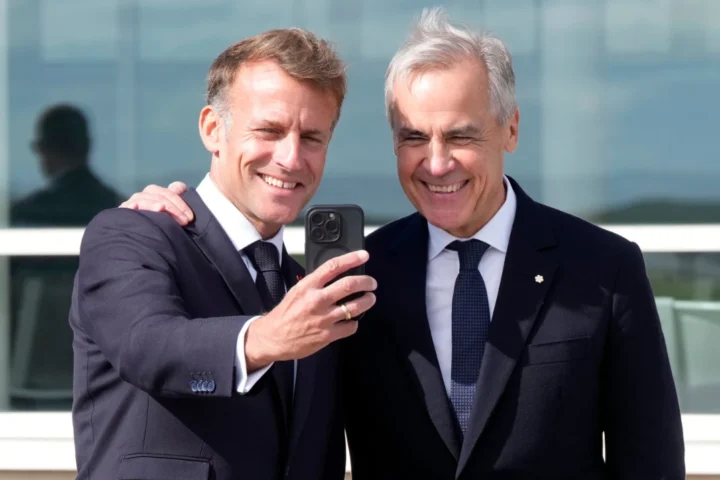
French President Emmanuel Macron echoed Starmer’s outrage, calling the tariff threats “unacceptable” and vowing that “no amount of intimidation” would sway European nations. Macron drew parallels to Europe’s support for Ukraine against Russian aggression, framing the Greenland issue as part of a broader defense of sovereignty. “Tariff threats are unacceptable and have no place in this context,” he stated, warning that Europeans would respond in a “united and coordinated manner” if the threats materialize. Macron’s stance aligns with his advocacy for European strategic autonomy, a concept he has championed since 2017 to reduce reliance on the U.S. for defense and economic matters.
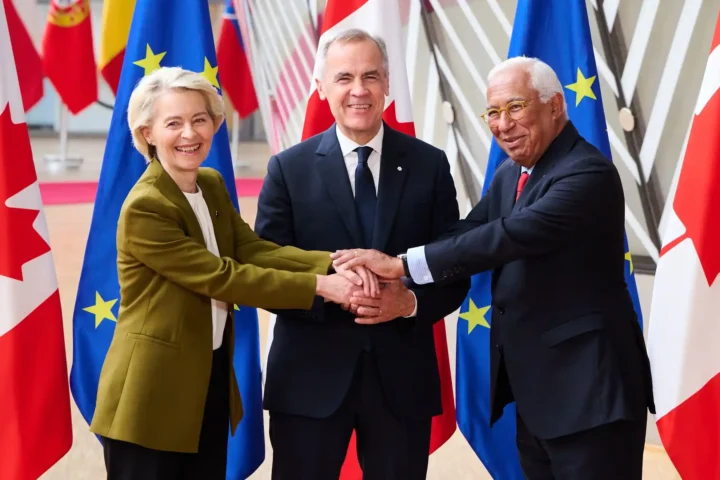
The backlash extended beyond Starmer and Macron. European Commission President Ursula von der Leyen, in a joint statement with European Council President Antonio Costa, affirmed the EU’s “full solidarity with Denmark and the people of Greenland.” She warned that tariffs would “undermine transatlantic relations and risk a dangerous downward spiral,” urging dialogue to build on recent U.S.-Denmark talks. German Chancellor Friedrich Merz, Finnish President Alexander Stubb, and Swedish Prime Minister Ulf Kristersson also condemned the move, with Kristersson declaring, “We will not let ourselves be blackmailed.” Estonian Prime Minister Kaja Kallas noted that such divisions could benefit China and Russia, while Dutch Foreign Minister Caspar Veldkamp simply stated, “We have taken note,” signaling a measured but firm response.
This unified front was evident in the emergency meeting of EU ambassadors convened in Brussels on January 18, where discussions focused on a coordinated retaliation strategy. The gathering, prompted by Trump’s announcement, underscores the EU’s determination to protect its members—Denmark in particular—from external pressure. Danish Foreign Minister Lars Løkke Rasmussen expressed surprise at the tariffs following what he described as a “constructive meeting” with U.S. officials earlier in the week. Greenland’s own leaders, including Minister for Mineral Resources Naaja Nathanielsen, praised the European support, expressing hope that “diplomacy and allieship will prevail.”
The tariffs themselves represent a classic Trumpian tactic: using trade as a blunt instrument to achieve geopolitical goals. Analysts point to his first-term trade wars with China and the EU, which imposed billions in duties on steel, aluminum, and other goods. In this case, the targeted countries are major exporters to the U.S., with the UK sending goods worth over $60 billion annually, France around $50 billion, and Germany leading at nearly $150 billion. The levies could disrupt supply chains in sectors like automobiles, pharmaceuticals, and machinery, potentially raising costs for American consumers and businesses. The Council on Foreign Relations has warned that this approach may discourage European cooperation on broader security issues, fearing further escalation.
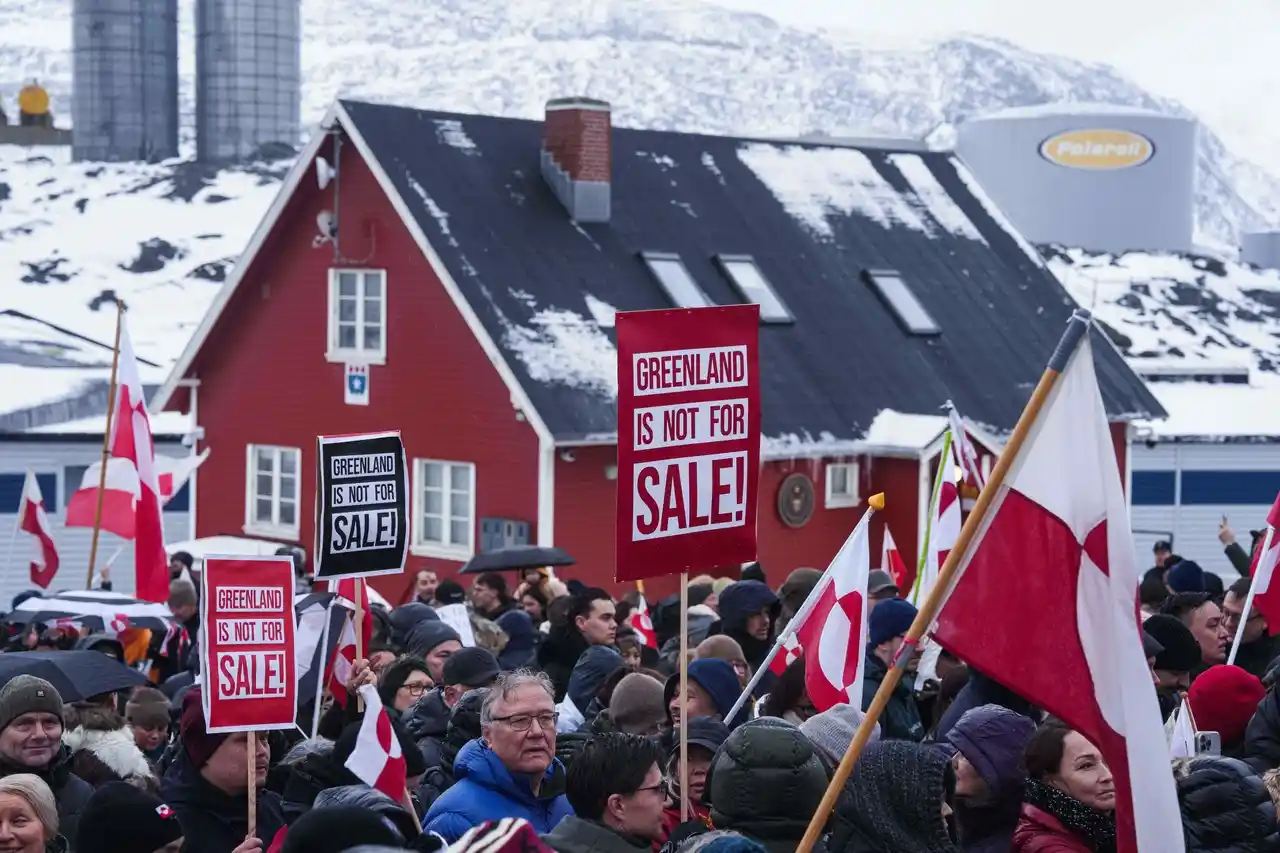
Protests have erupted in response, with thousands gathering in Greenland’s capital, Nuuk, and Copenhagen to oppose any U.S. takeover. Banners reading “Greenland is not for sale” reflect a deep-seated resistance rooted in the island’s history of colonial exploitation under Danish rule until its home rule in 1979 and expanded autonomy in 2009. Greenlandic officials have repeatedly affirmed their commitment to self-determination, with some even floating the idea of full independence from Denmark in the future—but on their terms, not Washington’s.
From a strategic perspective, Trump’s push for Greenland isn’t without merit. The island’s location provides a critical vantage point for monitoring Arctic activities, and its rare earth deposits—estimated at over 10% of global reserves—could reduce U.S. dependence on China, which dominates the market. The 1951 defense agreement already allows U.S. military expansion on the island, but Trump seeks outright ownership to secure long-term control. Critics, however, argue this overlooks diplomatic alternatives, such as enhanced NATO cooperation in the Arctic, which European leaders have proposed.
The incident also highlights tensions within NATO, exacerbated by Trump’s past criticisms of allies’ defense spending. While many of the targeted nations meet or exceed the 2% GDP target, the tariffs risk fracturing the alliance at a time when unity is crucial against Russian aggression in Ukraine and Chinese assertiveness in the Indo-Pacific. Polish Prime Minister Donald Tusk, not directly targeted but vocal on transatlantic issues, called for avoiding a “totally unnecessary and stupid tariff war.” Even Italian Prime Minister Giorgia Meloni, often seen as more aligned with Trump, joined the chorus condemning the move.
Social media has amplified the outrage, with X posts from users and officials alike decrying the tariffs as bullying. One viral thread from a Serbian commentator drew parallels to Kosovo, accusing European leaders of hypocrisy in territorial matters. Others, like U.S. Republicans critical of Trump, highlighted the humiliation of allies issuing statements to deter potential U.S. actions.
As world leaders prepare for the World Economic Forum in Davos, where Trump is expected to meet von der Leyen, Macron, and others, the Greenland saga could dominate discussions. A bipartisan U.S. delegation’s recent visit to Copenhagen signals some willingness for dialogue, but the tariffs loom as a deadline approaches.
Trump’s Greenland tariffs have united European leaders in defiance, exposing fault lines in transatlantic relations. From Starmer’s measured rebuke to Macron’s fiery resolve, the response signals a Europe unwilling to bend to economic pressure. Whether this leads to a trade war or a negotiated thaw remains uncertain, but it underscores the fragile balance between alliance and ambition in a multipolar world. As Greenland’s fate hangs in the balance, the episode serves as a stark reminder that territorial aspirations in the 21st century cannot ignore the principles of sovereignty and mutual respect.
References and Further Reading
- McCreesh, S., Swanson, A., & Smialek, J. (2026, January 17). Trump announces new tariffs on some European countries in Greenland standoff. The New York Times. https://www.nytimes.com/2026/01/17/us/politics/trump-eu-tariffs-greenland.html
- (2026, January 17). Trump threatens 25% tariff on European allies until Denmark sells Greenland to US. The Guardian. https://www.theguardian.com/us-news/2026/jan/17/trump-tariff-european-countries-greenland
- (2026, January 17). Trump vows tariffs on eight European nations over Greenland. Reuters. https://www.reuters.com/world/europe/trump-vows-tariffs-eight-european-nations-over-greenland-2026-01-17
- (2026, January 17). Trump threatens new tariffs on European allies over Greenland until deal reached, as thousands protest. CNN. https://www.cnn.com/2026/01/17/europe/protesters-denmark-greenland-trump-intl
- (2026, January 17). Trump says 8 European nations face tariffs rising to 25% if Greenland isn’t sold to the U.S. CNBC. https://www.cnbc.com/2026/01/17/trump-greenland-tariffs-nato.html
- (2026, January 17). European leaders warn of ‘downward spiral’ after Trump threatens tariffs over Greenland – as it happened. The Guardian. https://www.theguardian.com/world/live/2026/jan/17/hands-off-greenland-protests-denmark-us-donald-trump-europe-latest-news-updates
- (2026, January 17). EU vows coordinated response to Trump’s tariffs threat over Greenland sale. Euronews. https://www.euronews.com/my-europe/2026/01/17/eu-vows-coordinated-response-to-trumps-tariffs-threat-over-greenland-sale
- (2026, January 17). Trump pledges to slap tariffs on European allies over Greenland. Al Jazeera. https://www.aljazeera.com/news/2026/1/17/trump-pledges-to-slap-tariffs-on-european-allies-over-greenland
- (2026, January 18). ‘Unacceptable’: European leaders hit back at Trump’s Greenland tariffs threat. CNBC. https://www.cnbc.com/2026/01/18/european-leaders-reaction-trump-greenland-tariffs-threat.html
- (2026, January 18). EU ambassadors to hold emergency talks after Trump threatens tariffs over Greenland – follow live. BBC News. https://www.bbc.com/news/live/c1j8kw866p3t
- (2026, January 17). Greenland row: EU weighing response to Trump tariff plan. DW. https://www.dw.com/en/greenland-row-eu-weighing-response-to-trump-tariff-plan/live-75550031
- (2026, January 17). Keir Starmer says Trump’s threat to impose tariffs over Greenland ‘completely wrong’. The Guardian. https://www.theguardian.com/world/2026/jan/17/uk-politicians-condemn-trumps-threat-to-impose-tariffs-over-greenland