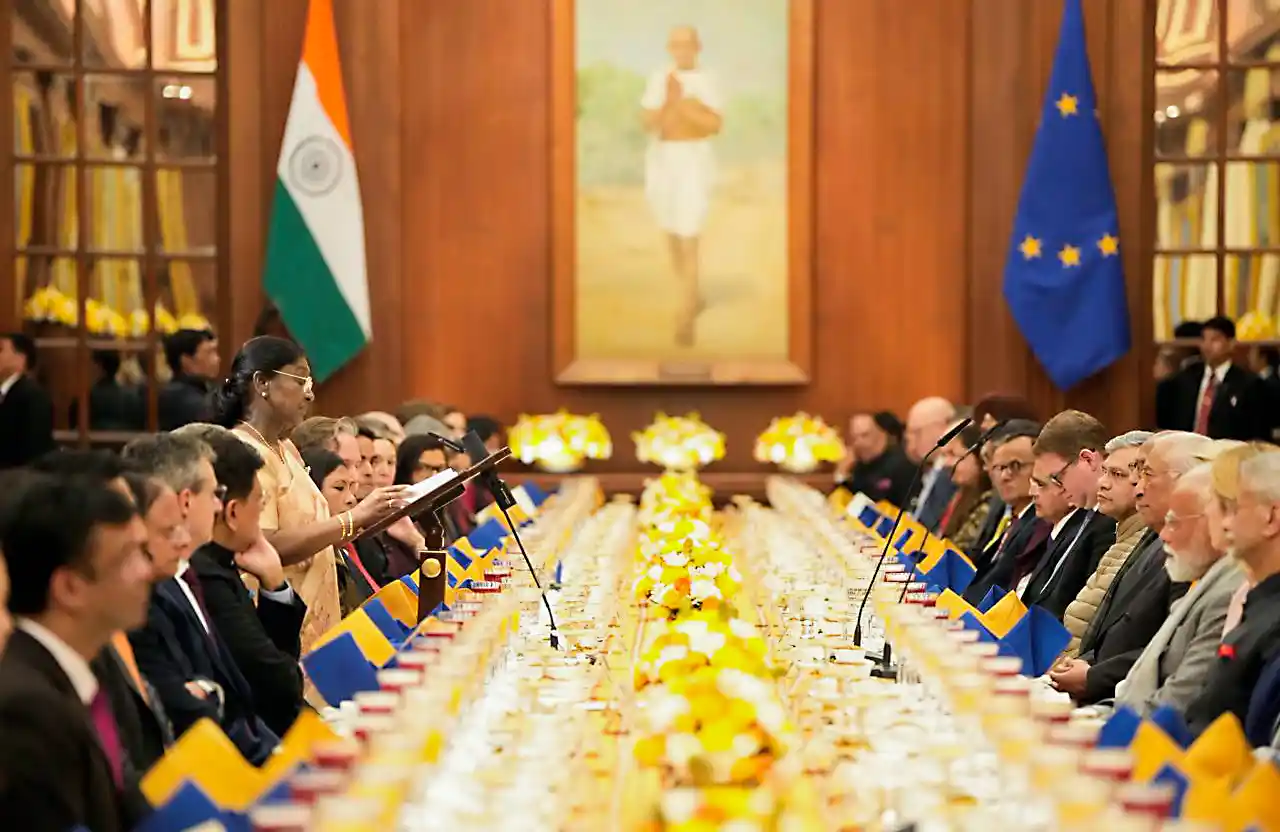
The recent conclusion of negotiations on the India-EU Free Trade Agreement (FTA) on January 27, 2026, marks a pivotal moment in global trade dynamics. Dubbed the “mother of all deals” by European Commission President Ursula von der Leyen, this landmark pact unites two massive democratic economies representing nearly a quarter of global GDP and a combined market of around 2 billion consumers. Bilateral goods trade already stood at approximately $136.5 billion in the fiscal year ending March 2025, with the EU as India’s largest trading partner. The agreement promises to eliminate or reduce tariffs on over 96% of traded goods, potentially doubling EU exports to India by 2032 and providing significant duty advantages for Indian exporters in key sectors.
After years of stop-start talks, the EU and India have signed a long-awaited free trade deal. Renewed momentum from global trade tensions pushed both sides forward. #DWBusiness pic.twitter.com/yf5gVZC6zS
— DW News (@dwnews) January 27, 2026
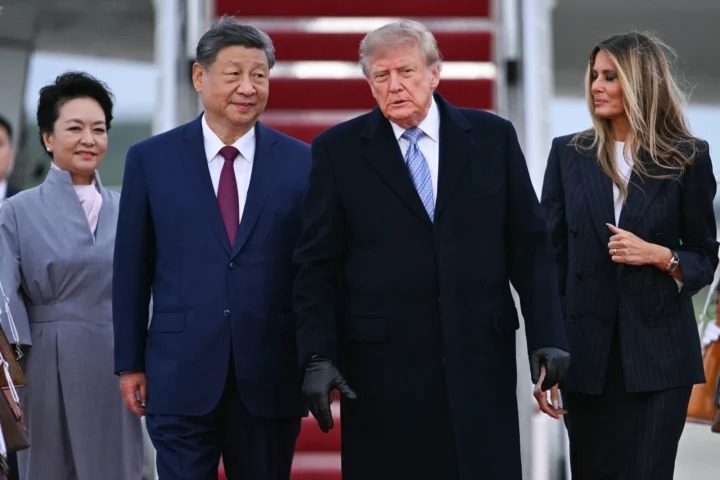
This breakthrough did not emerge in isolation. It was propelled by two powerful external forces: aggressive American tariff coercion under President Donald Trump and China’s enduring dominance in global exports. Together, these pressures have compelled Brussels and New Delhi to accelerate talks that had languished for nearly two decades, transforming a once-stalled negotiation into a strategic imperative for economic resilience and diversification.
The EU and India have agreed to a landmark trade deal, cutting tariffs on nearly all goods as both move to hedge against Trump’s tariffs.@Alisha2494 explains https://t.co/lTaMVYZXtK pic.twitter.com/3Mkc2pYAN6
— Bloomberg (@business) January 27, 2026
Trump’s tariff offensive has reshaped the international trade landscape since his return to office. The administration imposed steep tariffs on a range of partners, including a 50% duty on certain Indian goods—partly linked to India’s continued purchases of Russian oil amid geopolitical tensions. These measures, part of a broader policy of reciprocal tariffs and threats against allies and adversaries alike, have disrupted established supply chains and eroded confidence in the U.S. as a reliable trading partner. India, facing punitive duties on exports like auto components, gems, jewelry, and electrical machinery, has been compelled to seek alternative markets swiftly. Similarly, the EU has grappled with tariff threats from Washington, including on automobiles and industrial goods, prompting a reevaluation of transatlantic dependencies.
In this environment of uncertainty, the India-EU FTA serves as a direct countermeasure. By securing preferential access to one of the world’s largest markets, both sides hedge against U.S. volatility. Indian industries battered by American tariffs can redirect shipments to Europe, while European firms gain lower barriers in India’s fast-growing economy. The deal’s timing—concluded amid ongoing U.S.-India trade frictions and broader tariff disputes—underscores how unilateralism in Washington has inadvertently fostered deeper ties elsewhere. As one EU diplomat noted, Trump’s policies provided a “useful tailwind” in the final stretch of negotiations.
Compounding this is China’s export dominance, which has long been a source of concern for both the EU and India. China accounts for a significant share of global manufacturing, particularly in sectors like textiles, electronics, machinery, and renewables. In the EU’s ready-made garment (RMG) market, for instance, China holds nearly 30% share, while flooding markets with low-cost goods that challenge local and alternative suppliers. The EU has expressed worries over over-reliance on China for critical technologies and supply chains, exacerbated by export controls and geopolitical risks. India, meanwhile, has pursued a “China Plus One” diversification strategy, aiming to attract manufacturing shifts and reduce vulnerabilities in global value chains.
“This is great news for everybody. It means more business opportunities for our SMEs, for our industries, for our service providers, and of course also for India.”
— euronews (@euronews) January 27, 2026
European Commission Executive Vice-President @HennaVirkkunen reacts on #EuropeToday to the EU–India trade deal. pic.twitter.com/9Y9jscPTSG
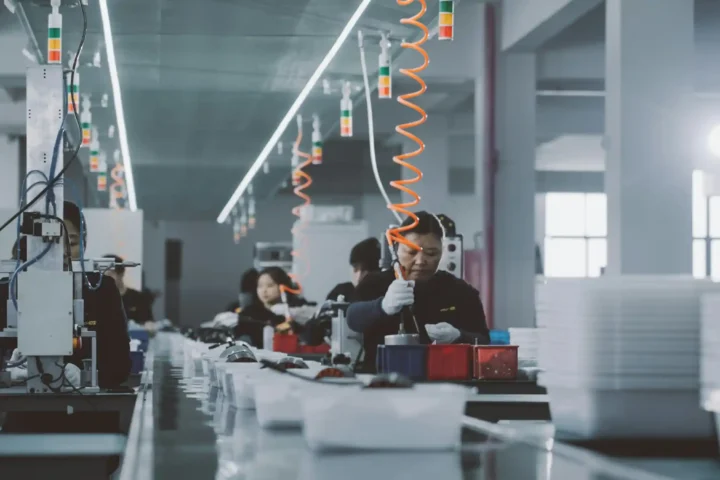
The FTA directly addresses these issues by leveling the playing field. Indian exporters in labor-intensive sectors such as textiles, apparel, leather, and footwear stand to gain substantially. Once fully implemented (expected in 2026-2027 after legal scrubbing and ratification), India could enjoy a 12% tariff advantage over China in the EU RMG market. This could boost India’s share from around 5% to 8-9%, unlocking an incremental $4-4.5 billion in annual export opportunities for garments alone. Sectors like plastics, rubber, engineering goods, and chemicals will also benefit from preferential access to a vast European market. For the EU, the pact reduces exposure to Chinese dominance by fostering alternative sourcing from a trusted democratic partner, while opening India’s market to European machinery, vehicles (with tariffs phased down to 10% under quotas), chemicals, and services.
Beyond economics, the agreement carries profound strategic weight. It reinforces a rules-based global order amid rising protectionism and fragmentation. India and the EU—two of the world’s largest democracies—share values on sustainability, innovation, and multilateralism, even as they navigate differences on issues like carbon border adjustments (CBAM) and labor standards. The FTA complements India’s recent pacts with the UK, EFTA countries, Oman, and New Zealand, forming a web of diversified partnerships. For Brussels, it aligns with deals like the one with Mercosur, signaling a pivot toward reliable non-U.S., non-China alliances.
Critics may argue the deal involves concessions—India’s high tariffs on European cars and wines are being lowered, while sensitive agricultural products remain protected. Yet these compromises reflect pragmatic negotiation in a high-stakes environment. The exclusion of contentious areas like worker mobility to separate tracks helped unblock progress. Moreover, built-in review mechanisms ensure adaptability to future challenges, such as evolving technologies or regulatory shifts.
The India-EU FTA is more than a trade pact; it is a response to coercion and dominance in global commerce. American tariffs have exposed the fragility of over-reliance on any single partner, while China’s export prowess has highlighted the need for diversified, resilient supply chains. By concluding this “mother of all deals,” Brussels and New Delhi are not merely expanding markets—they are asserting strategic autonomy, promoting fair competition, and contributing to a more balanced multipolar economic order. As implementation begins, the real test will be translating these commitments into tangible growth, job creation, and shared prosperity. In an era of uncertainty, this agreement stands as a beacon of what collaborative, rules-based trade can achieve when external pressures align interests.