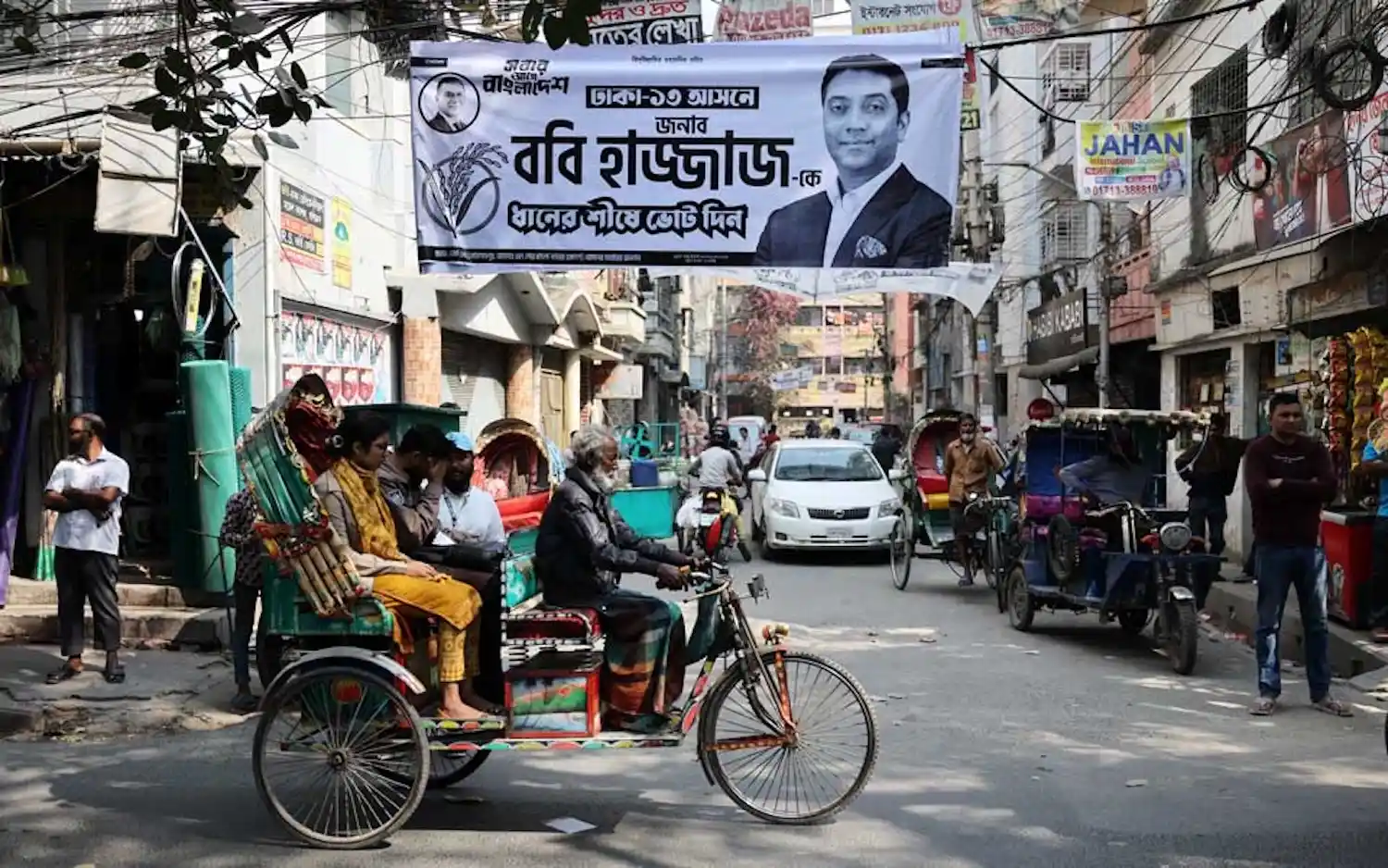
The stark underrepresentation of women in Bangladesh’s parliamentary election stands as a glaring contradiction to the nation’s recent history and the pivotal role women played in its political transformation. As voters, nearly half of them women lined up at polling stations, only about 4% of the roughly 1,981 to 2,000 candidates contesting the 300 directly elected seats were female. Figures from various reports place the number between 76 and 85 women candidates, marking a historic low and a sharp decline from previous elections. This comes despite women’s leading presence in the 2024 student-led uprising that ousted longtime Prime Minister Sheikh Hasina in August 2024, ending her 15-year rule amid widespread protests against autocracy, corruption, and violence.
For over three decades, Bangladesh was an outlier in South Asia and globally, led by women for much of its independent history. Sheikh Hasina (Awami League) and Khaleda Zia (Bangladesh Nationalist Party, BNP) dominated politics, with women prime ministers in power for roughly 32 of the country’s 54 years since independence. Yet this “begum” era masked deeper structural exclusions. Women have rarely contested or won general seats on merit; most female representation has come through the 50 reserved seats allocated proportionally to parties after elections, filled indirectly rather than through direct popular vote. In past elections like 2008 (last widely seen as free and fair), only 19 women won direct seats out of 59 who ran. The pattern persisted: dynastic ties, not broad empowerment, often defined female participation.
The 2024 uprising, sparked by quota reforms in government jobs but escalating into a mass movement against Hasina’s authoritarianism, saw women, students, activists, and ordinary citizens at the forefront. They faced police brutality, endured arrests, and mobilized en masse, contributing to the revolution’s success and the installation of an interim government under Nobel laureate Muhammad Yunus. Many expected this momentum to translate into greater inclusion, especially as youth and reformist voices pushed for democratic renewal.
A key opportunity arose through the July Charter (or July National Charter), a negotiated document from 2025 that outlined reforms and commitments ahead of the election. Among its provisions was a modest, non-binding pledge: political parties should nominate at least 5% women candidates in the upcoming polls, as a step toward eventually reaching 33% representation. This target was criticized by activists as too low but represented a symbolic test of inclusivity post-uprising. Parties that signed on, including major players like the BNP, failed to deliver.
The BNP, positioned as a frontrunner, nominated only around 10 women, roughly 3-4% of its candidates, most linked to male politicians as wives or daughters. Jamaat-e-Islami, a significant Islamist force allied with newer groups, fielded zero women candidates across hundreds of nominations. The student-led National Citizen Party (NCP), born from the uprising, managed just two women among its 30 candidates, barely meeting the 5% threshold in its small slate but drawing criticism for compromising principles in alliances. Over 30 of the 51 registered parties nominated no women at all. Even smaller left-leaning parties showed higher shares in some cases, but they remained marginal.
Several intertwined factors explain this failure. Deep-rooted patriarchal structures in Bangladeshi society and politics persist, viewing leadership as male domain despite high-profile female figures. Parties prioritize “winnability” in competitive first-past-the-post constituencies, often favoring established male networks, local strongmen, or those with financial muscle and patronage power. Women face barriers like harassment, violence (including digital), family opposition, and limited access to party resources or nomination processes. During Charter negotiations, parties rarely included women representatives, signaling exclusion from the start.
The rise of conservative and Islamist-leaning alliances post-2024 has compounded the issue. Jamaat-e-Islami’s zero-women policy reflects ideological views on gender roles, though leaders claim women can participate if they choose. Alliances with such groups have diluted reformist commitments from uprising-era actors. Many young women leaders from the protests feel sidelined, pushed to symbolic roles during the movement but marginalized in post-uprising structures, including the interim government and new parties.
The irony is profound: a revolution driven partly by demands for justice and equality has produced an election where women are more visible as voters (with long lines reported, including burqa-clad women) than as contenders for power. The concurrent referendum on constitutional reforms, including proposals to increase reserved seats for women from 50 to 100 and other gender-related measures, offers a glimmer of hope for structural change, but it cannot substitute for direct electoral inclusion.
This low representation is not inevitable but a choice by parties that prioritized short-term electoral math over the inclusive vision many uprising participants fought for. It risks disillusioning the very youth and women who catalyzed change, undermining the democratic renewal Bangladesh desperately needs. True progress requires binding quotas, party-level reforms to elevate women in decision-making, and cultural shifts to recognize women as leaders beyond dynasties or symbols. Until then, the ballot will reflect not the full potential of Bangladesh’s women, but the persistent grip of patriarchal politics, even after a revolution that proved their power.