
The question isn’t whether AI will transform jobs; it’s already doing so, but whether society, governments, businesses, and individuals are truly ready for the scale and speed of that change.
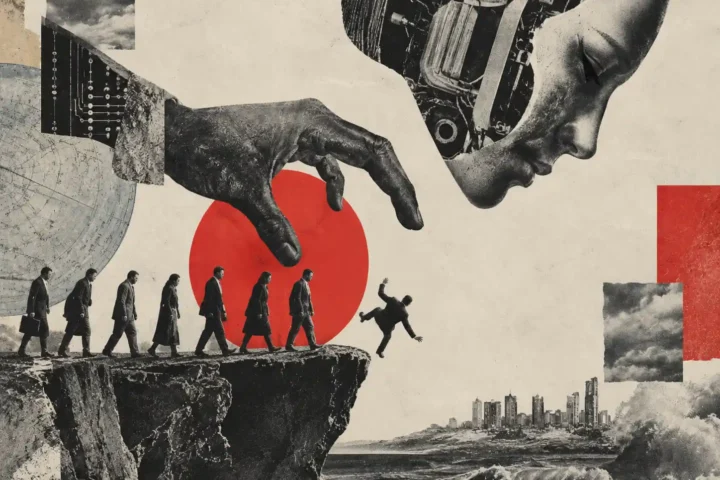
In early 2026, the evidence paints a sobering picture. Tech giants and traditional firms alike have cited AI in layoffs and hiring freezes, even when the tools themselves haven’t fully matured. Companies are preemptively shedding roles in anticipation of what generative and agentic AI might soon handle, from routine analysis to entire workflows. Reports from 2025 documented tens of thousands of AI-linked job cuts in the US alone, contributing to a broader trend where over a million positions vanished across sectors. Young workers, especially those aged 22–25 in AI-exposed fields, have seen employment drop by around 13% in recent years, serving as early warning signals, or “canaries in the coal mine.”
Prominent voices amplify the unease. The CEO of Anthropic warned in 2025 that AI could push unemployment to 10–20% within a few years and eliminate half of entry-level white-collar positions. Leaders at Ford, OpenAI, and others have spoken openly of scenarios where vast swaths of cognitive labor become redundant. The IMF’s managing director described AI’s labor-market impact as arriving “like a tsunami,” with most countries and companies unprepared. An MIT study estimated that AI could already replace about 11.7% of the US workforce in wages, particularly in finance, healthcare, and professional services, far beyond the visible tech-sector cuts.
Yet the picture isn’t uniformly apocalyptic. Some analyses, including from Goldman Sachs and parts of the World Economic Forum’s 2025 Future of Jobs Report, project more modest net effects: temporary unemployment bumps of perhaps half a percentage point during transition, with millions of new roles emerging in AI oversight, data curation, ethics, and human-AI collaboration. PwC’s 2025 AI Jobs Barometer found jobs requiring AI skills growing faster, commanding wage premiums as high as 56% in some cases, and even making workers in automatable roles more valuable when they adapt.
The deeper concern is readiness, not just raw numbers. Historical technological shifts, like mechanization or computing, eventually created more jobs than they destroyed, but they also inflicted decades of pain on displaced communities, widened inequality, and demanded massive societal adjustments. AI differs in pace and scope: it targets cognitive rather than physical labor, hits higher-paid white-collar and entry-level roles hardest, and spreads globally almost instantly.
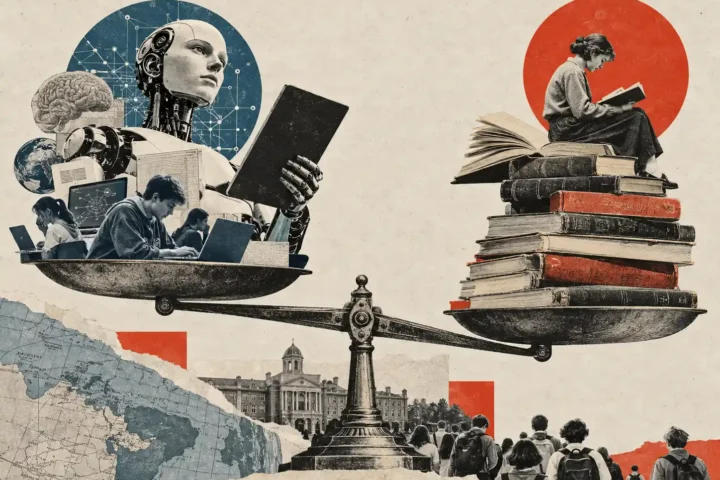
Current responses fall short. Reskilling programs exist, but participation remains low, especially among those most at risk. Education systems still churn out graduates trained for yesterday’s economy, while companies invest billions in AI pilots that rarely scale. Governments debate regulation and safety but rarely match it with robust safety nets, universal retraining funds, or policies that capture AI productivity gains for broad redistribution, through shorter workweeks, wage subsidies, or updated social insurance. Public anxiety is high: polls show over 70% of Americans fear permanent job displacement.
We are not ready.
Preparation would require uncomfortable choices: treating AI as a general-purpose technology deserving of the same societal mobilization once given to wartime economies or the space race. That means:
- Massively scaling affordable, lifelong learning, integrating AI literacy across all fields, not just STEM.
- Redesigning work so humans augment AI rather than compete directly with it, preserving dignity and meaning.
- Experimenting boldly with policies like portable benefits, negative income taxes, or AI-generated wealth funds to buffer transitions.
- Acknowledging that some pain is inevitable, but pretending otherwise only delays the reckoning.
The paradox of our moment is that AI promises abundance, higher productivity, cheaper goods, perhaps even liberation from drudgery, yet it arrives amid stagnating wages for many, lengthening unemployment spells, and a fraying social fabric. If we meet this wave with denial or piecemeal fixes, we risk a future of polarized prosperity: spectacular gains for capital and AI-fluent elites, stagnation or decline for everyone else.
If we confront it with foresight and collective will, we might yet steer toward an economy where technology serves human flourishing rather than rendering large swaths of us obsolete.
The machines are already at work. The real question is whether we will be.