The deepening alliance between India and Israel represents one of the most significant geopolitical shifts in recent decades, transforming a relationship once marked by caution into a robust strategic partnership grounded in shared interests, mutual respect, and tangible benefits. As Indian Prime Minister Narendra Modi undertakes his second state visit to Israel on February 25-26, addressing the Knesset and receiving the inaugural Medal of the Knesset, this moment underscores the enduring strength of ties that serve both nations’ security and prosperity in an uncertain world.
Historically, the connection between India and Israel dates back millennia, with ancient civilizational links through Jewish communities in India that found refuge and thrived for centuries without persecution. Modern diplomatic relations, however, evolved more cautiously. India recognized Israel in 1950, but full diplomatic ties were not established until 1992, following the end of the Cold War and India’s economic liberalization. Earlier, India supported Palestinian statehood and voted against Israel’s UN membership in 1949, reflecting its non-aligned stance and solidarity with Arab nations.
This changed dramatically in the 1990s, with covert cooperation during conflicts like the 1971 Indo-Pakistani War and the 1999 Kargil conflict, where Israel provided critical arms and intelligence. The turning point came under Prime Minister Modi, whose 2017 visit, the first by an Indian premier, upgraded relations to a “strategic partnership.” Today, the bond is multifaceted, encompassing defense, technology, agriculture, and counter-terrorism.
Central to this partnership is defense and security cooperation. Israel has become one of India’s top arms suppliers. According to Stockholm International Peace Research Institute (SIPRI) data for 2020-2024, Israel accounted for approximately 13% of India’s arms imports (third after Russia at 36% and France at 33%), while India represented about 34% of Israel’s total arms exports. Key systems include Barak missiles, Heron drones, air defense technologies, sensors (where Israel holds a significant share of India’s imports), and naval weapons. Bilateral arms trade has surged, with deals often involving technology transfer and joint ventures, such as those with Indian firms like Adani-Elbit and Kalyani Rafael Advanced Systems.
This collaboration addresses shared threats: both nations face terrorism from non-state actors and regional instability. India and Israel cooperate closely on counter-terrorism through mechanisms like the Joint Working Group on Counter Terrorism, with recent meetings reinforcing intelligence-sharing and joint exercises. In a world where terrorism anywhere threatens peace everywhere, as the Indian Prime Minister emphasized in his Knesset address, these ties provide mutual resilience.
Beyond defense, economic and technological synergies drive the relationship. Bilateral trade (excluding military sales) stood at approximately USD 3.62 billion in FY 2024-2025, with negotiations ongoing for a Free Trade Agreement. Israel excels in innovation, cybersecurity, AI, quantum computing, agriculture (drip irrigation benefiting Indian farmers), and water management, while India’s vast market and growing tech ecosystem offer scale. Investments flow both ways, and joint projects in infrastructure and startups highlight complementary strengths.
The strategic importance of this partnership cannot be overstated. For India, Israel provides advanced capabilities to counter threats from Pakistan and China, diversifying along with traditional suppliers like Russia. For Israel, India is a reliable, large-scale partner amid global isolation pressures, especially post the October 7, 2023, Hamas attack and the Gaza conflict. Prime Minister Modi has expressed solidarity, condemning terrorism and standing with Israel “firmly with full conviction,” while supporting Gaza peace initiatives for just and durable solutions.
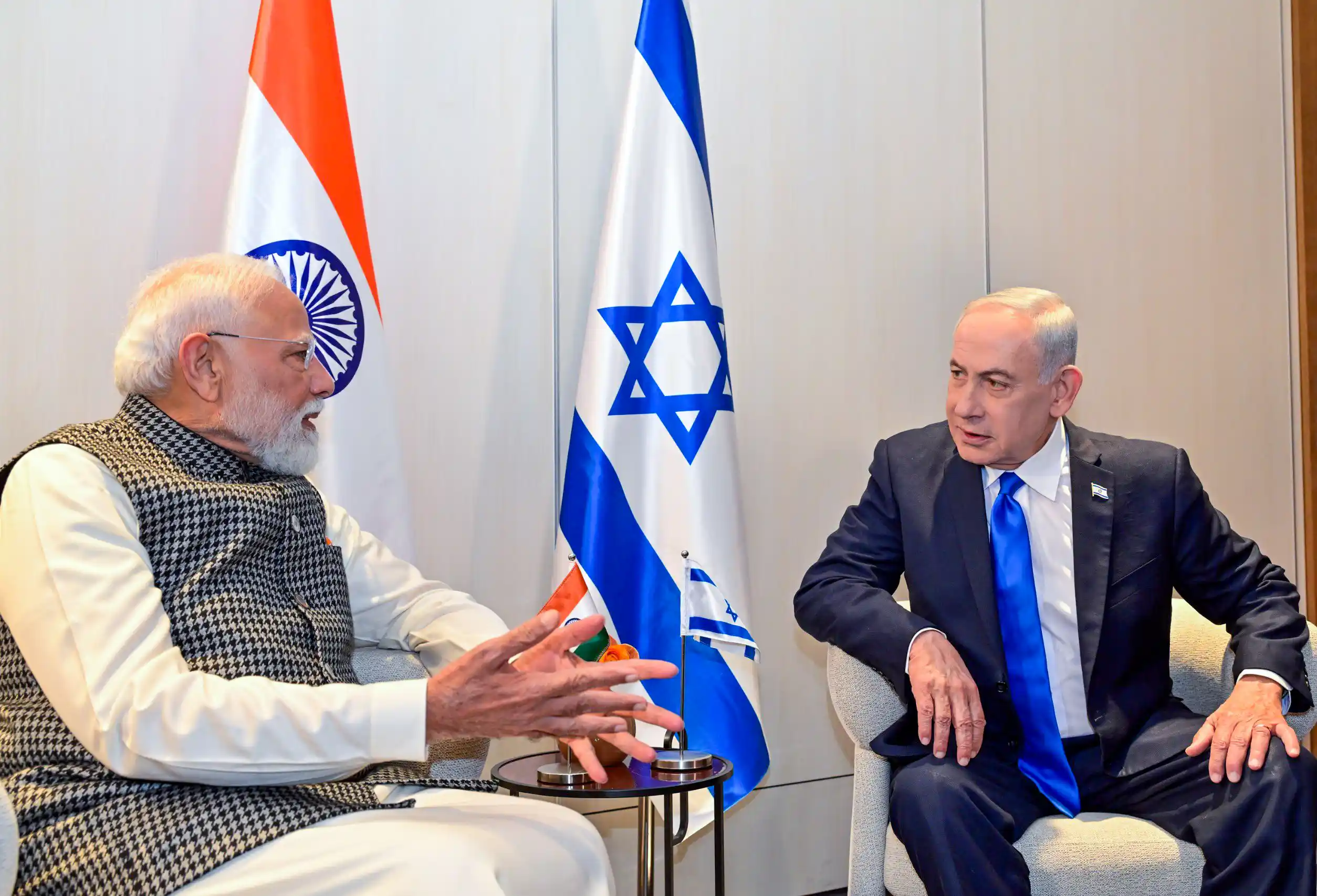
The ongoing 2026 visit exemplifies this evolution. Arriving in Tel Aviv on February 25, the Indian Prime Minister was warmly welcomed by Israeli Prime Minister Benjamin Netanyahu. Highlights include high-level talks on defense, trade, AI, and regional issues; a landmark address to the Knesset, the first by an Indian Prime Minister, he pledged to consolidate ties and received standing ovations; and conferment of the “Medal of the Knesset” (or Speaker’s Medal), the highest parliamentary honor, awarded to him as the inaugural recipient for strengthening bilateral relations. Prime Minister Modi described it as a tribute to the “enduring friendship” between the nations. Additional elements include meetings with President Isaac Herzog, a visit to Yad Vashem, and expected MoUs on economic, security, and technological cooperation. Reports indicate potential defense deals worth billions, further expanding missile, drone, and air defense collaborations.
This visit arrives amid regional tensions, including U.S.-Iran dynamics, yet it reinforces the role of India-Israel ties in stability. No cause justifies civilian killings, he stated in the Knesset, reflecting shared democratic values and commitment to humane security approaches.
The India-Israel partnership, forged through history, accelerated by necessity, and symbolized by Prime Minister Modi’s ongoing visit, transcends bilateral interests. It exemplifies how two democracies, facing existential threats and pursuing innovation, can build a force for global good. This friendship remains a source of strength in an uncertain world, promising continued collaboration for security, prosperity, and peace.