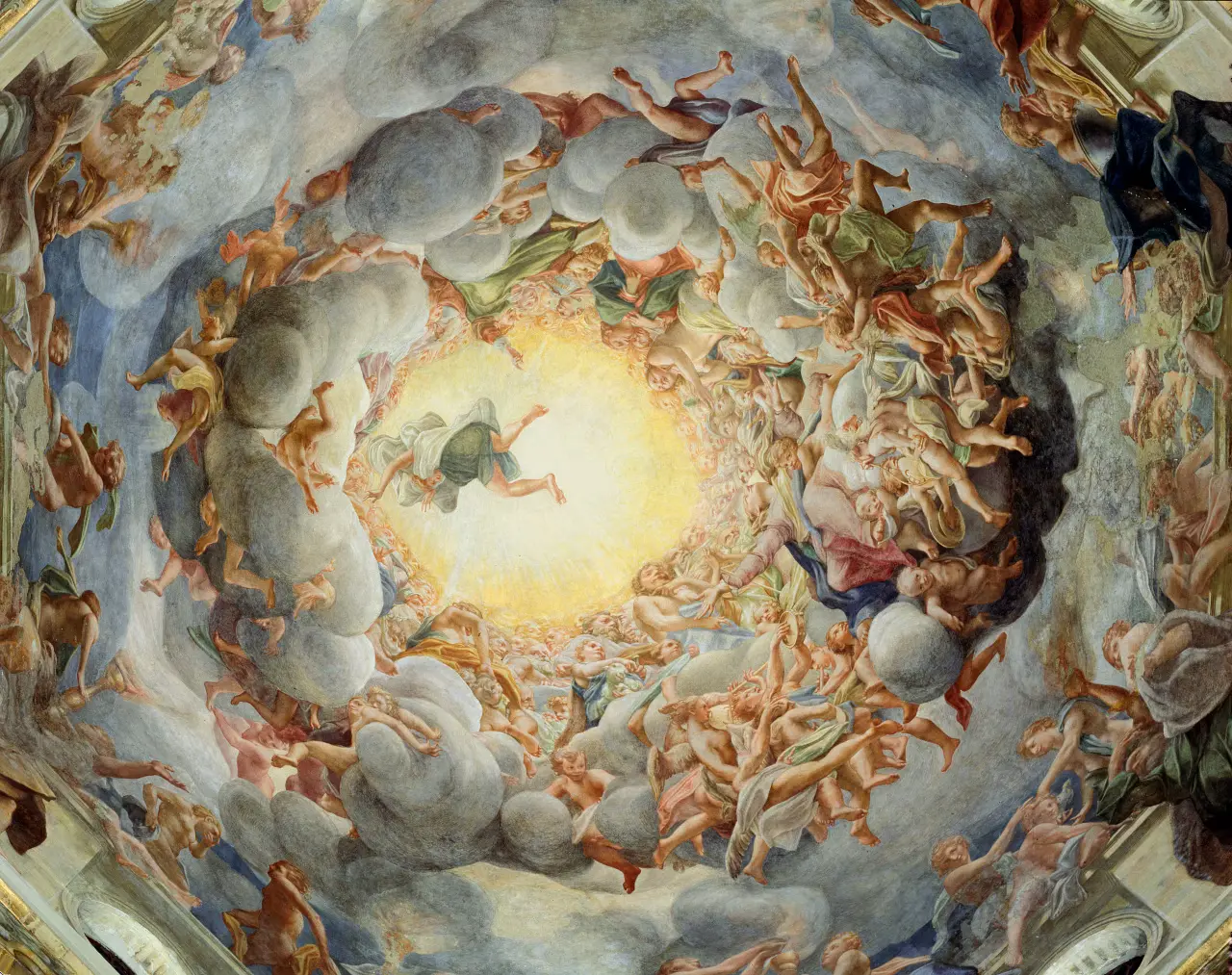
Antonio da Correggio’s fresco in Parma Cathedral’s dome captures the Virgin Mary’s ascent to heaven through a swirling mass of angels, saints, and divine light, revolutionizing Renaissance ceiling painting. Completed in 1530 after an eight-year effort starting with a 1522 contract, this work blends illusionistic techniques with profound Catholic theology amid Reformation tensions. Viewers below experience a dizzying heavenly vortex that dissolves the dome’s architecture into eternity.
Parma Cathedral, a Romanesque jewel from the 11th century, became a canvas for civic pride when local elites commissioned Correggio shortly after papal forces freed the city from French occupation in 1521. The fresco crowned the sacred space, symbolizing Parma’s return to Papal States and affirming doctrines like Mary’s Assumption and Transubstantiation against Protestant challenges. Correggio, born Antonio Allegri in 1489 near Parma, drew from Mantegna’s foreshortening but forged a unique Emilian style, influencing later Baroque masters like Lanfranco.
From the nave, robust Apostles ring the dome’s base in trompe l’oeil ledges, shielding eyes from celestial glare while tending symbolic lamps and censers, evoking discovery of Mary’s empty tomb. The Virgin, in red and blue robes, rises on clouds amid frolicking angels of varying ages, their draperies fluttering in ecstatic motion toward golden light. Extreme di sotto in su perspective—painting from below upward—makes naked limbs and torsos protrude dramatically, turning the flat surface into a sculptural portal to heaven.
Theological Layers and Symbols
Mary embodies the Church, repairing Adam and Eve’s primal sin—Eve offers the apple, Adam confesses—as she ascends to her beardless son, whose exposed youthful form stresses Incarnation and Eucharistic presence above the altar. Saints like John the Baptist, Hilary of Poitiers, Thomas, and Bernard anchor the base, directing gazes upward; higher realms feature Judith with Holofernes’ head among the blessed. This progression mirrors the devotee’s liturgical path: laity sees Mary’s rise for redemption, clergy beholds Christ’s descent consecrating bread into body.
Correggio’s audacious foreshortening shocked contemporaries—18th-century priest Tiraboschi decried “frog leg stew”—yet inspired illusionistic domes from Cignani in Forlì to Bernini-era vaults. Assistants like young Parmigianino aided decorative elements, but Correggio’s vision endures, drawing pilgrims to Parma where the fresco still pulses with spiritual energy. In 2026, amid global faith debates, it reaffirms heaven’s tangible allure, a Renaissance triumph blending motion, light, and doctrine into eternal whirl.