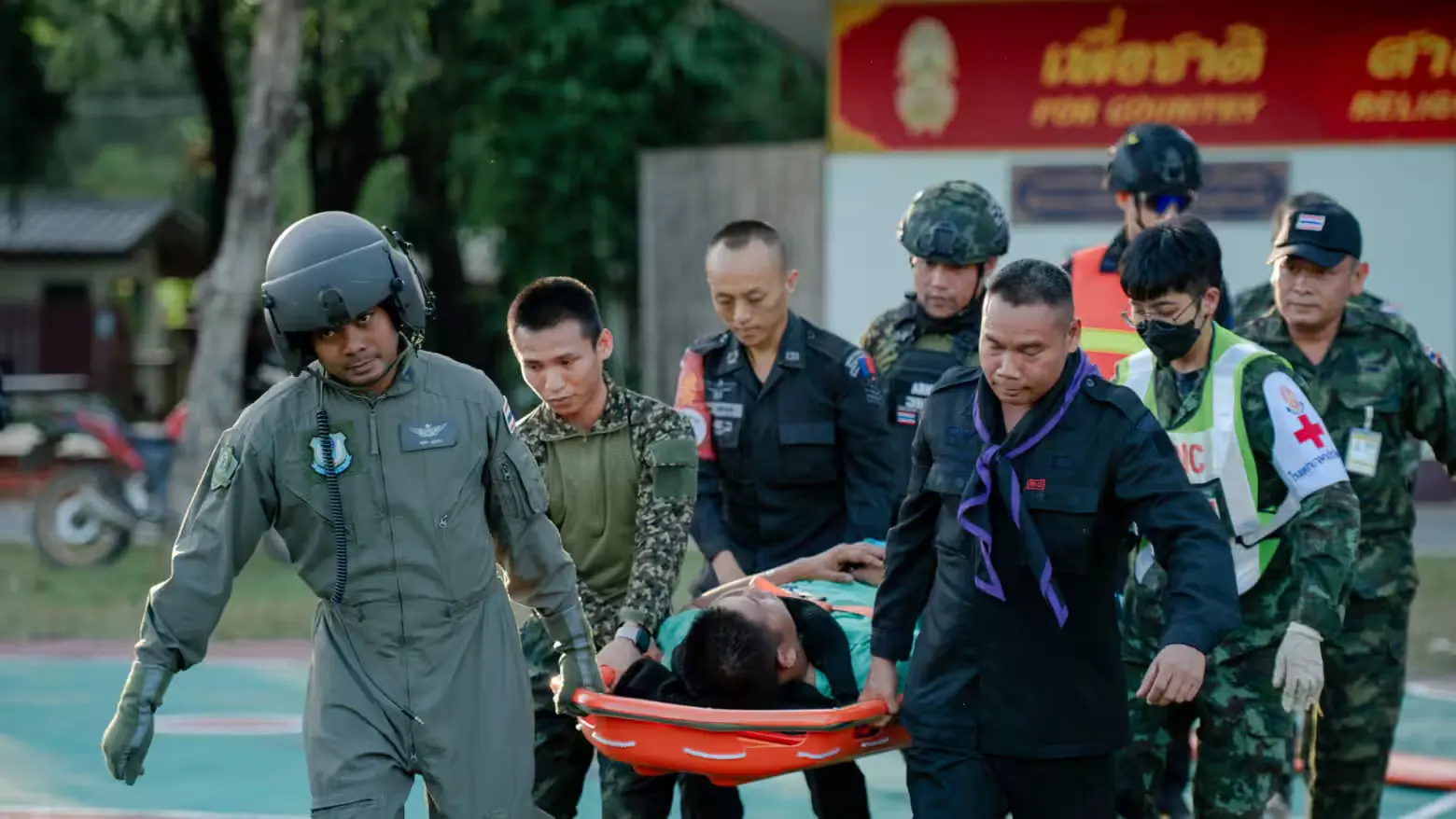
Thailand’s latest airstrikes mark the most serious escalation in its long-running border dispute with Cambodia since the early 2010s, turning what had been intermittent skirmishes into sustained, multi‑theatre combat along a contested frontier. The clashes sit atop decades of nationalist grievance and unresolved cartography centred on ancient temples such as Preah Vihear, now colliding with domestic politics and a faltering, Trump‑brokered ceasefire.
What triggered the latest flare-up?
The immediate trigger for the current round appears to have been deadly exchanges of fire in Thailand’s eastern Ubon Ratchathani province, where Bangkok says Cambodian units used artillery and mortars against Thai positions. Thailand reports at least one soldier killed and several wounded, accusing Cambodian forces of “supporting fire attacks” from across the border and of repositioning heavy weaponry close to Thai territory.
Both governments claim the other fired first, but the escalation pattern is clear: localized clashes in late November, a landmine incident that maimed a Thai soldier, then a Thai decision to suspend implementation of a U.S.-brokered ceasefire, followed by progressively heavier exchanges. Washington’s mediation—prominently involving President Donald Trump—had produced a temporary truce in October, but the underlying dispute over territory and military deployments never fully cooled.
Why Thailand has used air power
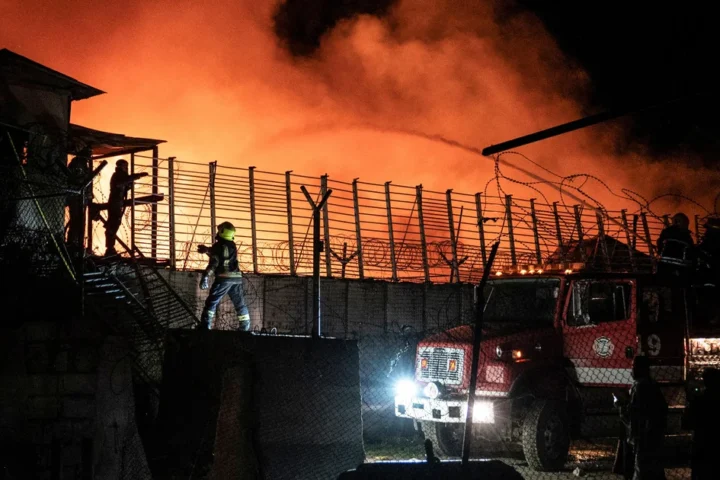
In response to the latest shelling and casualties, the Royal Thai Army and Royal Thai Air Force launched airstrikes against what they describe as strictly military targets on the Cambodian side. Official statements say Thai F‑16s and other aircraft hit ammunition depots, command centres and supply routes assessed as posing an “immediate threat” to Thai bases, especially near the Chong An Ma Pass and other flashpoints along the disputed frontier.
This is significant because it marks a shift from the mostly ground‑based skirmishing seen in earlier border crises to sustained use of air power, something Thailand had not employed in combat since its conflict with Laos in the 1980s. Cambodia accuses Thailand of disproportionate force and of striking near civilian areas, while Thailand insists it has acted within its right to self‑defence, underlining how quickly a tactical decision about force protection can acquire strategic and diplomatic consequences.
The border dispute and temple politics
While the latest deaths and airstrikes are new, the geography of the crisis is not: it is rooted in long‑running disagreements over where exactly the border runs, especially around a cluster of hilltop temples such as Preah Vihear (Khmer) or Phra Vihan (Thai). Colonial‑era maps drawn during French rule over Cambodia conflict with Thai interpretations, creating overlapping claims to a roughly 4.6‑square‑kilometre patch of land surrounding the 11th‑century temple.
The International Court of Justice ruled in 1962 that the temple itself lay in Cambodian territory and, in a 2013 clarification, extended that finding to much of the surrounding land—decisions that remain deeply unpopular among Thai nationalists and sections of the military. Tensions spiked again in 2008 when Cambodia succeeded in listing Preah Vihear as a UNESCO World Heritage Site, a move many Thai protesters cast as a stealth land grab, helping fuel deadly clashes in 2011 and setting the stage for today’s crisis.
From skirmishes to a 2025 crisis
The 2025 crisis has unfolded in stages: the year began with sporadic artillery duels and accusations that Cambodia was firing heavy rockets, such as BM‑21 Grad systems, into Thai territory, prompting counter‑battery fire and reinforcements on both sides. As the dry season advanced, both armies dug in around key passes and temple complexes, with Cambodia reportedly moving tanks and additional infantry into contested sectors while Thailand bolstered border bases and forward observation posts.
External mediation efforts sought to lock in local ceasefires, culminating in a Trump‑backed agreement observed by regional leaders in mid‑2025. But ceasefire monitoring remained thin, and local commanders retained broad discretion; the combination of landmines, poorly demarcated lines, and nationalist media narratives meant even minor incidents risked spiralling, which is essentially what happened in November and December.
Humanitarian impact and civilian risk
As artillery exchanges and airstrikes have widened, border communities on both sides have borne the brunt of the insecurity. Thailand has closed key crossings and urged its nationals working or travelling in Cambodia to evacuate, while Cambodian authorities have moved thousands of villagers away from front‑line districts such as Oddar Meanchey and areas near the so‑called Emerald Triangle.
Reports from humanitarian agencies and local media point to damaged homes, disrupted trade routes, and schools and clinics shuttered along the frontier, although casualty figures among civilians remain relatively low so far compared to earlier conflicts. Both governments face pressure to show resolve, yet each also risks a domestic backlash if the fighting drags on, casualties mount, or evidence emerges of strikes near populated areas or heritage sites.
Regional and international stakes
The clash complicates ASEAN’s longstanding aspiration to keep intra‑regional disputes from escalating into open warfare, especially at a time when the bloc is already strained by crises in Myanmar and the South China Sea. Neighbours such as Vietnam, Laos and Malaysia have an interest in preventing any precedent that might invite external intervention or undermine the principle of peaceful dispute resolution within Southeast Asia.
For the United States, which invested political capital in brokering the now‑shaky ceasefire, the airstrikes are a setback that test its influence with both Bangkok and Phnom Penh. China, meanwhile, maintains close economic and defence ties with Cambodia and a significant footprint in Thailand, giving Beijing leverage but also making it wary of being drawn overtly into a bilateral conflict that could alarm other ASEAN states.
What to watch next
Several variables will determine whether this remains a sharp but contained border war or tips into a broader and more entrenched conflict. The first is whether both sides can re‑establish reliable communication channels at the military and political level—through hotlines, joint border commissions, or renewed third‑party mediation—to prevent small incidents from escalating.
The second is domestic politics: nationalist sentiment in both countries can harden red lines, especially around iconic sites like Preah Vihear, making compromise over patrol patterns, demilitarized pockets, or joint management of temple zones more difficult. Finally, the legal and cartographic dispute has never been fully resolved on the ground despite ICJ rulings; without a mutually accepted demarcation and some confidence‑building presence—whether observers, joint patrols, or buffer arrangements—any ceasefire risks being merely another pause between rounds of fighting.