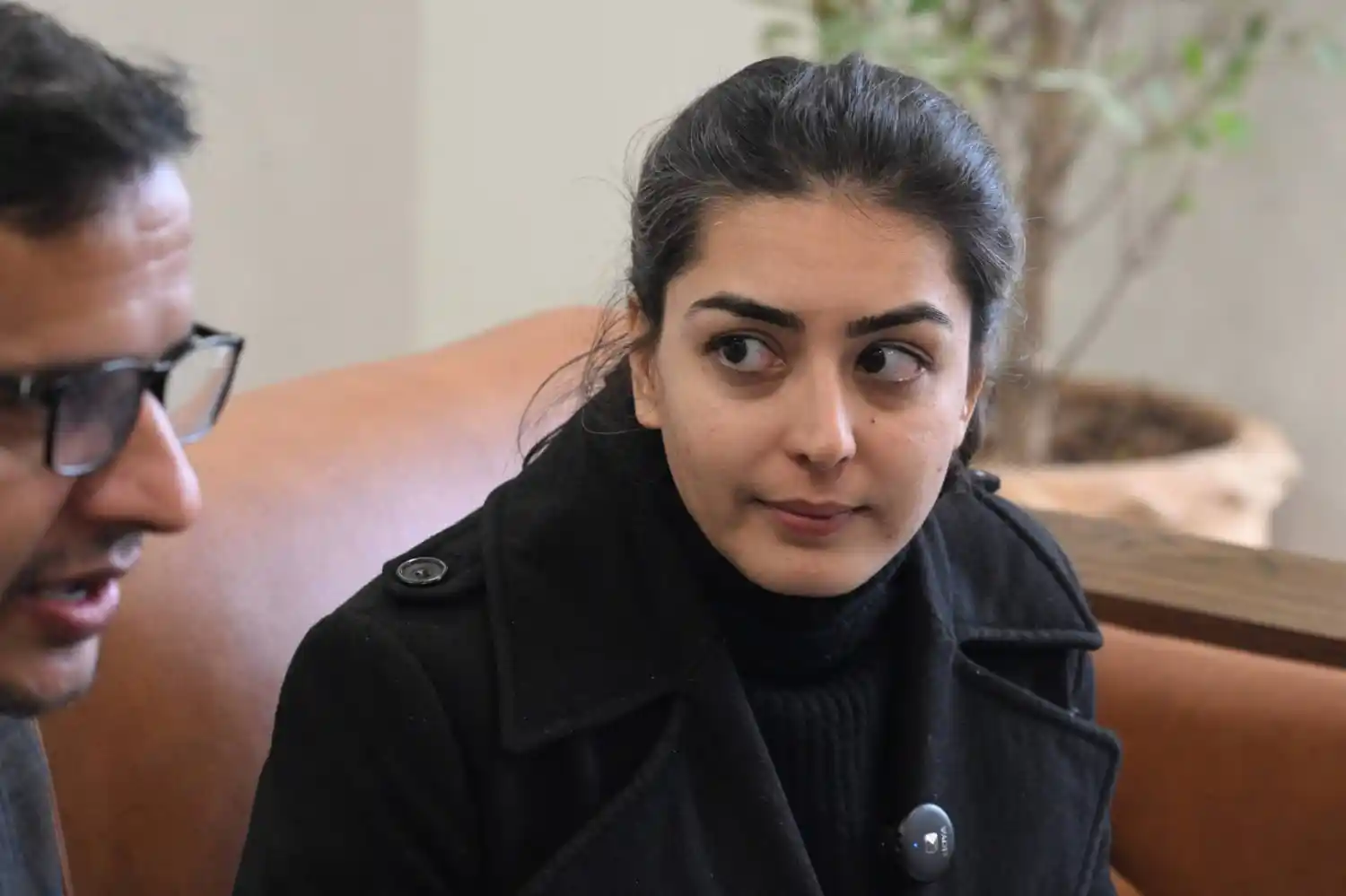
The recent verdict delivered by Judge Afzal Majoka’s sessions court in Islamabad represents a stark and alarming escalation in Pakistan’s crackdown on dissent. Prominent human rights lawyer and activist Imaan Zainab Mazari-Hazir (commonly referred to as Iman Mazari or Imaan Mazari) and her husband, fellow advocate Hadi Ali Chattha, were sentenced to a combined total of 17 years in prison, along with fines exceeding PKR 10-15 million each. This stemmed from a case filed under the Prevention of Electronic Crimes Act (PECA), Pakistan’s controversial cybercrime law, over their social media posts, primarily tweets, that authorities deemed “anti-state,” hostile to security institutions, and supportive of banned groups, including portraying the agenda of the outlawed Baloch separatist movement.
Imaan Mazari wrote this to mark ten years of the APS massacre. Judge Afzal Majoka included it in his judgement sentencing her to 17 years for writing it and Hadi for reposting it.#ReleaseImaanAndHadi pic.twitter.com/dzj4zLo7Aw
— Alifya Sohail (@AlifyaSohail) January 25, 2026
According to court documents and media reports, the couple faced charges under multiple sections of PECA. They each received five-year sentences and PKR 5 million fines under Section 9 (related to offenses against the integrity of Pakistan or incitement), and additional 10-year terms (served concurrently in some accounts, but contributing to the total figure cited) under Section 10 or similar provisions criminalizing propaganda for banned organizations or crossing the “permissible boundary of dissent.” The prosecution argued that Mazari’s tweets over recent years had promoted separatist narratives and criticized state institutions in ways that threatened national security. Critics, including human rights groups, condemned the trial as lacking fair process, with allegations that the right to defense was curtailed and the proceedings rushed without adequate opportunity for rebuttal.
This ruling is not an isolated incident but a dangerous link in a lengthening chain of judicial and state actions aimed at silencing powerful voices advocating for human rights, minority rights, and accountability in Pakistan. Imaan Mazari, daughter of the late prominent lawyer and former minister Shireen Mazari, has long been a vocal critic of enforced disappearances, particularly in Balochistan, military overreach, and violations against marginalized communities. Her work with the Human Rights Commission of Pakistan and independent advocacy has made her a target. The sentencing of such a high-profile lawyer couple, both practicing advocates, signals that even legal professionals are no longer insulated from reprisals for online expression.
Human Rights Council of Pakistan (HRC-Pakistan) strongly condemns the decision by Judge Afzal Majoka's court to sentence prominent human rights lawyers Advocate Iman Mazari and Advocate Hadi Ali Chattha to a total of 17 years in prison and a fine exceeding 30 million rupees in… pic.twitter.com/Taf2K7p4jZ
— Human Rights Council of Pakistan (@HRCPakistan) January 25, 2026
Pakistan’s broader pattern of suppressing free speech is deeply troubling and well-documented. The Prevention of Electronic Crimes Act (PECA), enacted in 2016 and amended multiple times (including controversial expansions in recent years), has become a primary tool for this repression. Originally intended to combat cybercrime, terrorism glorification, and hate speech, it has been widely criticized by organizations like Amnesty International, Human Rights Watch, and local digital rights groups for its vague wording, terms like “anti-state” or “propaganda against the state”, which allow broad interpretation and abuse. Post-2025 amendments have further empowered authorities to pursue cases against journalists and activists.
Recent years have seen a surge in such cases:
- Journalists face routine harassment under PECA. In 2025 alone, Freedom Network Pakistan documented at least 142 violations against media professionals, including arrests, cases, and threats. The Committee to Protect Journalists (CPJ) and others note Pakistan remains one of the most dangerous countries for journalists, with jailings and legal persecution remaining high globally into 2025-2026.
- Specific cases include the ongoing persecution of journalists like Sohrab Barkat, who faces multiple criminal proceedings under cybercrime laws for his reporting. Outspoken journalists have been charged for “defamatory” or “anti-state” social media posts criticizing government policies or institutions.
- In October 2025, Human Rights Watch called for dropping charges against an outspoken journalist targeted under similar laws, highlighting the chilling effect on peaceful expression.
- Beyond media, activists and politicians face parallel crackdowns. The 2023-2025 period saw intensified use of anti-terrorism laws and PECA against supporters of opposition figures like Imran Khan, with thousands arrested for social media activity deemed seditious.
- Enforced disappearances and abductions of Baloch and Pashtun activists often precede or accompany online speech cases, creating a climate of fear where criticism of state policies in sensitive regions like Balochistan is equated with separatism.
This environment has led to self-censorship across society. The Pakistan Federal Union of Journalists (PFUJ) and Council of Pakistan Newspaper Editors (CPNE) reported in 2025-2026 that media faced “extreme punitive actions,” including killings (five journalists in 2025 per CPNE), arrests, and conference disruptions. Global indices reflect the slide: Pakistan ranked near the bottom in press freedom (around 158th out of 180 in recent reports), with Freedom on the Net reports detailing internet controls, content blocking, and surveillance.
#Pakistan: Disturbing news— human rights lawyers @ImaanZHazir and @AdvHadiali have reportedly been convicted and received concurrent 17-year sentences on multiple charges relating to their posts on social media. This conviction comes in the context of alleged violations of their…
— Margaret Satterthwaite (@SRjudgeslawyers) January 24, 2026
The implications of Judge Majoka’s verdict are profound and dangerous for Pakistan’s democracy. By targeting human rights lawyers, who defend the very principles of due process and constitutional rights, the state erodes the independence of the judiciary and the legal profession. When advocates like Mazari and Chattha, who have represented victims of state excesses, are imprisoned for their own speech, it deters others from taking up sensitive cases. This creates a cascading effect: fewer lawyers willing to challenge disappearances, torture, or military actions, leading to unchecked abuses.
Moreover, the harsh sentences, 17 years combined, far exceeding typical terms for similar offenses, appear disproportionate and punitive, intended to intimidate rather than uphold justice. International condemnations have poured in, with groups like Amnesty International urging an end to the “judicial harassment” of the couple as early as January 2026 filings. Local reactions describe the legal system as “dead” or in crisis, with the verdict seen as crossing into outright authoritarianism.
Pakistan stands at a precarious juncture. The weaponization of laws like PECA against dissent not only violates international standards on free expression (Article 19 of the ICCPR, which Pakistan has ratified) but risks further isolating the country diplomatically while fostering domestic instability. True security comes from addressing grievances through dialogue, not silencing critics. The Mazari-Chattha case should serve as a wake-up call: without reversing this trend of criminalizing speech, Pakistan’s claims to constitutional democracy ring increasingly hollow.
In defending free speech, the international community, civil society, and remaining independent voices must amplify these cases, demand fair appeals, and push for PECA reforms that protect rather than suppress. The alternative, a society where tweeting criticism invites years in prison, is a path toward deeper authoritarianism, where powerful voices for human rights are extinguished one verdict at a time.
References and Further Reading
Dawn. (2026, January 25). Day after dramatic arrest, Imaan and Hadi handed jail sentence in controversial social media posts case. https://www.dawn.com/news/1968788
The Express Tribune. (2026, January 25). Imaan Mazari, husband jailed in PECA case. https://tribune.com.pk/story/2588920/imaan-mazari-husband-jailed-in-peca-case
Geo News. (2026, January 25). Imaan Mazari, husband Hadi Chattha sentenced to 17 years in controversial tweets case. https://www.geo.tv/latest/646956-imaan-mazari-husband-hadi-chattha-sentenced-to-10-years-in-controversial-tweets-case
Arab News. (2026, January 25). Pakistan court sentences lawyer couple to 17 years over social media posts. https://www.arabnews.com/node/2630478/pakistan
Reuters. (2026, January 24). Pakistan sentences human rights activist to 17 years over anti-state posts. https://www.reuters.com/world/asia-pacific/pakistan-sentences-human-rights-activist-17-years-over-anti-state-posts-2026-01-24
Jurist. (2026, January 25). Pakistan human rights lawyers Imaan Mazari and Hadi Chattha sentenced to 17 years over social media posts. https://www.jurist.org/news/2026/01/pakistan-human-rights-lawyers-imaan-mazari-and-hadi-chattha-sentenced-to-17-years-over-social-media-posts
Amnesty International. (2026, January 16). Pakistan: Authorities must end judicial harassment of lawyers Imaan Mazari and Hadi Chatta. https://www.amnesty.org/en/latest/news/2026/01/pakistan-authorities-must-end-judicial-harassment-of-lawyers-imaan-mazari-and-hadi-chatta
Human Rights Watch. (2025, January 16). Pakistan: New government cracks down on free expression. https://www.hrw.org/news/2025/01/16/pakistan-new-government-cracks-down-free-expression
Human Rights Watch. (2025). World Report 2025: Pakistan. https://www.hrw.org/world-report/2025/country-chapters/pakistan
Human Rights Watch. (2025, February 3). Pakistan: Repeal amendment to draconian cyber law. https://www.hrw.org/news/2025/02/03/pakistan-repeal-amendment-draconian-cyber-law
Freedom Network Pakistan. (2025, October 29). From bad to worse: 60% increase in violations against media in Pakistan during last one year. https://www.fnpk.org/from-bad-to-worse-60-increase-in-violations-against-media-in-pakistan-during-last-one-year