The striking thing about the new U.S. military “front” in Ecuador is not that Washington cares about narcotics, every administration says it does, but that the Trump administration is increasingly treating disparate theatres as one problem set: security threats to be met with visible force, fast timelines, and maximal political signaling. The pattern looks less like a single doctrine than a convergence of incentives, domestic politics, deterrence messaging, and bureaucratic momentum that rewards escalation in multiple places at once.
Ecuador is being framed as war, not policing
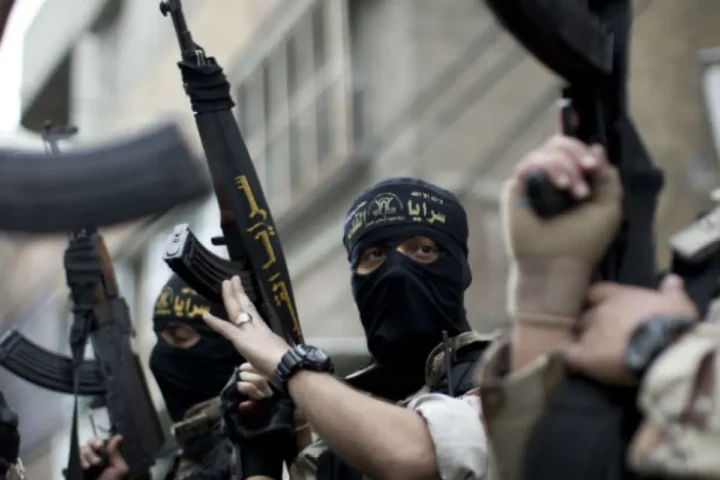
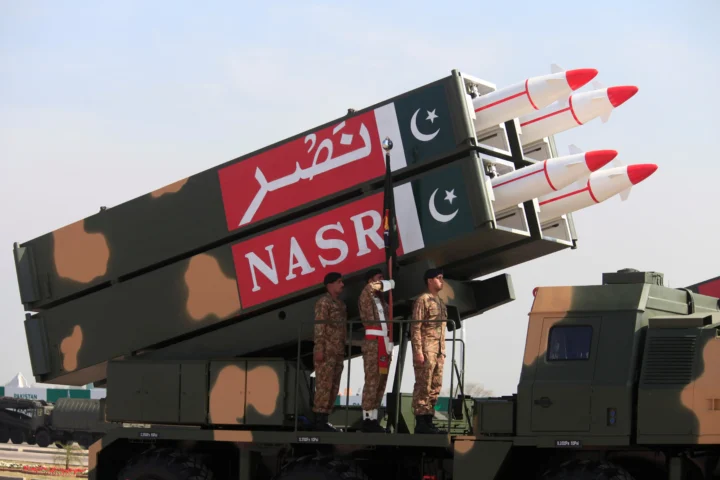
On March 3, the Pentagon said U.S. and Ecuadorian forces had launched operations against “designated terrorist organizations” in Ecuador, with U.S. Special Forces advising and supporting Ecuadorian commandos on raids while not directly conducting the raids themselves. CNN described it as a “new front” and linked it to a broader U.S. campaign, reported as “Operation Spear”, that has involved strikes on suspected drug vessels in the Caribbean and eastern Pacific.
That wording matters because calling cartels “terrorists” is not just rhetoric; it is a legal and political move that can widen the menu of tools (intelligence authorities, sanctions posture, operational tempo) available to the U.S. government. It also allows the White House to present cross-border security activity as a form of wartime defense rather than a slow, legally constrained law-enforcement grind that rarely produces headline results.
Venezuela showed the ceiling has moved
Two months ago, the United States demonstrated how far it is now willing to go in the hemisphere: on Jan. 3, it launched strikes in Venezuela and captured President Nicolás Maduro and his wife, Cilia Flores, in an operation Wikipedia identifies as “Operation Absolute Resolve.” According to that account, U.S. forces bombed infrastructure across northern Venezuela to suppress air defenses while an apprehension force attacked Maduro’s compound in Caracas, then flew Maduro and Flores to New York City.
Whether one accepts every tactical detail in secondary summaries, the strategic signal is unambiguous: this White House is willing to use overt military power against a sitting head of state in Latin America and present it as decisive law-and-order statecraft. Once that ceiling rises, Ecuador becomes easier to sell as continuity: “we already acted in Venezuela; now we are acting against narco-terrorists in Ecuador.”
Iran illustrates the same escalation logic
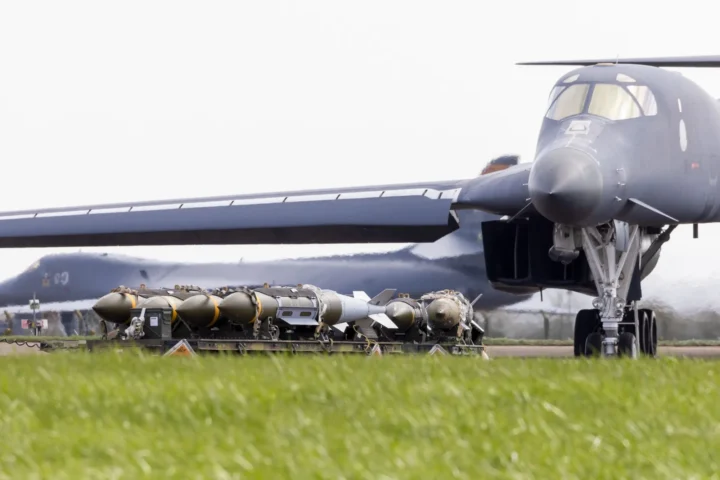
In the Middle East, Reuters reported in mid-February that U.S. military preparations pointed to potentially weeks-long operations against Iran, alongside deployments including an additional aircraft carrier and thousands of troops, plus air and naval assets. That reporting also underlined the central risk: Iranian retaliation against U.S. military installations across a region where the United States has extensive basing and presence.
A separate public narrative has framed the Iran campaign in maximal terms, destroying Iran’s capabilities, preventing a nuclear weapon, and even pursuing regime change. Big aims paired with short timelines create structural pressure for visible escalation: if your objectives are sweeping and your clock is ticking, every incremental step looks insufficient, so you reach for larger, louder actions.
Why “turning up the heat” everywhere can make political sense
There are three fact-patterns in the public record that help explain why escalation can appear simultaneous across theatres, even if the underlying causes differ.
First, the administration is repeatedly choosing frames that convert messy problems into “enemy” problems: drug trafficking becomes “narco-terrorism” in Ecuador, and Iran is treated not as a bargaining adversary but as an imminent military threat requiring “major combat operations,” in the language attributed to the president in public accounts. That framing encourages a common template, force, raids, strikes, captures, regardless of whether the operating environment is a jungle transit corridor or a missile-saturated state.
Second, visible operations create leverage even when they don’t “solve” the problem: raids and maritime strikes can demonstrate momentum, capture media cycles, and warn adversaries (and allies) that Washington will act. Reuters’ account of major asset movements toward the Middle East also fits this logic: deployments are both military preparation and diplomatic pressure.
Third, bureaucracies like repeatable playbooks because they reduce uncertainty: advising partner commandos, sharing intelligence, providing logistics, and showcasing short video clips of action are scalable tools, easy to extend from one country to another with modest political cost, until something goes wrong. The Southern Command video described in reporting is almost a template for modern signaling: a brief, deniable-yet-undeniable vignette that says “we’re involved” without disclosing details.
The risk: one escalation can validate the next
When Washington normalizes cross-border force against non-state targets in Ecuador while having recently used force in Venezuela and prepared major operations against Iran, it risks creating a self-reinforcing cycle: each operation becomes precedent for the next. The more the U.S. leans on military instruments for problems that are ultimately political, cartel governance, state legitimacy, and regional alliances, the more it invites adversaries to respond asymmetrically, especially in places where U.S. troops and bases are exposed.
In Ecuador specifically, the U.S. emphasis on advising/supporting rather than leading raids is likely designed to reduce blowback and keep the mission politically defensible if casualties mount or sovereignty concerns flare. But the “terrorist organizations” label and the broader maritime-strike context described by CNN signal that Washington is not trying to shrink its role; it is trying to make a wider campaign feel coherent.
The hard question is whether coherence is the point or the byproduct. If the administration’s incentives reward demonstrations of strength across multiple fronts, then Iran, Venezuela, and Ecuador can start to look like chapters in one story even when the causes are unrelated: a presidency proving it can impose outcomes quickly, and a national-security apparatus adapting to that demand.