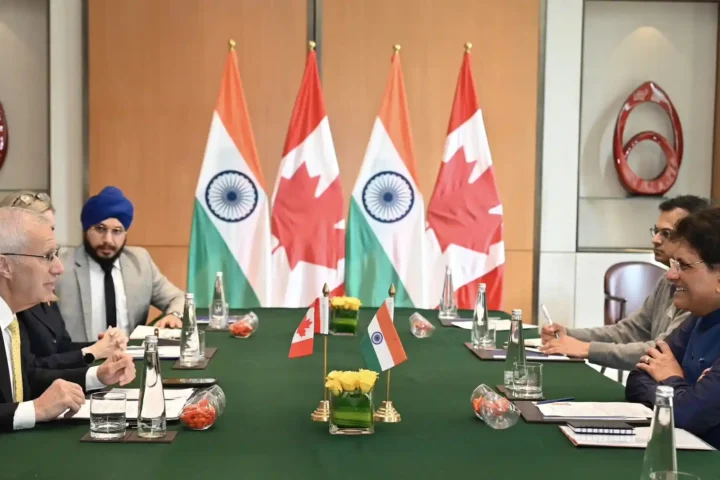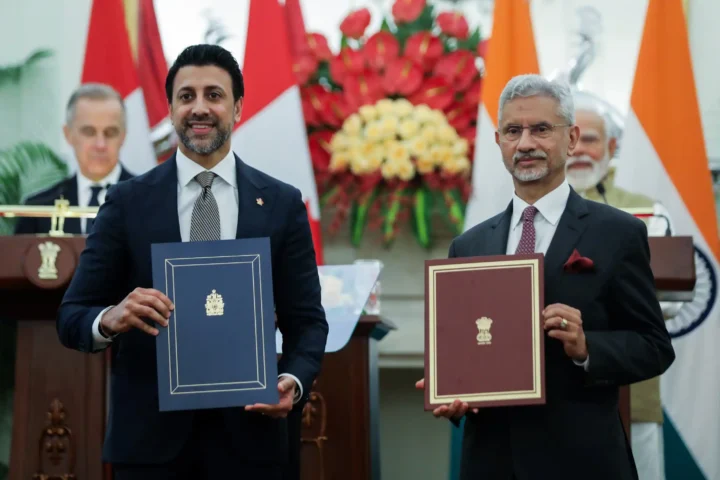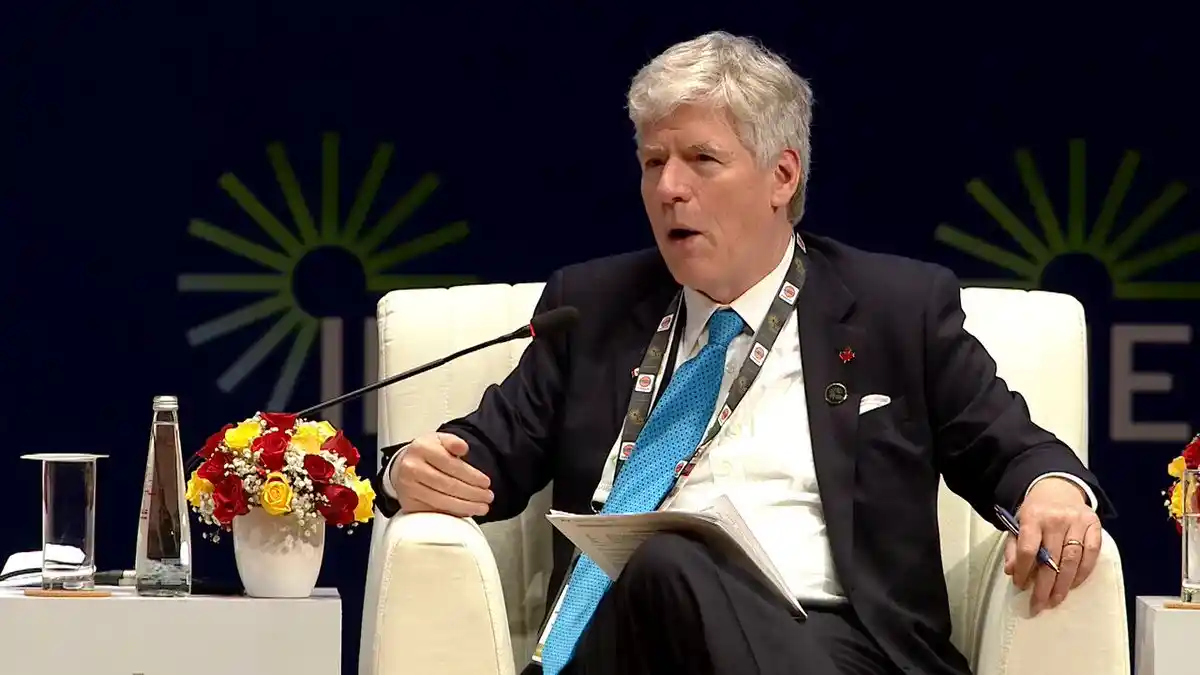
Canada’s Energy Minister Tim Hodgson made a high-profile appearance at India Energy Week in Goa, India, in late January 2026, marking the first time a Canadian cabinet minister has attended the event. There, he pitched Canada as a dependable supplier of crude oil, liquefied natural gas (LNG), liquefied petroleum gas (LPG), and other resources to help fuel India’s rapidly expanding economy. The visit culminated in a joint statement with India’s Ministry of Petroleum and Natural Gas, recommitting both sides to deepen bilateral energy trade and cooperation.
This development underscores India’s deliberate multi-alignment strategy in energy sourcing, maintaining strong ties with traditional suppliers while actively cultivating new partnerships. India currently imports crude oil from the U.S, Russia, and Middle Eastern nations. Adding Canada to the mix enhances supply diversity without displacing established relationships, including those with the U.S.
Back in Canada after India Energy Week and grateful for the opportunity to connect with Indian industry and ministers across oil and gas, critical minerals, and renewables.
— Tim Hodgson (@timhodgsonmt) January 30, 2026
Together, we laid the groundwork for deeper Canada–India energy trade through a reimagined partnership… pic.twitter.com/WrAfVH8UqL
India’s energy demand continues to surge, making it the world’s fastest-growing major economy. The country imported roughly 4.9 million barrels per day of crude in 2025, meeting about 89% of its needs through overseas purchases. Russian supplies accounted for around 33-35% of imports over the year, though volumes dipped in December 2025 to their lowest in two years amid tighter Western sanctions, allowing OPEC’s share to climb to 50%. U.S. crude has also gained ground, with imports rising sharply in parts of 2025.
Natural gas consumption is expanding even faster, driven by efforts to raise its share in the primary energy mix from about 6% today to 15% by 2030. LNG imports reached approximately 25.5 million metric tons in 2025, with forecasts pointing to 28-29 million tons in 2026 as new capacity comes online and demand rebounds in Asia. India’s overall gas needs are projected to grow substantially, with the International Energy Agency estimating consumption could reach 103 billion cubic meters annually by 2030, nearly 60% higher than in 2023, requiring LNG imports to more than double.
Canada, the world’s fourth-largest oil producer with output around 5 million barrels per day, is eager to expand beyond its overwhelming reliance on the United States, which absorbs about 96% of its exports. The completion of the Trans Mountain Expansion pipeline in 2024 has opened new tidewater access on the West Coast, enabling shipments to Asia-Pacific markets. Canadian crude exports to the region have accelerated, with India receiving modest but growing volumes, around 84,000 barrels per day of Canadian-origin crude in 2025, often re-exported via U.S. Gulf Coast terminals, up 52% from the prior year.
Canada’s path to becoming an energy superpower runs through India, said Energy Minister Tim Hodgson, noting that Indian refiners are seeking more Canadian crude as Ottawa looks to roughly double bilateral trade with the fast-growing economy by 2030.https://t.co/uRfJLqlzyk
— Heather Exner-Pirot (@ExnerPirot) January 30, 2026
The joint statement from the Goa meeting commits both countries to reciprocal flows: Canada supplying more crude, LNG, and LPG to India, while India explores exporting refined products back to Canada. It also highlights potential collaboration on critical minerals and clean technologies, aligning with India’s energy transition goals.
For India’s oil and gas sector, the partnership offers tangible advantages. Diversifying suppliers mitigates risks from geopolitical disruptions, price volatility, and sanctions pressures on any single source. Canadian heavy crudes, such as Western Canadian Select and Cold Lake, match the sour grades many Indian refineries are configured to process efficiently, similar to those from Venezuela or the Middle East. With Canadian production set to rise to record levels in 2026, steady supplies could help stabilize import costs over the long term.
In LNG, Canada’s emerging export capacity, bolstered by projects ramping up since mid-2025, positions it to compete in Asia. Shorter shipping routes compared to some U.S. Gulf suppliers could improve economics, especially as global LNG supply surges and prices moderate. India’s appetite for gas in power generation, industry, and city distribution networks makes reliable, long-term contracts appealing.
Economically, the bilateral relationship has room to expand significantly. Two-way goods trade stood at C$13.3 billion (about US$9.7 billion) in 2024, with energy forming a growing component. Analysts see potential for energy trade to contribute substantially more, supporting job creation in logistics, refining, and related infrastructure in both nations.
The U.S. continues to play a vital role in India’s energy security. American crude imports have increased markedly in recent years, providing light, sweet grades that complement heavier imports and help refiners optimize yields. Any deepening of Canada-India ties complements rather than competes with U.S. supplies, reinforcing India’s multi-sourcing approach amid a complex global landscape.
Challenges remain. Logistical hurdles, longer trans-Pacific voyages compared to Middle Eastern routes, could add costs, though pipeline access and scale may offset this over time. Compatibility of Canadian grades with existing refineries requires some evaluation, and broader trade normalization will depend on sustained diplomatic momentum following recent bilateral resets.
Still, the Goa pitch signals a pragmatic step forward. As Minister Hodgson noted, India’s demand growth is among the world’s strongest, offering Canada a strategic outlet while providing India with another reliable, non-coercive partner. In an era of supply-chain resilience and energy security priorities, such alignments benefit both sides.
This collaboration fits neatly into India’s broader multi-alignment playbook: engaging diverse producers to ensure affordable, uninterrupted flows that support economic expansion and industrial ambitions. With global demand shifts accelerating, partnerships like this one position India to navigate volatility more effectively while advancing toward its energy-mix targets.