When the Middle East teeters on the brink, commentators reflexively predict a Sino‑Iranian axis taking shape against the West. But that’s a mirage. For all the talk of “strategic partnership” and anti‑American solidarity, Beijing treats Tehran less like an ally and more like a risky commodity supplier, one useful for energy diversification and diplomatic leverage, but ultimately expendable.
China won’t bail out Iran. It was never intended to. The relationship is transactional, not ideological. What Beijing wants from Iran is oil, access, and a modicum of regional stability, not entanglement in Tehran’s battles or protection of its regime.
Energy, Not Ideology
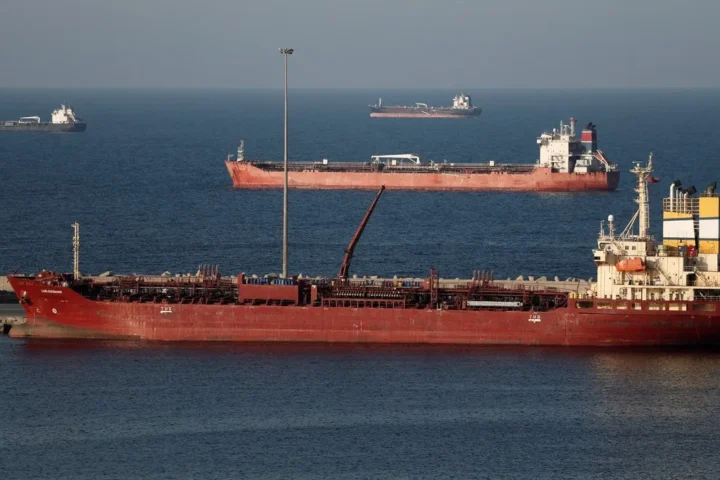
China’s engagement with Iran has always revolved around energy security. Iran supplies roughly 7–10 percent of Beijing’s crude imports, routed clandestinely through re‑flagged tankers and intermediaries to avoid U.S. sanctions. For a country whose domestic oil production peaked long ago, this flow matters. But it’s not irreplaceable. Beijing maintains diversified supply lines from Saudi Arabia, Russia, Iraq, and even Brazil.
What Iran offers is discount oil, not geo‑strategic depth. Each time tensions flare, whether it’s a confrontation in the Strait of Hormuz or an Israeli strike on Iranian assets, Chinese traders quietly hedge their exposure and turn to other suppliers. Beijing’s energy bureaucracy, unlike its diplomacy, is ruthlessly pragmatic.
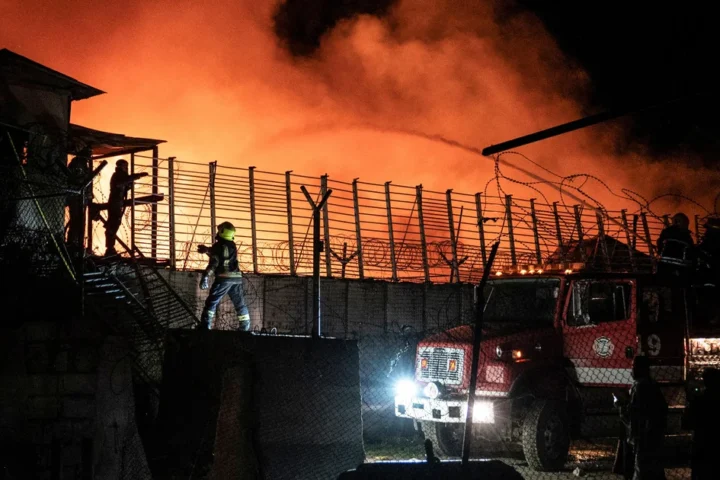
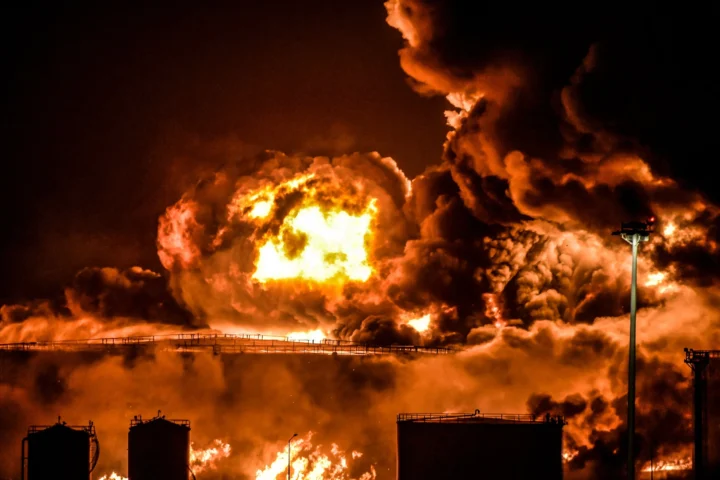
This calculus explains China’s studied neutrality. During the recent missile exchange between Iran and Israel, Beijing issued the same boilerplate call for “restraint from all parties.” It neither defended Tehran’s action nor condemned the Israeli response. The message to both sides was clear: don’t disrupt the oil market. Stability, not solidarity, drives China’s regional diplomacy.
Sanctions Fatigue and Risk Management
Chinese traders have mastered sanctions evasion, but that does not mean Beijing endorses Iran’s defiance. On the contrary, Chinese companies complain about the growing difficulty of converting payments from Bank Melli or shipping through sanctioned ports like Bandar Abbas. Back in 2010, when Washington threatened to restrict access to the U.S. financial system, China’s state firms like CNPC and Sinopec quietly froze new investments. A decade later, they’ve learned to buy Iranian oil through opaque channels, but steer clear of infrastructure projects or defense contracts that could trigger secondary sanctions.
If the Iranian regime suddenly faced a financial collapse, Beijing wouldn’t rescue it with fresh credit or military aid. It would protect its own assets, delay payments, and relocate energy contracts to safer jurisdictions. In China’s hierarchy of interests, avoiding exposure to U.S. sanctions trumps ideological posturing about “the Global South” every time.
The contrast with Russia is instructive. Beijing perceives Moscow as a peer power capable of absorbing sanctions and contributing to Chinese security objectives in Eurasia. Iran, by comparison, is a middleweight economy under perpetual stress, too isolated to offer investment, too volatile to stabilize. That asymmetry means the partnership will always remain tactical.
The “Comprehensive Cooperation” Mirage
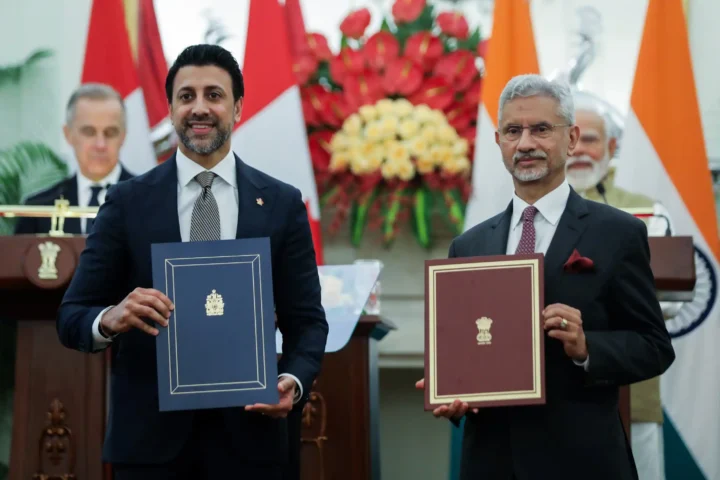
When China and Iran signed their 25‑year “Comprehensive Strategic Partnership” agreement in 2021, state‑controlled media in Tehran hailed it as a historic breakthrough, a blueprint for $400 billion in Chinese investment. Five years later, little of that materialized. Beyond token energy contracts, Beijing refrained from pouring money into Iranian ports, refineries, or rail lines, wary of Washington’s reaction and Tehran’s opaque regulatory environment.
Iranian officials blame Chinese caution; Chinese analysts blame Iranian mismanagement and corruption. Both are right. Beijing’s development model thrives on predictability and legal assurances, neither of which Iran offers. Unlike the Belt and Road projects in Pakistan or the Gulf, Iran’s political risks outweigh any strategic reward.
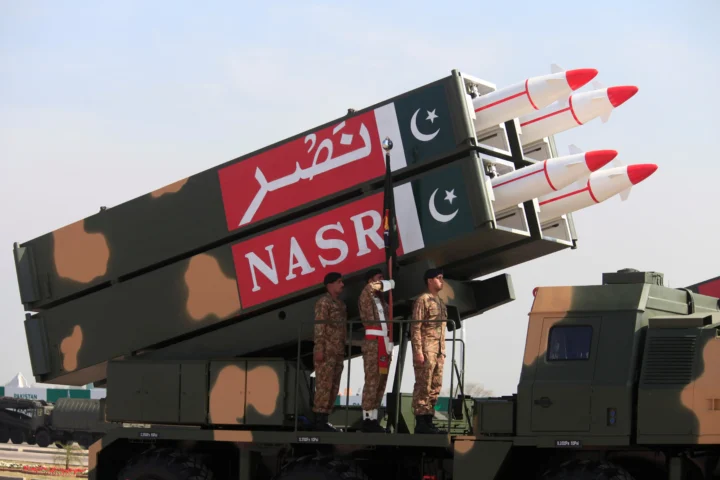
Even in defense cooperation, the gap between rhetoric and reality is vast. China sells drones and dual‑use components through third parties but refuses to supply advanced missile technology or ballistic systems that could inflame U.S. or Saudi suspicions. The partnership stops where risk begins.
Gulf Balancing Act
China’s rejection of Iranian exceptionalism becomes clearer when viewed through its relationships with Tehran’s rivals. During the same period, it inked the 25‑year plan with Iran, and Beijing deepened economic integration with Saudi Arabia and the United Arab Emirates. Chinese firms are building smart‑city projects in NEOM, Huawei is rolling out 5G networks across the Gulf, and the Bank of China now operates branches in Riyadh.
Beijing’s diplomatic coup in 2023, mediating the Saudi‑Iran rapprochement, illustrates its true objective: to position itself as a balancing power, not a backer of one side. That agreement was less about endorsing Iran than about creating a stable oil market and a predictable environment for Chinese trade.
The Gulf monarchies, flush with capital and geopolitical weight, represent Beijing’s preferred partners. They invest in Chinese green‑energy ventures, buy surveillance technology, and offer secure logistics hubs for Belt and Road shipping. Iran offers discounted crude and diplomatic headaches.
Ideology Has No Market Value
Iran’s leaders routinely invoke “civilizational partnership” and “multipolar resistance.” Chinese officials nod politely and change the subject to trade. Beijing’s foreign policy lexicon is devoid of revolutionary zeal. The Communist Party sees religious or ideological movements as destabilizing forces, precisely the kind it suppresses at home. To Chinese strategists, Tehran’s revolutionary theocracy isn’t an asset but a liability.
This mindset explains why Beijing abstained from offering Iran significant support after the 2020 assassination of Qasem Soleimani, the 2022 unrest over Mahsa Amini, or the more recent crackdown on anti‑regime protests. China doesn’t pick fights it can’t monetize, nor does it attach itself to governments that might fall.
The ideological distance shows up in public diplomacy. Chinese state media rarely mention Iran except in the context of energy flows or trade statistics. There’s no cultural outreach, no popular narrative of solidarity, no equivalent to the “Russia‑China friendship” rhetoric. The relationship exists on spreadsheets, not in hearts and minds.
Pragmatism Over Partnership
Should war break out, for instance, if Israel or the U.S. targets Iranian nuclear facilities, Beijing’s reaction would be calibrated, not committed. It would condemn unilateral strikes yet avoid material support. It might exploit the crisis to buy oil at a steeper discount or propose multilateral talks under the Shanghai Cooperation Organisation banner, burnishing its image as a peace broker. But it wouldn’t defend Iran.
China’s leaders understand that open alignment with Iran risks jeopardizing ties with the West, the Gulf, and even Russia, whose energy exports directly compete with Tehran’s. In the global energy market, loyalty costs more than it pays.
Transactional, Not Parternship
For all the speculation about a Beijing‑Tehran axis, the relationship remains shallow, defined by trade flows and transactional diplomacy. China needs Iranian oil, but it doesn’t need Iran’s defiance. It values stability over solidarity, markets over regimes, and pragmatism over revolution.
If Iran ever faces existential pressure from the U.S. or Israel, Beijing will counsel restraint, call for dialogue, and quietly load its tankers. But it won’t send money, weapons, or guarantees. Because in Beijing’s worldview, partnerships are measured not by ideology or history, but by what ends up in the barrels.