The recent detention of Columbia University senior Ellie Aghayeva by ICE agents, who allegedly posed as searchers for a missing child to enter her dorm, exposes cracks in America’s higher education immigration defenses. This incident, unfolding on February 26th, in a university-owned residence hall, revives tensions from 2025 pro-Palestinian protests where students like Mahmoud Khalil faced arrest and deportation threats. As President Trump’s administration ramps up visa revocations—citing old violations or activism—campuses must rethink their “playbooks” for shielding international students, who comprise over a million enrollees fueling U.S. innovation.
Agents from the Department of Homeland Security (DHS) entered Columbia’s housing around 6:30 a.m., flashing images of a supposed missing five-year-old to bypass protocols, according to Acting President Claire Shipman. Despite a campus security officer demanding a warrant, they detained Aghayeva, an Azerbaijani neuroscience major whose F-1 visa was revoked in 2016 for alleged non-attendance under Obama-era rules. DHS countered that officers identified themselves verbally, badges visible, and gained consensual entry via the building manager and roommate; Aghayeva, labeled an “illegal alien,” was released hours later after New York City Mayor Mamdani’s meeting with Trump.
This mirrors 2025 cases: Palestinian activist Khalil, a green card holder and protest leader, was handcuffed in his Columbia apartment, accused of Hamas ties despite no charges, and shuttled to Louisiana before court-ordered release. A second Palestinian student, “Kordia,” followed, amid threats to Columbia’s federal funding. Senator Marco Rubio boasted of revoking 300+ visas, targeting “pro-Hamas thugs,” while Tufts and Alabama saw similar plainclothes raids on masked agents. Universities report ICE memos allowing warrantless administrative arrests in residences, shifting from judicial oversight.
Campuses’ Fractured Responses
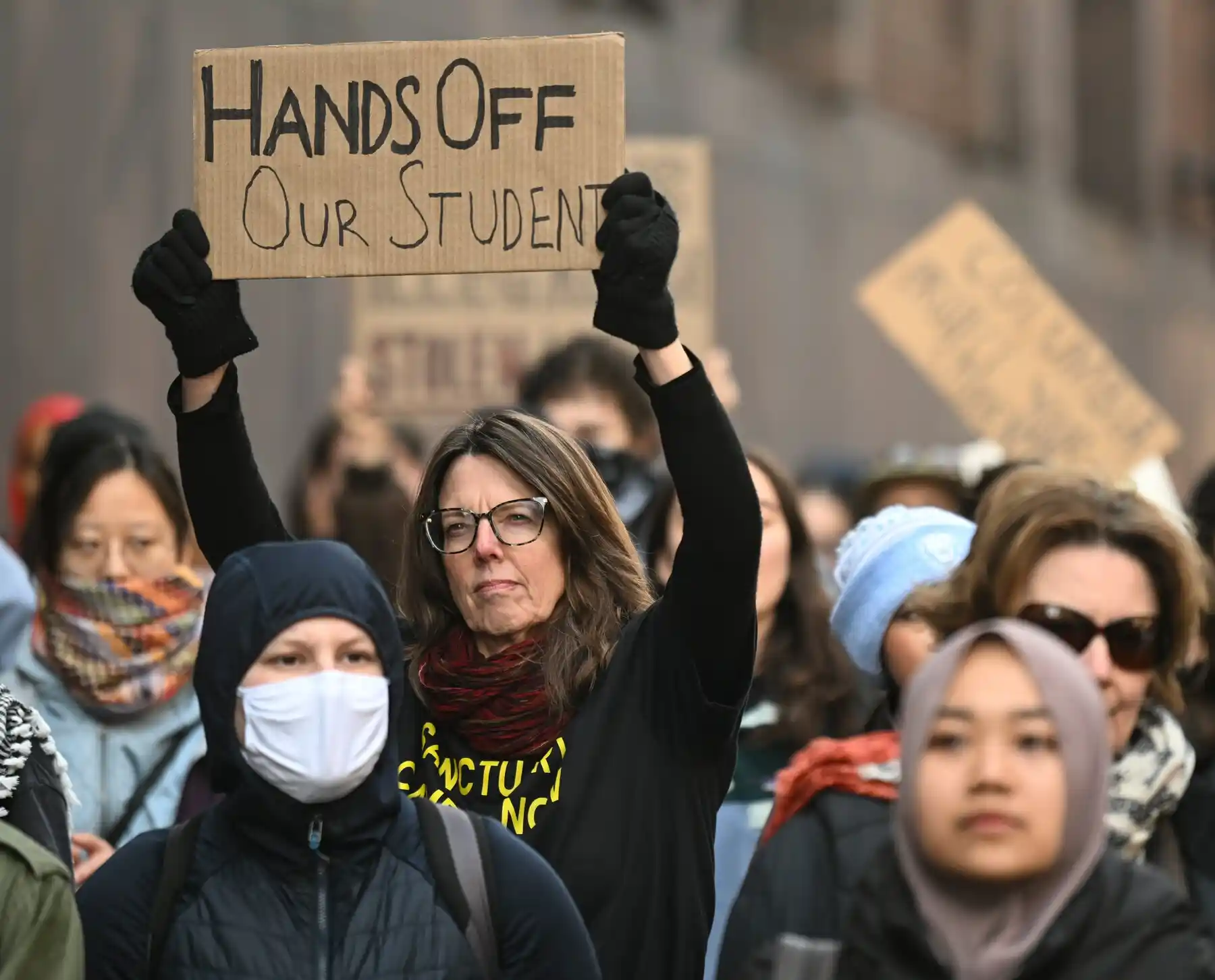
Columbia swiftly condemned the “outrageous” ruse, mandating public safety escorts for future law enforcement visits and legal counsel sign-off for non-emergencies. Shipman alerted the community by 10 a.m., boosting patrols amid protests chanting “Abolish ICE.” Governor Kathy Hochul decried “rogue deportation” lacking transparency, echoing cases like a refugee’s death post-CBP release. Yet, critics say universities waver: post-2025 raids, Columbia clarified no ICE invites but upheld warrant requirements—still breached here.
Nationwide, responses vary wildly. Some declare “sanctuary campuses” limiting ICE cooperation, facing White House ire like Columbia’s prior receivership threats. Others, fearing funding cuts—Columbia lost $400 million threats—opt quiet compliance. Lawsuits mount: professors sue over First Amendment chills, arguing detentions punish speech; judges scrutinize Trump’s tactics as overreach on non-citizens’ rights. Trump’s proposed four-year F-1 caps, banning transfers, loom for 2026, panned as “dangerous overreach.”
National Security vs. Academic Freedom
The administration frames these as housekeeping: old violations like Aghayeva’s or “terrorist-aligned” activism disqualify visa holders. White House spokespeople vow no tolerance for “pro-terrorist” privileges on U.S. soil. But evidence thins: Khalil’s internship was university-approved, no fraud proven; Aghayeva studied post-revocation limbo diligently. Protests, born from Gaza critiques post-congressional hearings, led to 3,000+ arrests nationwide, blurring anti-Semitism claims with speech suppression.
This playbook weaponizes immigration against dissent, testing universities’ core: fostering global talent amid $45 billion annual international tuition. Trump’s reelection amplifies it—Rubio’s daily revocations signal escalation. Columbia’s dorm raids evoke Vietnam-era drafts; today’s international students, 40% grad-level, drive STEM patents yet face expulsion whims.
Universities need unified action: standardized “know-your-rights” training, legal funds for detained students, and coalitions suing en masse. Partner with cities like sanctuary New York, amplifying Hochul-Mamdani pressure that freed Aghayeva swiftly. Lobby Congress against visa caps; diversify recruitment beyond vulnerable F-1s. Boldly, designate full sanctuary status—risky, but principled, as FIRE urges.
Failure invites exodus: Indian, Chinese talents eye Canada, Australia. Columbia’s breach warns: passive protocols fail deceptive feds. As Shipman noted, “utterly unacceptable” must evolve to “unimpeachable defense.” Trump’s America demands universities choose—acquiesce or fortify as true idea bastions. The playbook rewrite starts now, lest dawn raids silence tomorrow’s Einsteins.