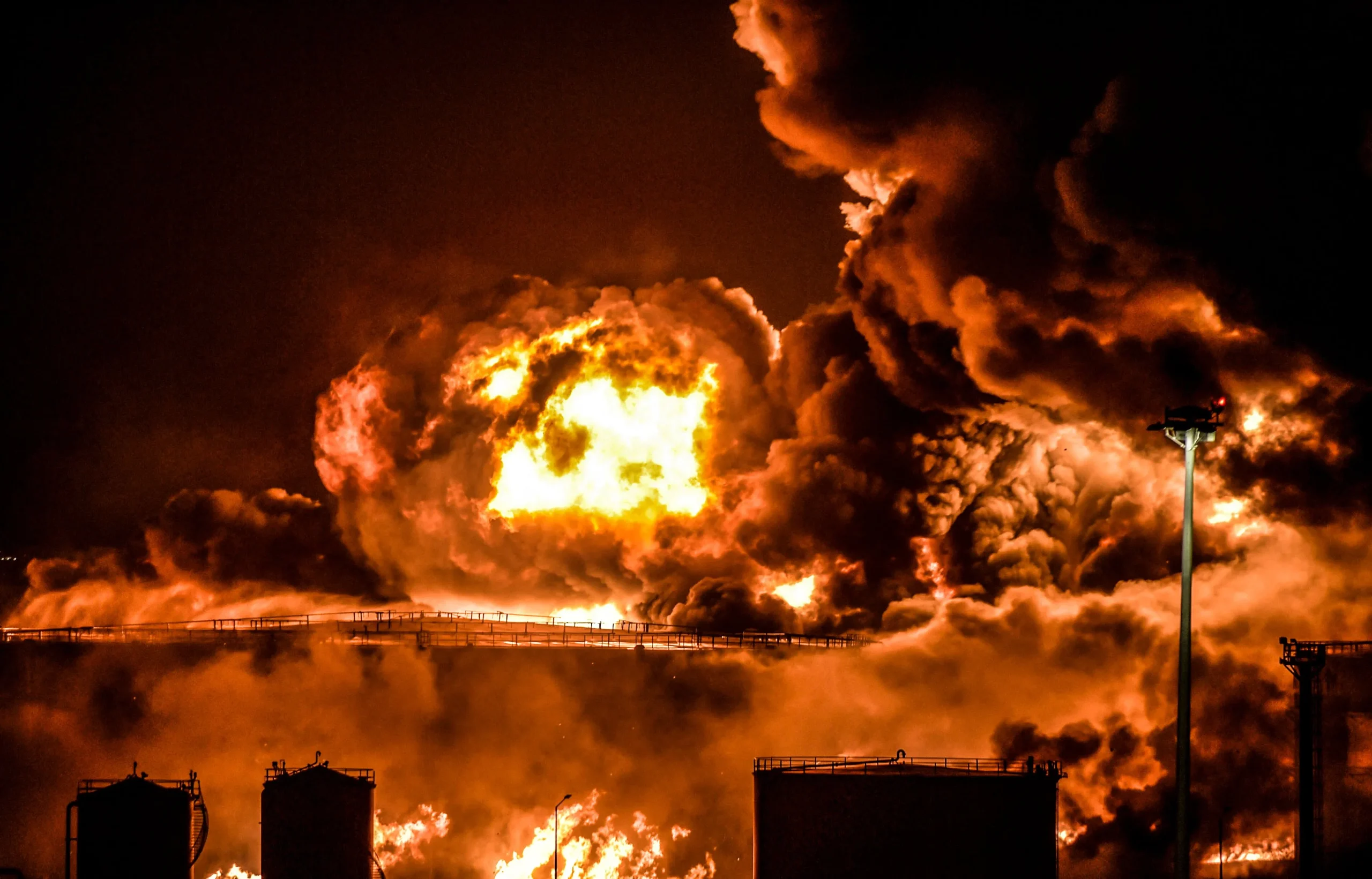
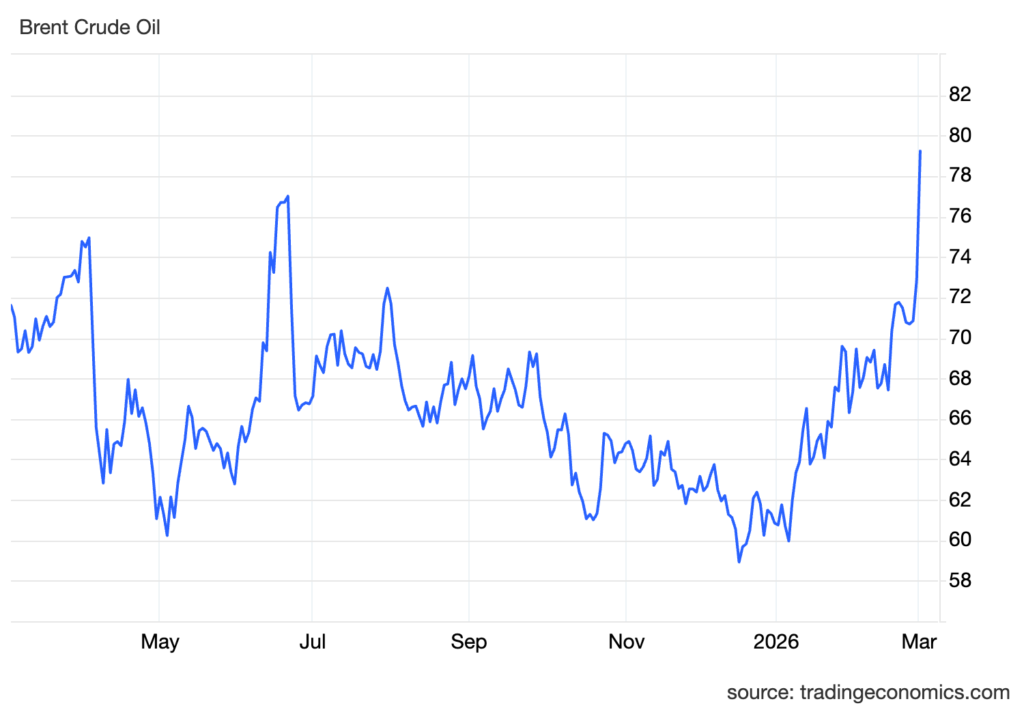
When U.S. and Israeli forces struck Iranian nuclear and military infrastructure, markets braced for the worst. Brent crude, already trading in the low seventies on weeks of escalating tension, spiked sharply. Tanker insurance premiums jumped. Shipping companies began quietly rerouting. The question everyone asked was the obvious one: Will the oil stop flowing?
The short answer, for now, is NO. Global energy supplies are unlikely to collapse immediately. The structural fundamentals of the oil market remain, on paper, relatively comfortable: the IEA projects global supply capacity above 108 million barrels per day against demand of roughly 104.9 mb/d in 2026, implying a modest surplus if Middle Eastern flows are not heavily disrupted. Non-OPEC producers, the United States, Brazil, and Guyana, continue to grow output. The world is not running out of oil.
But that comfortable headline number obscures something that every serious energy analyst understands: global supply and demand balances tell you very little about price. What determines price, in the short and medium run, is geography, infrastructure, and the willingness of ships to sail into a war zone. And on all three dimensions, the current crisis is deeply revealing about the future of energy, not just the next few weeks of it.
The War Premium Is Not Going Away
Before the latest strikes, analysts estimated that fear of a broader U.S.-Iran conflict had already added roughly $4 to $10 per barrel of geopolitical risk premium to crude benchmarks. That premium is now higher, and it is structural rather than transient. Even in a scenario where the immediate military exchange remains limited and Hormuz flows are not materially disrupted, the base case most markets are currently pricing, Brent is unlikely to settle back into the low seventies. The risk is now priced into the market’s DNA.
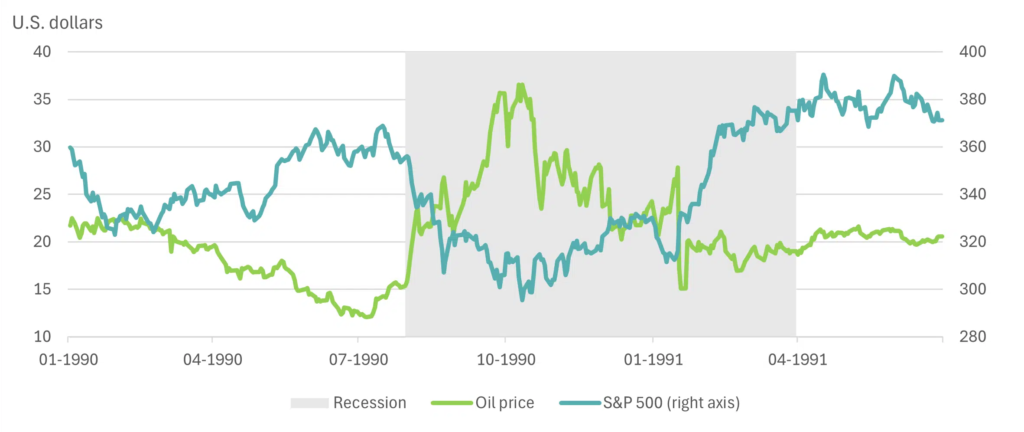
This matters beyond the current news cycle. Energy investment decisions are made against price expectations stretching five, ten, and twenty years forward. When geopolitical risk premiums become persistent features of the oil price rather than brief spikes, they alter the economics of everything from refinery expansions to renewable energy projects to sovereign fiscal planning in import-dependent economies. A market that prices in $10 to $15 of permanent risk premium is a structurally different market than one trading on fundamentals alone.
The current crisis has also exposed just how concentrated marginal pricing power remains. Iran produces just over 3 million barrels per day, a meaningful but not dominant share of global supply. Yet the threat that a conflict involving Iran poses to Hormuz, through which around 20 percent of all globally traded oil and a similar share of seaborne LNG transits, means that a relatively small producer commands outsized influence over the price paid by the entire world. That asymmetry is not new. But it is becoming more acute.
Three Paths for Supply, and What They Signal
The near-term trajectory of energy prices will be determined by which of three broad scenarios materializes. In the base case, a limited military exchange with no serious disruption to Hormuz shipping, the structural surplus in oil markets should eventually reassert itself. Brent likely stabilizes somewhere in a $75 to $90 band. U.S. shale producers, responding to elevated prices, add incremental supply over several months. Some OPEC+ cuts get unwound. The world pays a persistent risk premium, but physical supply remains adequate.
A moderate disruption scenario, the loss of roughly 1 to 2 mb/d of Iranian exports, with shippers self-sanctioning around nearby ports, is more damaging. Even this limited loss can move prices sharply, because short-term oil demand is inelastic and because spare capacity is concentrated in Gulf producers whose own exports depend on the same sea lanes. Saudi Arabia and the UAE can partially compensate for lost Iranian barrels, but not instantly or barrel-for-barrel. Brent in a $95 to $110 range, with sharp backwardation in futures curves signaling near-term tightness, is a realistic outcome.
The severe scenario, Iran successfully making Hormuz unsafe through mining, missile attacks, or sustained harassment of tankers, is the tail risk that most worries energy security analysts. Price estimates of $120 to $140 per barrel are not alarmist in this scenario; they follow directly from the arithmetic of lost volumes versus available buffers. And crucially, this scenario would not just be an oil shock. Qatar, the UAE, and others export large volumes of LNG through the same chokepoint. LNG markets showed in 2022 how quickly prices can reach record levels when a few key suppliers are constrained; a Hormuz crisis would replay that dynamic with fewer alternatives available.
Buffers Exist, But They Have Limits
The global energy system is not without shock absorbers. OECD strategic petroleum reserves hold around 1.5 billion barrels, roughly 120 days of import cover, and the IEA has stated it stands ready to coordinate emergency releases if supply is severely disrupted. Coordinated draws of 1 to 2 mb/d can smooth a shock materially, buying time for markets to adjust.
Non-OPEC supply growth also provides a medium-term cushion. U.S. shale responds to price signals with a lag of several months rather than years, and producers in Brazil, Canada, and Guyana continue to bring new volumes online. The IEA and S&P Global both project capacity expansion outpacing demand growth through 2026 in a calm scenario, generating more than 2 mb/d of theoretical headroom.
But these buffers are calibrated for a disruption of months, not a sustained structural change. And they do not address the LNG vulnerability at all, there is no strategic LNG reserve, no equivalent of the IEA coordinating emergency gas releases. The buffer for a serious LNG shock is entirely on the demand side: industries switching fuels, households cutting usage, and governments rationing. That means price spikes in gas markets tend to be faster and sharper than in oil, and the political fallout in import-dependent economies tends to be more severe.
Who Pays, and Who Benefits
The distributional consequences of a sustained energy price shock are not symmetrical. Large net importers, India, the EU, Japan, and much of the developing world, face higher fuel import bills, weaker currencies, and more difficult monetary policy choices. Central banks that had begun easing after the 2022-23 inflation shock may find themselves pausing or reversing cuts just as growth was stabilizing, raising real borrowing costs across economies that can least afford it. A sustained $10 to $20 increase in Brent translates into higher headline inflation within weeks, particularly in emerging markets with large administered fuel components.
On the other side of the ledger, major exporters with infrastructure insulated from the Gulf, the United States, Russia, Norway, Brazil, and Canada, stand to benefit from windfall revenues and a sudden premium on their cargo availability. American LNG, in particular, becomes more valuable to European and Asian buyers scrambling for alternatives to disrupted Gulf supplies. The geography of energy geopolitics is being redrawn in real time, and the redrawn map systematically advantages the Western Hemisphere and disadvantages Asian importers.
The Crisis That Could Reshape Energy’s Longer Arc
History consistently shows that acute energy crises produce contradictory short- and long-term effects. In the immediate scramble, governments reach for subsidies to shield consumers, blunting conservation incentives and increasing fiscal pressure. Coal and diesel burn rises as industries seek any available alternative. The energy transition appears, briefly, to be going in reverse.
But the medium-term trajectory runs the other way. After Russia’s invasion of Ukraine, Europe burned more coal and oil in the immediate panic, and then, within two years, sharply accelerated renewable installations, dramatically expanded LNG import terminal capacity, and drove efficiency investments at a pace that would have seemed politically impossible before the crisis. The IEA’s medium-term outlook already assumes oil demand plateauing before 2030, driven by accelerating EV adoption and slowing demand growth of around 0.7 to 0.8 mb/d per year through the mid-2020s. A serious and sustained Middle East shock would likely compress that timeline.
Energy security and energy transition, long treated as competing priorities by politicians on both sides of the climate debate, have a way of converging when prices get high enough and supply looks precarious enough. The single most effective policy argument for electrifying transport, diversifying away from imported gas, and building out domestic renewable capacity is a prolonged oil shock. Policymakers in New Delhi, Tokyo, and Berlin understand this. So do their voters.
What Markets Are Really Telling Us
The immediate volatility in energy markets is not primarily about the current Iranian military situation, as significant as that is. It is about something the market has long known and periodically been reminded of: the global energy system remains structurally dependent on a small number of chokepoints, a handful of producers, and the continued willingness of those producers and the shipping industry to operate normally in a volatile region.
The war premium now embedded in oil prices is not irrational panic. It is the market accurately repricing the probability distribution of future disruptions. That repricing will persist long after the immediate military situation is resolved, because the underlying structural vulnerability, the concentration of reserves, production, and export infrastructure in a geopolitically contested region, has not changed and will not change quickly.
For energy producers, the message is that the price environment may remain more supportive than the fundamentals alone would suggest for years to come. For importers and consumers, it is a reminder that the energy transition is not just an environmental imperative; it is an economic and strategic one. And for policymakers everywhere, it is a useful, if costly, reminder that energy security is not a problem that surplus production alone can solve. The question is not whether the world has enough oil. It is whether the world can reliably get that oil from where it is to where it is needed, and increasingly, the honest answer to that question is: it depends.