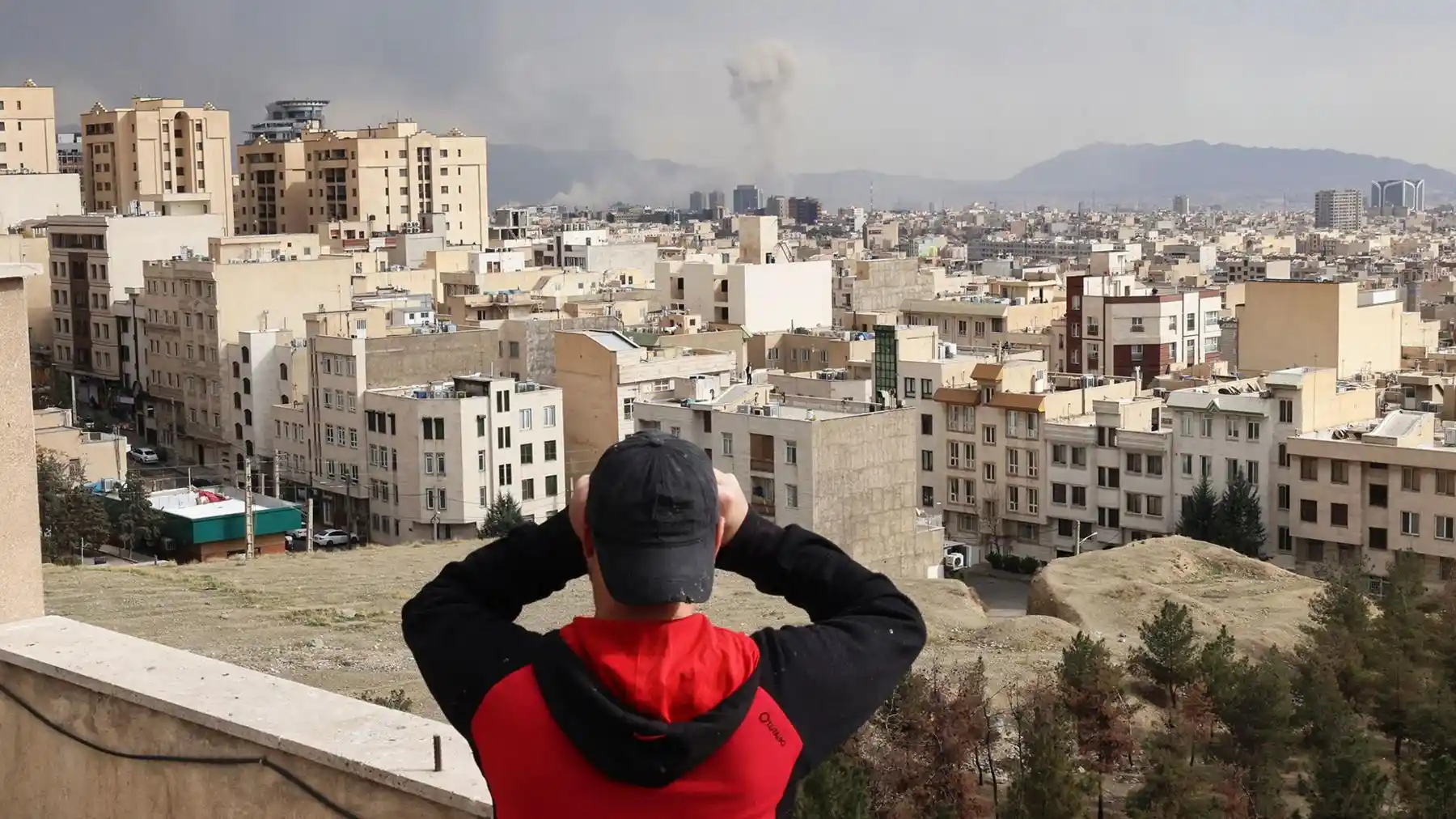
Europe is trying to cordon itself off from a widening Middle East war, relying on humanitarian cheques, naval patrols and diplomatic silence, but the geography of energy, trade and migration means this posture of strategic avoidance is unlikely to hold. The more the conflict metastasises — from Gaza to the Red Sea to Iran — the more it exposes the gap between the EU’s rhetoric as a “geopolitical” actor and its real preference to remain a risk‑averse bystander.
A divided Europe in Gaza’s shadow
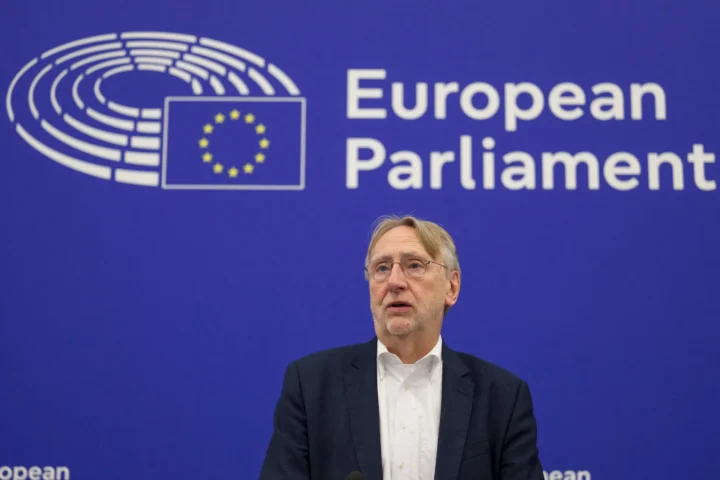
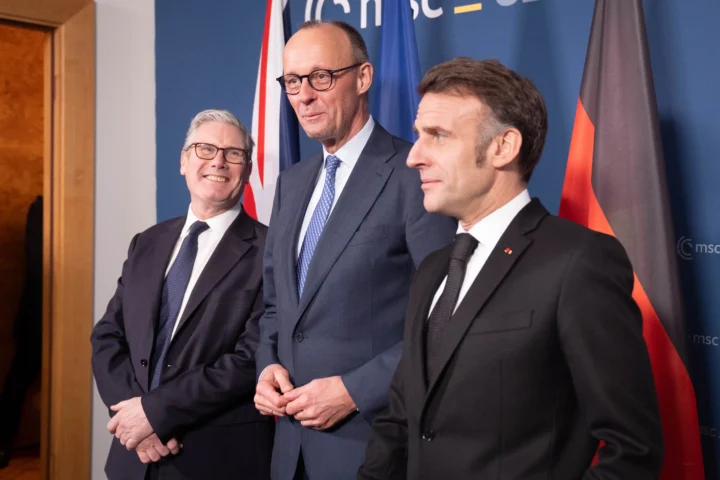
The Gaza war has laid bare a deeply fractured EU. Member states have fallen into at least three camps: an Israel‑aligned group led by Germany, Austria, the Czech Republic and Hungary; a more critical camp favouring an early ceasefire; and a hesitant middle that shifts with domestic pressures. This split has repeatedly paralysed EU decision‑making, including a December leaders’ summit that failed to agree even a joint statement as the Gaza death toll surged past 24,000 and displacement and hunger reached catastrophic levels.
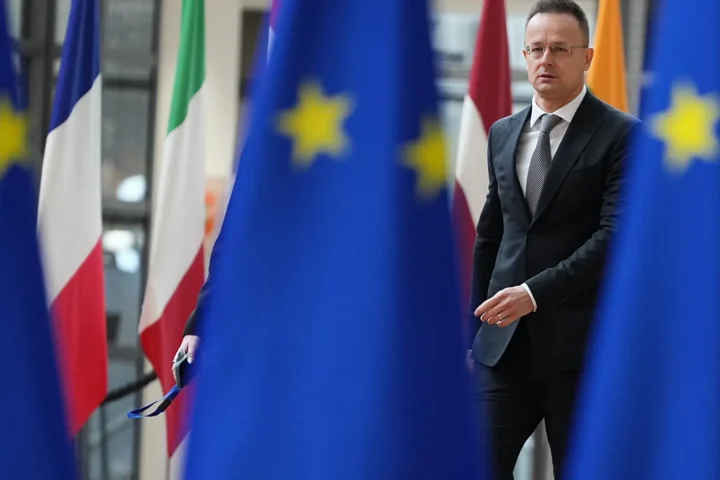
At the institutional level, the dissonance has been just as stark. European Commission President Ursula von der Leyen initially personified the Israel‑aligned camp, projecting the Israeli flag onto Commission headquarters and stressing Israel’s right to defend itself with few qualifications, even as humanitarian law concerns mounted. By contrast, the EU’s foreign policy chief Josep Borrell gravitated toward calls for a ceasefire and stronger emphasis on international law, reflecting the position of a growing majority of member states. The result has been not strategic clarity but selective moralism: very loud on Russia’s violations in Ukraine, strikingly cautious on Israel’s conduct in Gaza.
Cheques instead of strategy
Faced with accusations of complicity, the EU has turned to its comfort zone: writing cheques. Since 2023, Brussels has sharply ramped up humanitarian aid to Gaza, with the Commission alone channelling over €550 million by late 2025, while member states together have more than quadrupled their own contributions to Palestinians compared with pre‑war levels. Humanitarian aid is essential, but it is not a substitute for political leverage over the conflict’s conduct or its eventual settlement.
This pattern reflects a broader European reflex in the Middle East: compensate for strategic impotence with technocratic generosity. The EU has reiterated broad “day after” principles for Gaza — no Hamas rule, no Israeli re‑occupation, no forced displacement, no territorial shrinkage and no renewed blockade — which enjoy rare consensus in Brussels. But it has offered no credible pathway, diplomatic or coercive, to make those principles more than talking points, especially while it continues security cooperation and trade as usual with Israel. In effect, Europe is paying to mitigate a crisis it has little appetite to shape.
The Red Sea test: interests without will
The spillover to the Red Sea has been an early warning of how quickly Middle Eastern shocks can hit European interests. Since late 2023, Houthi attacks on commercial shipping “in solidarity with Gaza” have made one of the world’s busiest maritime chokepoints a war zone, disrupting trade flows and raising insurance and freight costs on routes vital to European supply chains and energy imports. The EU has condemned the attacks and moved toward a naval mission to protect shipping, while some member states ducked US requests to join more kinetic operations.
This is crisis management focused narrowly on sea lanes, not on the conflict ecosystem that produced the threat. Naval patrols can reduce immediate risk, but they cannot insulate Europe from a Gaza war that fuels regional proxy dynamics, nor from the Iran–Israel confrontation that increasingly frames escalation in the Red Sea and beyond. Europe is trying to draw a line between “security of navigation”, where it has direct economic stakes, and the wider conflict, where it prefers rhetorical distance; in practice, that line is fictional.
Energy, Hormuz and Europe’s new vulnerability
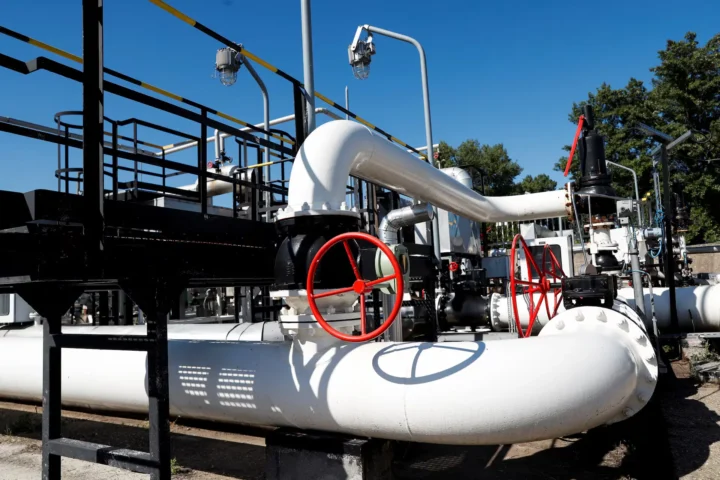
The illusion of distance is even weaker on energy. After Russia’s invasion of Ukraine, the EU diversified away from pipeline gas, leaning more heavily on liquefied natural gas from the United States and the Gulf, including Qatar. By 2024 Qatar alone supplied a meaningful slice of the EU’s gas mix, and nearly all its LNG exports transit the Strait of Hormuz — the single most important energy chokepoint in the world.
As strikes involving Iran, the United States and Israel intensified, shipping through Hormuz has already slowed sharply, and analysts warn that as much as a fifth of global oil consumption and around 20 percent of global LNG trade could be at risk in a sustained crisis. For Europe, this translates directly into exposure to price spikes, supply interruptions and renewed competition for cargoes, with knock‑on effects for inflation and industrial competitiveness. The EU’s much‑touted “strategic autonomy” is being tested not in Brussels communiqués but at sea, in a region where it has minimal hard power and only fragmented diplomatic leverage.
Migration, domestic politics and the coming shock
The EU’s instinct to sit on the fence is also shaped by domestic politics. European governments fear that a wider Middle East war will trigger new refugee flows through Turkey, the Eastern Mediterranean and North Africa, reviving the toxic migration debates of 2015–16 and feeding far‑right parties that are already rising. This fear pushes leaders to prioritise short‑term stability over principled confrontation with regional partners, from Israel to Egypt and Gulf monarchies, whose cooperation they see as essential to containing migration.
Yet this logic is self‑defeating. A protracted, uncontained conflict — one that devastates Gaza, destabilises Lebanon, and deepens economic misery in Egypt and Jordan — will almost certainly generate larger and more politically explosive migration pressures than any uncomfortable confrontation with allies would. By treating Middle Eastern stability as something to be subcontracted rather than shaped, Europe increases the risk that the next wave of geopolitical shock will break directly over its own domestic politics.
Can the EU stay out?
For now, the EU is trying to cordon off the Middle East war into separate files: humanitarian aid for Palestinians, naval missions for the Red Sea, sanctions and diplomacy for Iran, migration deals with transit states. But these are all facets of a single, deteriorating crisis that erodes the very order Europe depends on: open sea lanes, predictable energy flows, constrained refugee movements and respect for international humanitarian law.
The uncomfortable reality is that Europe does not have the option of strategic abstention. It can either move, however awkwardly, toward a more coherent Middle East policy — one that couples humanitarian aid with real conditionality on arms exports, applies international law consistently, and invests in de‑escalation between Israel, Iran and their proxies — or it can continue to muddle through until events drag it in on far worse terms. The EU may wish to stay out of the Middle East war; geography, energy and interdependence suggest the war will not stay out of Europe for long.