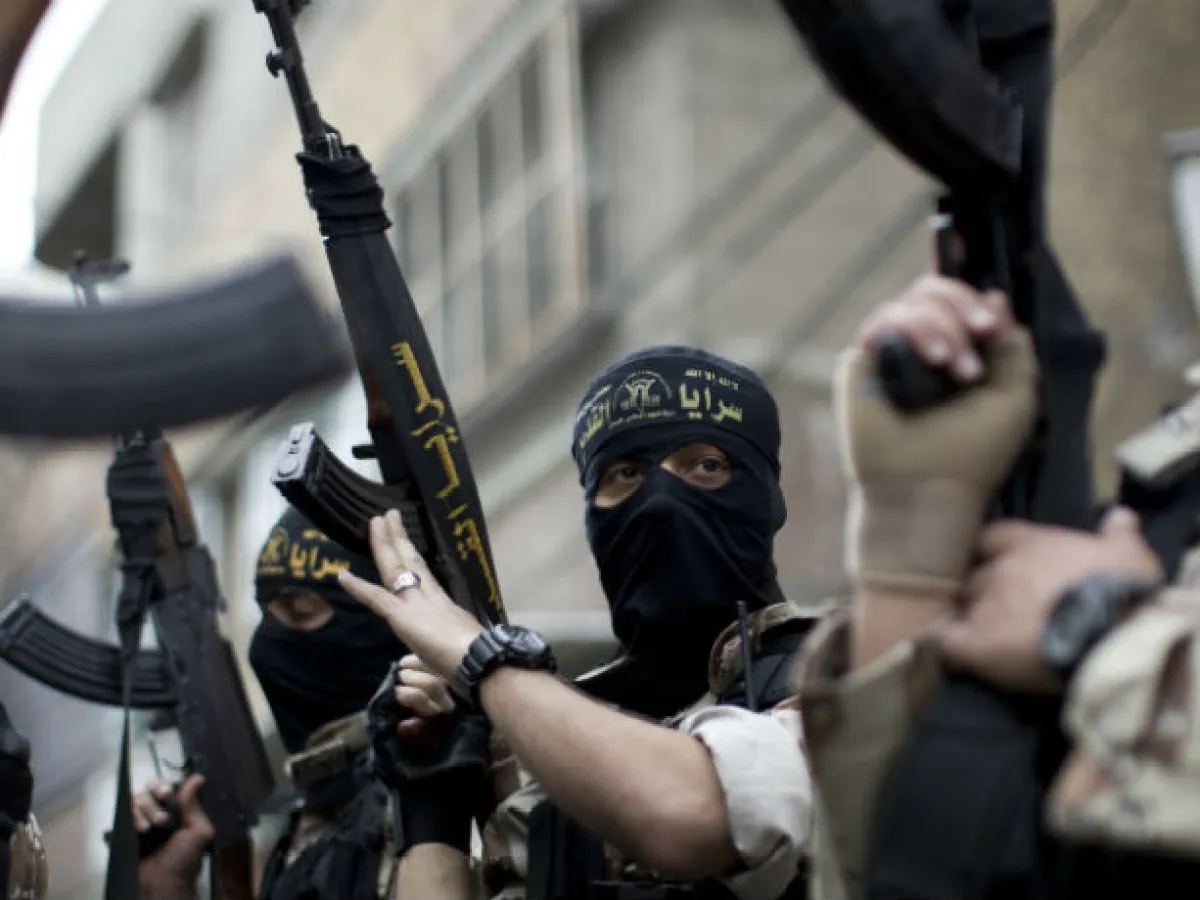
Tulsi Gabbard’s recent warning that “Islamists and Islamism is the greatest threat to the freedom, security, and prosperity of the United States and the free world” captures a hard truth that many governments have learned at great cost over the past quarter century. Her perspective does not emerge in a vacuum; it is rooted in a data-driven record of mass‑casualty attacks, destabilized regions, and a transnational ideology that deliberately targets both Muslims and non‑Muslims who refuse its vision.
At the Worldwide Threats hearing, @DNIGabbard spoke the TRUTH about the danger of radical Islamist ideology:
— Office of the DNI (@ODNIgov) March 19, 2026
“The spread of Islamist ideology… poses a fundamental threat to freedom and the foundational principles that underpin Western civilization.”
“President Trump's… pic.twitter.com/eER1kaON5J
“Radical Islam” or jihadist Islamism is not a synonym for the religion of Islam but for a political‑religious ideology that seeks to impose a theocratic order through violence and coercion. Groups like Al‑Qaeda, the Islamic State (IS), Lashkar‑e‑Taiba, and Al‑Shabaab explicitly frame their struggle as a global confrontation with secular democracy, religious pluralism, and the modern international system.
Gabbard’s own experience—from Iraq deployments under constant mortar fire to work with Somali forces against Al‑Shabaab—has shaped her view that Islamist terrorism is the primary long‑term challenge to American freedom and Western civilization. In a 2025 interview as Director of National Intelligence, she warned that the threat had evolved from large foreign networks to “lone‑wolf” attackers radicalized online, making it more diffuse and harder to detect. In early 2025 she also pointed to the goal of an “Islamic Caliphate” as the common ideological thread linking jihadist organizations across continents.
The global data: concentrated and deadly
If Islamist extremism were merely a rhetorical bogeyman, global terrorism data would show it as marginal; instead, it dominates the landscape. Between 2013 and April 2024, Islamist‑motivated attacks accounted for 56,413 incidents worldwide, representing 84.4% of all recorded terrorist attacks since 1979. These attacks killed on average 3.7 people per incident, underscoring their high lethality compared to many other forms of political violence.
The Global Terrorism Index (GTI) reinforces this picture. Its 2024–2025 findings identify the Sahel region of Africa as terrorism’s contemporary “epicentre,” with over half of global terrorism deaths concentrated there and Islamic State and its affiliates as the world’s deadliest terrorist organizations. In 2025, IS had expanded operations to 22 countries and remained the most lethal group in the GTI, responsible for 1,805 deaths, mostly in Syria and the Democratic Republic of the Congo. These are not localized insurgencies with narrow aims; they are manifestations of a globalized jihadist movement.
Past attacks as global warning signs
The world has repeatedly seen how Islamist radicalism can turn major cities into war zones in a matter of hours. The 9/11 attacks in the United States, carried out by Al‑Qaeda, killed nearly 3,000 people and triggered two major wars and a reordering of global security priorities. Years later, the 2008 Mumbai attacks, executed by Lashkar‑e‑Taiba, demonstrated the tactical sophistication of jihadist groups using small assault teams to hold a megacity hostage for three days and kill 166 people, including foreign nationals.
More recently, ISIS‑linked atrocities have delivered similar shocks. The 2019 Easter Sunday bombings in Sri Lanka saw local National Thowheed Jamaath militants, inspired and aided by ISIS, attack churches and luxury hotels across multiple cities, killing over 290 people and injuring hundreds. Analysts describe these bombings as proof that radical Islamist ideology can embed itself even in countries with no deep prior history of jihadist violence, exploiting local grievances to plug into a global narrative of “holy war.”
Threat to Muslim societies first
Paradoxically, the primary victims of radical Islam are often Muslims themselves. A major study by the Fondapol foundation found that 86.3% of Islamist terrorist attacks and 88.9% of the resulting deaths between 1979 and 2024 occurred in Muslim‑majority countries. Afghanistan, Iraq, Syria, Pakistan, and parts of Africa have borne the brunt of suicide bombings in markets, mosques, and schools that target those deemed “apostate” or insufficiently strict.
In the Sahel, jihadist violence has devastated fragile states like Mali, Burkina Faso, and Niger, displacing millions and eroding already weak governance. GTI reports show that Sub‑Saharan Africa alone accounted for nearly half of global terrorism deaths in recent years, with Islamist groups driving most of this carnage. Far from defending Muslims, these movements impose medieval punishments, destroy education systems, and entrench cycles of poverty that make future radicalization more likely.
Lone wolves and Western democracies
For Western democracies, the front line has shifted. Rather than only large, centrally planned operations, the dominant risk now comes from individuals or micro‑cells radicalized via online propaganda. The 2025 Global Terrorism Index notes that, in Western nations, 93% of all fatal terrorist attacks over the last five years were carried out by lone actors. Many of these actors explicitly cite ISIS or similar jihadist ideologies as inspiration, even when they have no operational ties to a formal group.
This is precisely the evolution Gabbard highlighted when she warned that Islamist terrorism now spans both foreign battlefields and domestic online ecosystems. US intelligence reporting for 2025 indicates at least three Islamist terrorist attacks inside the United States and the disruption of at least fifteen US‑based Islamist plots in a single year, underscoring the persistent and adaptive nature of the threat. The same pattern is visible in Europe and Australia with attacks on concerts, churches, and streets by individuals pledging allegiance to ISIS moments before or during their rampages.
Strategic challenge to open societies
Radical Islamist movements pose a multilayered challenge to global security that goes beyond the immediate body count. First, they erode trust within diverse societies by deliberately targeting religious minorities and public spaces, hoping to provoke backlash and communal polarization that can feed further recruitment. Second, they strain civil liberties as states respond with expanded surveillance, emergency powers, and securitized borders, which can in turn create new grievances if misused.
Third, and most dangerously, they present an alternative model of political order based on a transnational “Caliphate” that repudiates the nation‑state system and universal human rights. When Gabbard warns that attempts to implement Islamist legal and political norms inside democratic systems threaten “individual liberty and democratic values,” she is echoing a lesson drawn from places where jihadist factions have briefly seized territory—from Raqqa under ISIS to towns under Boko Haram rule. In each case, the result has been mass executions, enslavement, and the systematic crushing of dissent.
The imperative of clarity
Recognizing radical Islamism as a central threat to global security does not indict over a billion Muslims who reject extremism; it precisely aligns with the interests of Muslim communities that are its primary victims. Policymakers, however, cannot afford euphemism. As Gabbard has argued in the context of crises from Bangladesh to the Sahel, a serious strategy requires naming the ideology, tracking its networks, and mobilizing Muslim and non‑Muslim partners to challenge its theological and political claims.
Data from terrorism indexes, decades of attacks from New York to Mumbai and Colombo, and the ongoing bloodshed in the Sahel all support a sober conclusion: jihadist radicalism is not just one security issue among many, but a structural, transnational threat that corrodes states, fractures societies, and normalizes mass violence as a tool of politics. The debate today should not be over whether this threat exists, but over how free societies can confront it decisively while preserving the liberties and pluralism that radical Islamists seek to destroy.
References and Further Reading
- Foundation pour l’innovation politique. (2024, December 9). Islamist terrorist attacks in the world 1979-2024. https://www.fondapol.org/en/study/islamist-terrorist-attacks-in-the-world-1979-2024/
- Institute for Economics & Peace. (2026, March 3). Global Terrorism Index. https://www.visionofhumanity.org/maps/global-terrorism-index/
- Institute for Economics & Peace. (2025, March 5). Global Terrorism Index 2025. https://reliefweb.int/report/world/global-terrorism-index-2025