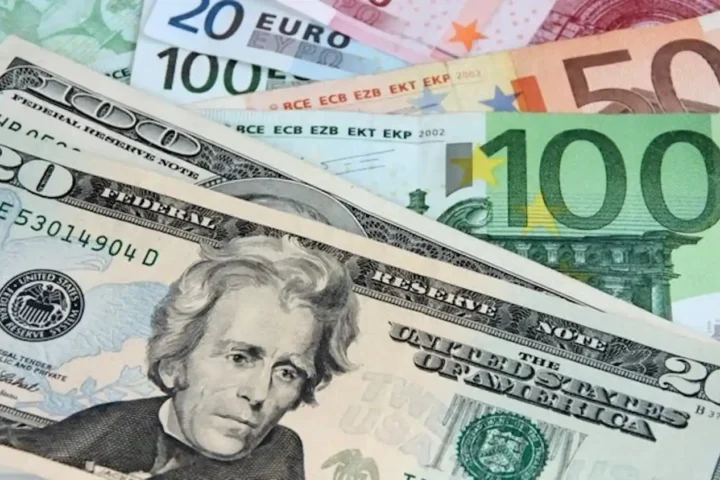
When the French government announced it would spend €70 million in April to subsidize fuel costs for farmers, truck drivers, and fishermen, it was not merely addressing an economic issue — it was making a statement about social stability, political priorities, and the deep tensions between ecological ambition and economic necessity.
The move, aimed at shielding essential sectors from soaring energy costs, might appear compassionate on the surface. Yet beneath the gesture lies a complex and uneasy truth: France is struggling to balance short-term relief for key constituencies with its long-term commitments to reduce carbon emissions and transition toward sustainable energy.
The Pressure of the Street and Field
To understand why President Emmanuel Macron’s government made this decision, one must look at recent months of mounting discontent. Across rural France, tractors have blocked highways, ports have been disrupted by fishermen’s protests, and transport unions have threatened strikes. The grievances are familiar but potent — surging fuel prices, high production costs, and a sense among working-class sectors that politicians in Paris are detached from their economic realities.
For farmers, fuel is the lifeblood of production. Diesel powers their tractors, irrigation systems, and transport. A spike in energy costs eats directly into already thin margins. Similarly, for truck drivers, fuel represents one of the largest operating expenses. Fishermen, operating small to medium boats, see fuel costs sometimes double or triple, threatening their livelihood as market prices fail to keep pace.
In this climate, the €70 million measure is less an act of generosity than one of political expediency. The Macron government, already facing criticism from both far-left and far-right movements, knows rural anger can quickly ignite broader unrest. France still carries vivid memories of the Yellow Vest movement in 2018, which erupted after a proposed fuel tax increase. This new subsidy, however temporary, acts as a pressure valve — a brief reprieve for sectors that might otherwise flood the streets once again.
An Economy Held Hostage by Energy Prices
The logic behind direct fuel subsidies is simple: they cushion immediate shocks and prevent cascading economic disruptions. Without assistance, farmers might cut production, truckers might raise freight rates (driving inflation further), and fisheries could slash operations, affecting prices and supply across food chains.
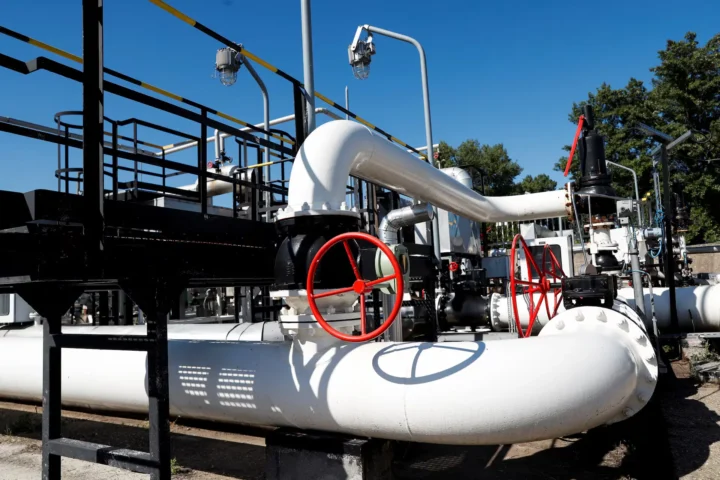
But subsidies also create dependency. By artificially lowering costs, governments risk locking industries into outdated models just when structural change is most needed. In France, fossil fuels remain deeply embedded in agricultural and transport systems. Instead of incentivizing cleaner methods, continued assistance to diesel-heavy sectors delays investment in electrification, biofuels, and environmentally friendly logistics.
Economist Philippe Chalmin, in a recent policy forum, warned that such short-term relief measures often become “painkillers for chronic pain.” Once granted, they are politically difficult to withdraw — especially when livelihoods depend on them. France’s agricultural sector, already among the most protected in Europe, could evolve into a permanent recipient of fossil fuel aid unless accompanied by strong energy transition policies.
Europe’s Larger Energy Paradox
France’s predicament is not unique. Across Europe, governments face the same conundrum: how to support national producers and consumers without derailing climate agendas. Germany has offered tax breaks for industrial fuel users, Spain has reduced fuel duties for transport, and Italy has extended fishermen’s fuel rebates.
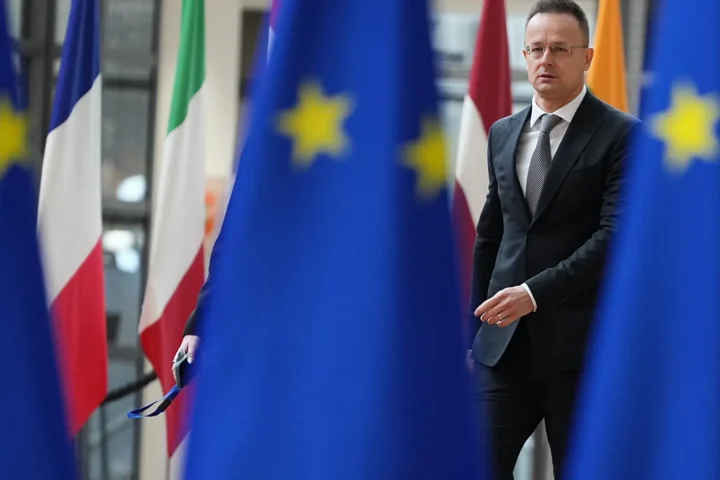
This trend exposes a broader European paradox. While the European Union pushes for decarbonization, its member states are still entangled in policies that incentivize fossil fuel consumption. The EU’s Green Deal aims for net-zero emissions by 2050, but subsidies like France’s push in the opposite direction, sending confusing signals to both markets and citizens.
The International Energy Agency has repeatedly warned that government fuel subsidies distort energy markets, encourage overconsumption, and delay innovation. Every euro spent mitigating fuel costs today is a euro not invested in long-term energy independence.
Politics Over Principle
Politically, the fuel subsidy underscores Macron’s delicate position. His administration is defending its centrist, reformist identity in a volatile political landscape. Populist parties, both left and right, have made cost-of-living struggles their rallying cry. Marine Le Pen’s National Rally frames subsidies as overdue support for “real French workers,” while Jean-Luc Mélenchon’s hard-left France Unbowed accuses Macron of token gestures that fail to address deeper inequalities.
Caught between these poles, the president’s team has opted for tactical flexibility — responding to immediate pressure rather than structural change. The government describes the €70 million package as a “temporary buffer” for essential sectors while it ramps up investments in renewables and innovation. Yet public skepticism remains strong. Many see this as a reactive gesture rather than part of a coherent, long-term energy strategy.
The Challenge of Transition
If France hopes to resolve this tension, it must move beyond crisis management toward a new social contract for its energy transition. This means linking subsidies not only to economic relief but also to reform. For example, fuel support for farmers could be conditional on adopting low-emission machinery or engaging in carbon-efficient farming. Trucking companies could receive incentives for fleet electrification. Fishermen might be offered grants to modernize boats with cleaner engines.
Subsidies without transformation are merely postponing the inevitable. With or without protests, global energy volatility is not going away. France imports most of the fossil fuels it consumes, leaving its production costs susceptible to external shocks — geopolitical conflicts, supply chain disruptions, or OPEC’s pricing decisions.
Transitioning to renewable energy sources, while costly upfront, offers stability and sovereignty in the long run. It aligns with France’s commitments under the Paris Agreement — an irony not lost when the world’s climate summit host continues to subsidize diesel for trawlers and tractors.
A Choice Between Comfort and Courage
Critics may argue that now is not the time to burden working people with transition costs — and they have a point. Asking struggling farmers or truckers to abandon diesel overnight would be both unrealistic and unfair. But public policy must find a middle ground between compassion and courage. Short-term subsidies can coexist with long-term reform if designed strategically.
France’s €70 million is, in global terms, a modest sum. Yet it symbolizes a larger question every modern state must confront: will we use our public budgets to perpetuate the status quo or to engineer transformation? The political temptation is always to soothe today’s pain. The harder, nobler task is to prevent tomorrow’s crises.
If France truly wishes to lead in both social justice and environmental leadership, it cannot afford to choose one at the expense of the other. Energy policy, as every protester on a tractor understands, is no longer just about fuel — it is about the future.