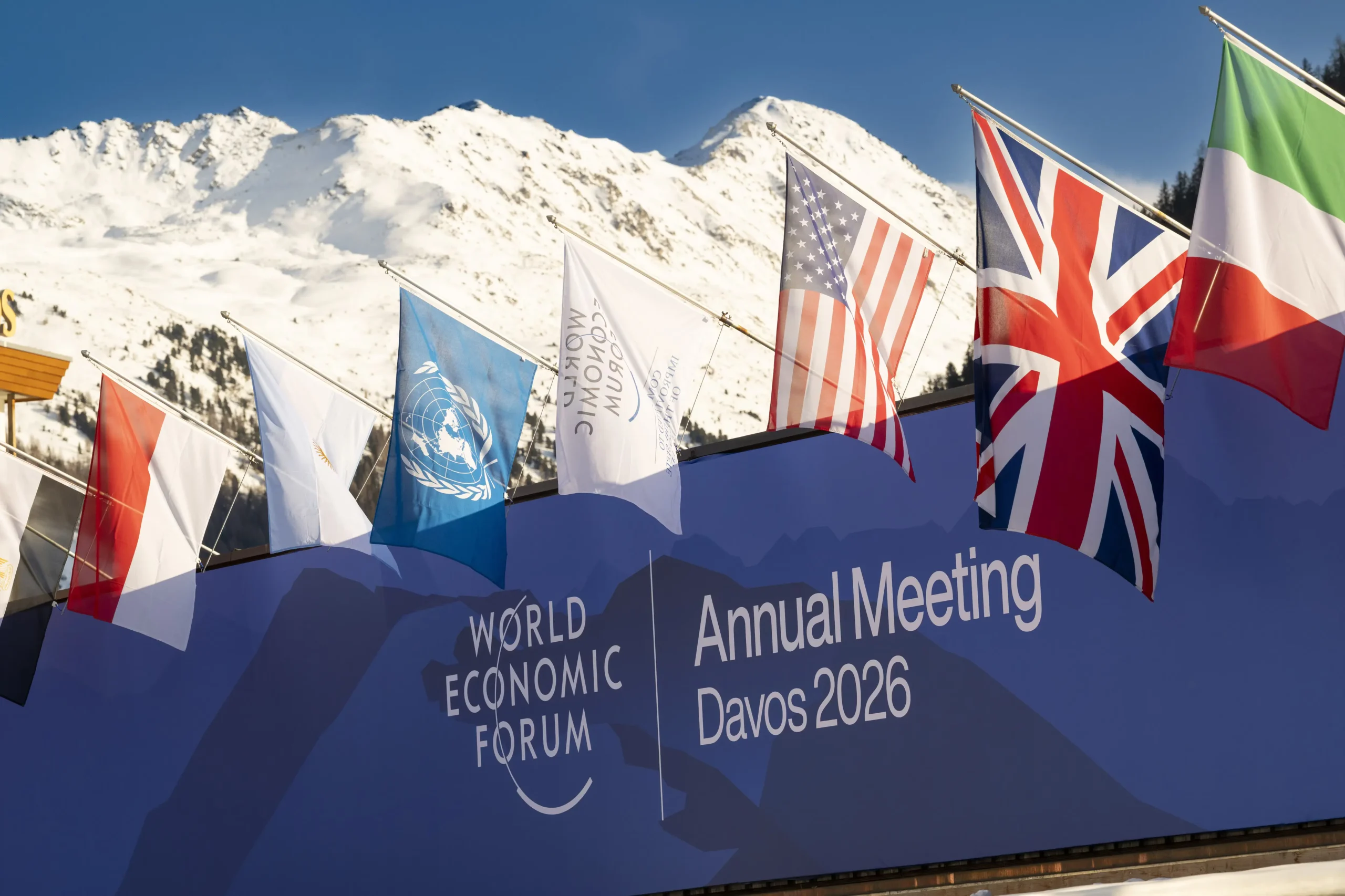
As the crisp alpine air of Davos fills with the murmurs of global elites, the 2026 World Economic Forum was supposed to focus on pressing issues like AI governance, climate resilience, and post-pandemic economic recovery. Instead, the spotlight has been hijacked by an unlikely antagonist: Greenland. President Donald Trump’s escalating threats to seize control of the Arctic island from Denmark have transformed the Swiss resort into a geopolitical pressure cooker, overshadowing panels on sustainable development and forcing world leaders into urgent huddles over tariffs, alliances, and the specter of transatlantic fracture. What began as a quirky proposal during Trump’s first term has morphed into a full-blown crisis, with Trump linking his ambitions to national security imperatives and even personal grievances like his Nobel Peace Prize snub.
To understand how we arrived here, rewind to 2019. Trump first floated the idea of purchasing Greenland, citing its strategic value amid melting ice caps revealing vast mineral resources and new shipping routes. Denmark dismissed it as absurd, and the world chuckled. Fast-forward to 2026, and Trump, back in the White House, isn’t laughing. He’s doubled down, arguing that U.S. control is essential for defending against Russian and Chinese encroachment in the Arctic. Greenland hosts the U.S. Thule Air Base, a key node in missile defense systems, but Trump insists current arrangements are insufficient. “The United States needs Greenland for the purpose of National Security,” he posted recently, echoing his “Golden Dome” anti-missile vision. This isn’t mere rhetoric; Trump has threatened 10% tariffs on Denmark and seven other NATO allies—Norway, Sweden, France, the UK, the Netherlands, and Finland—escalating to 25% if no deal materializes by June.
The timing couldn’t be more dramatic. As delegates convene in Davos, Trump’s threats have upended the agenda. Panels on global trade now buzz with whispers of retaliation, while European leaders coordinate responses in side rooms. Norway’s Prime Minister Jonas Gahr Støre altered his schedule to attend, overlapping with Trump’s appearance, signaling the gravity of the standoff. Even the EU, typically measured, is preparing countermeasures, eyeing tariffs on $108 billion in U.S. imports. This isn’t just about an island; it’s a test of NATO’s cohesion and the post-WWII order.
Trump’s personal touch adds fuel to the fire. In a bizarre twist, he tied his Greenland push to not winning the Nobel Peace Prize, texting Norway’s leader that he no longer thinks “purely of Peace.” When pressed on military force, Trump’s “no comment” sent chills across Europe. Denmark responded by deploying more troops to Greenland, a move Trump downplayed but which underscores the escalating tensions. UK Prime Minister Keir Starmer called the threats “completely wrong,” while the EU’s Ursula von der Leyen emphasized solidarity with Denmark.
On X, the reactions are a microcosm of global divide. Supporters hail Trump’s boldness: “Trump + NATO + Greenland = global strategy in action. Davos just got interesting!” one user posted. Critics, especially in Europe, decry it as imperial hubris. A Danish politician lamented it would “burn down the entire Western alliance,” while Greenland’s officials expressed heartbreak over the pressure. Trump himself shared a text from French President Emmanuel Macron, who urged a G7 meeting post-Davos to de-escalate, highlighting the diplomatic scramble.
Economically, the stakes are sky-high. The IMF warns of a “spiral of escalation” that could derail global growth, with markets already jittery. Greenland’s rare earth minerals—critical for tech and renewables—make it a prize in the U.S.-China rivalry, but the business case is weak: harsh conditions mean trillions in investment for uncertain returns. Yet Trump presses on, posting that he had a “very good” call with NATO’s Mark Rutte and will meet “various parties” in Davos. “Greenland is imperative for National and World Security. There can be no going back,” he declared.
Here’s where opinion sharpens: Trump’s gambit, though politically incorrect and alliance-straining, is substantively defensible. The Arctic is militarizing rapidly. Russia has rebuilt bases there, and China eyes it for its “Polar Silk Road.” U.S. control of Greenland would secure vital chokepoints, bolstering deterrence without the vulnerabilities of shared sovereignty. Critics cry colonialism, but history shows great powers act decisively in strategic vacuums—think the Louisiana Purchase or Alaska. Denmark’s oversight has left Greenland underdeveloped; U.S. investment could transform it, benefiting locals weary of Copenhagen’s distant rule.
That said, the execution is reckless. Threatening tariffs on allies revives trade wars, eroding trust at a time when NATO faces real threats from Russia’s Ukraine quagmire and China’s Taiwan saber-rattling. Europe’s firm stance—joint statements from Macron, Starmer, and others—signals a potential “economic Article 5,” invoking mutual defense clauses against U.S. pressure. If Trump pushes too hard, he risks splintering the alliance he claims to strengthen, handing gifts to adversaries.
At Davos, the world watches. Will Trump’s meetings yield compromise, perhaps a lease or joint administration? Or will bluster prevail, turning the forum into a stage for division? Macron’s plea for a Paris G7 hints at de-escalation, but Trump’s history suggests he thrives on chaos. Greenlanders, caught in the crossfire, deserve better than being pawns—polls show overwhelming opposition to U.S. takeover.
Trump’s Greenland obsession steals Davos’ thunder not just through spectacle, but by exposing fault lines in global order. It’s a reminder that in an era of great-power competition, niceties yield to necessity. Whether this bold stroke secures America’s future or unravels its alliances remains the forum’s unspoken question. As delegates sip fondue, the real heat is in the corridors, where the fate of an island could reshape the world.