The rescue of the U.S. pilot from Iran is not just a story of tactical daring; it is a story about what the American state still claims to be able to do under pressure. In the language of the old Atlantic imagination, it is a tale of competence as power: a machine of aircraft, intelligence, special operators, and political will surging into a hostile landscape to recover one of its own.
What makes the episode compelling is that it arrived already layered with contradiction. A fighter jet was downed over Iran on April 2 or 3, according to early reporting, and the rescue of at least one crew member followed quickly, with the second crew member recovered later in what multiple outlets described as a high-risk combat search-and-rescue operation. The broad outline is clear even if some details remain contested: the mission moved through hostile terrain, involved multiple aircraft, and triggered a parallel battle over narrative control.
A mission built for myth
Combat search and rescue has always been one of the most mythic forms of warfare because it is the part of war that most resembles rescue fiction, except that the stakes are real and the margins are brutal. The mission described in press accounts included helicopters, a Warthog close-air-support aircraft, electronic protection, and intelligence support, which is to say the full ecosystem of U.S. personnel recovery in contested airspace. One account said a helicopter came under fire and a U.S. attack aircraft pilot later ejected into the Persian Gulf before being recovered, underscoring how quickly a rescue can become a chain of emergencies.
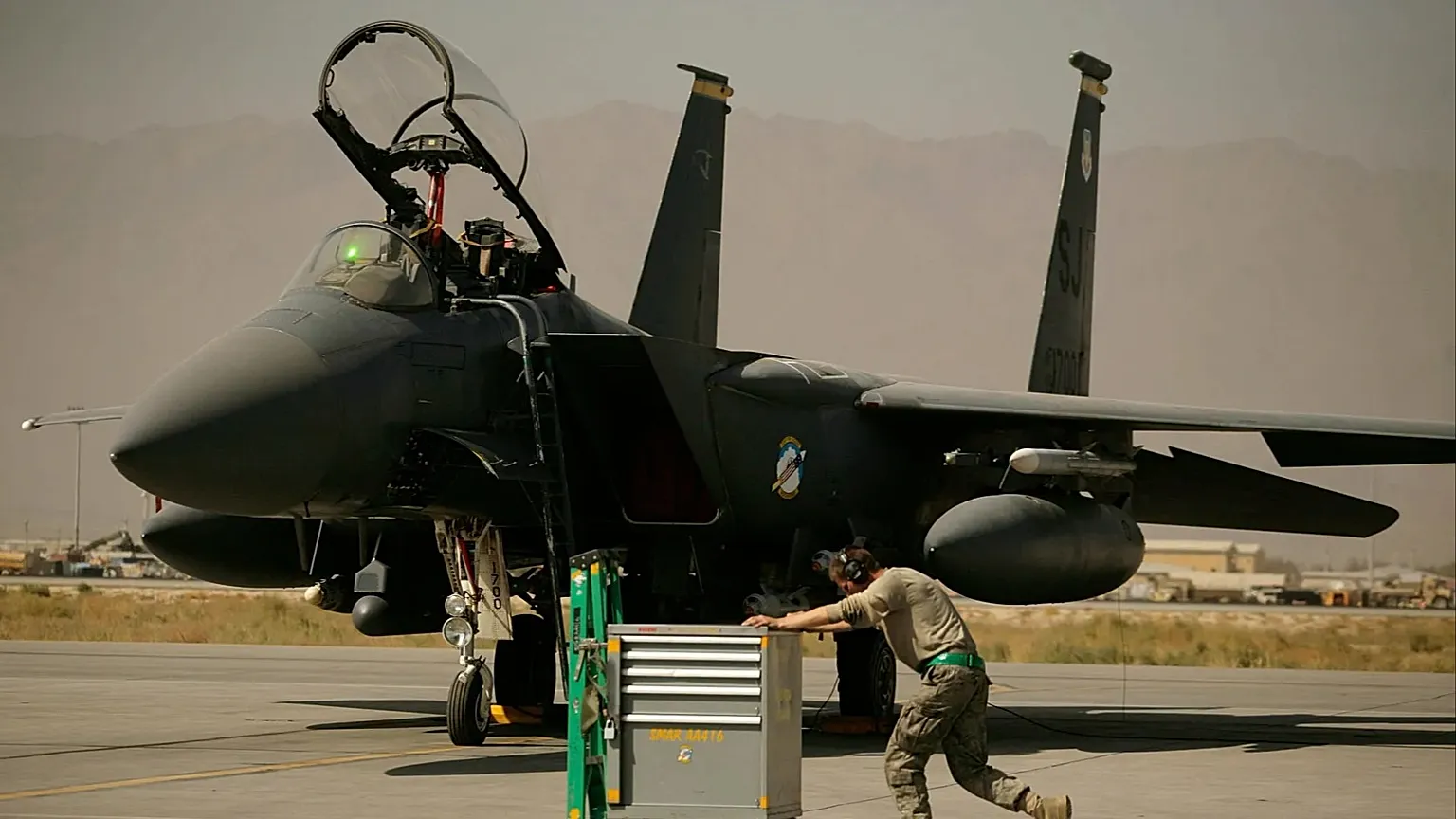
The numbers in the story matter. An F-15E Strike Eagle is a two-seat fighter, typically flown by a pilot and a weapon systems officer, and the reporting indicates that both crew members survived after ejection. That matters because it means this was not merely a search for a missing pilot, but a two-person extraction under combat conditions, with the risk multiplied by separation, terrain, and time.
The geography of vulnerability
Iran’s terrain is central to the story. Reports placed the downed crew in rugged, mountainous or remote terrain in southwestern Iran, where line-of-sight communications can be limited and weather or altitude can complicate both evasion and extraction. The rescue operation reportedly unfolded amid active hostilities, with officials saying the downed airmen were being tracked while enemy forces were closing in.
That landscape transforms every minute into a strategic variable. A downed airman in open desert is one problem; a downed airman in mountains near an adversary’s military apparatus is another, because each hour raises the risk of capture, injury, or a failed extraction that could widen the conflict.
The machinery behind the drama
The rescue also exposes the hidden architecture of American military reach. Reporting described a combination of intelligence, surveillance, reconnaissance, airborne platforms, and special operations assets; one account said the CIA’s “unique capabilities” helped locate the stranded crew member, while another described a deceptive approach and a temporary forward landing area or airstrip used to facilitate recovery.
That may sound cinematic, but the reality is more bureaucratic than heroic in the conventional sense. Modern rescue operations depend on invisible disciplines: satellite feeds, radio discipline, terrain analysis, electronic warfare, aerial refueling, medical staging, and a chain of command willing to accept enormous risk on behalf of a single crew. The drama is visible; the administrative choreography is what makes the drama survivable.
Politics in the cockpit
President Trump’s public framing turned the rescue into a moral and political proof point. He celebrated the recovered airman as evidence that the United States does not abandon its service members, turning a battlefield extraction into a broader statement about national resolve. That rhetorical move is familiar, but in a crisis with Iran it carries extra weight because it signals not just compassion, but escalation dominance: the claim that American power can reach into an enemy’s interior and bring people out alive.
Iran’s reaction, predictably, aimed at the opposite outcome. Iranian officials claimed the rescue was “foiled,” while Iranian state media emphasized destroyed aircraft and helicopters, seeking to recast the operation as a failed incursion rather than a successful extraction. In a confrontation like this, competing versions of events are not a sideshow; they are part of the battle itself, because each side wants to define whether the operation looked like courage, recklessness, or weakness.
What the episode reveals
The rescue is significant not because the United States can do this once, but because it shows what the country still reserves for personnel recovery: exceptionalism with logistics behind it. Few states can credibly promise that they will attempt to retrieve isolated aircrew deep inside hostile territory; fewer still can turn that promise into action at short notice. That capability is expensive, rare, and politically useful, which is why it remains one of the clearest symbols of American military power.
At the same time, the episode is a warning. The more technologically sophisticated a military becomes, the more it imagines it can manage risk; but the need for a rescue inside Iran reminds us that even the most advanced airpower can still be reduced to a pilot, a parachute, and a race against capture. The rescue succeeded because a system built for redundancy met a situation that allowed no margin for error.
The deeper American story
The story is not simply that America rescued a pilot. It is that the country still organizes enormous moral and material effort around the idea that no service member should be left behind, even when the mission becomes diplomatically explosive and operationally ambiguous. That principle is noble, but it is also costly, and in this case it collided with the hard realities of Iranian territory, contested airspace, and the perpetual contest over who gets to tell the story first.
The rescue offers a rare glimpse of a state acting at full concentration: intelligence finding the target, air power protecting the corridor, special operators taking the risk, and political leadership translating the event into a statement of purpose. That is what made the mission newsworthy. It was not only that a pilot came home; it was that the machinery of American power briefly revealed itself in motion, and the world was asked to watch.