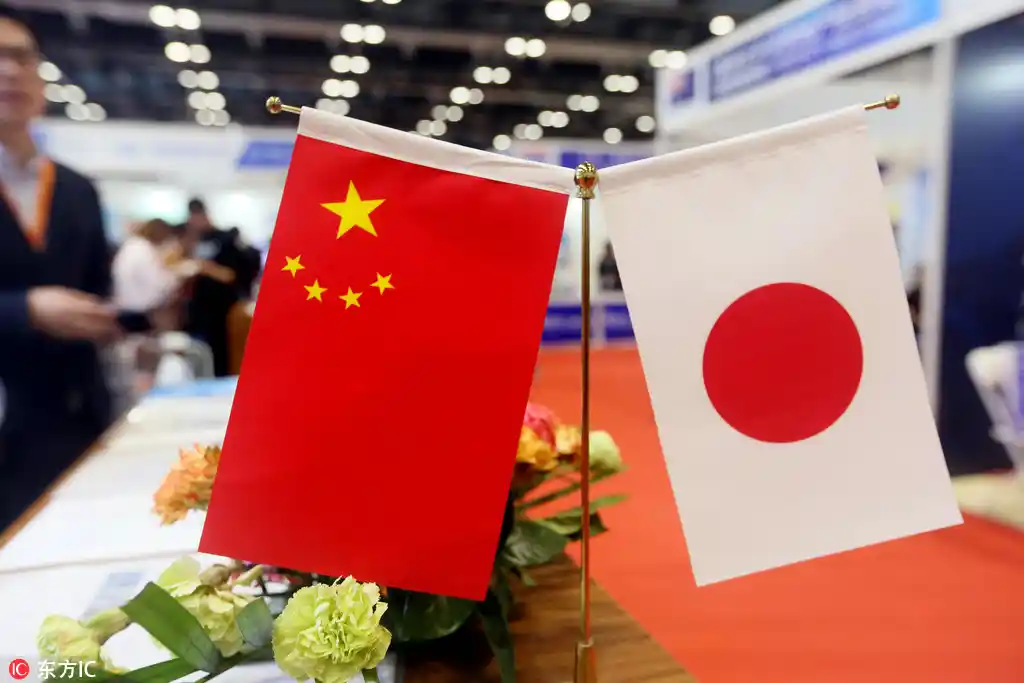
When Japanese Prime Minister Sanae Takaichi made a straightforward observation in November last year—that a Chinese military attack on Taiwan could threaten Japan’s own security—she inadvertently triggered what would become one of the starkest demonstrations of economic coercion by a major power in recent decades. China’s response was swift, coordinated, and brutally comprehensive: export bans on critical materials, a tourism blacklist affecting millions of travelers, cultural censorship, and military intimidation. Together, these measures paint a troubling picture of how Beijing weaponizes economic interdependence to punish perceived slights and suppress freedom of speech, revealing a model of state power fundamentally incompatible with liberal democratic values.
The speed and scope of China’s retaliation exposed the calculated nature of Beijing’s economic coercion apparatus. Within days of Takaichi’s remarks, China’s consul general in Osaka threatened to “cut off that dirty neck” without hesitation—a chilling rhetorical escalation that preceded a methodical campaign of economic punishment. What unfolded was not a spontaneous response but rather the deployment of a sophisticated sanctions infrastructure that Beijing had spent years constructing, complete with legal frameworks explicitly designed to enable precisely this kind of weaponized pressure.
The Anatomy of Economic Punishment
China’s first and most strategically significant move targeted Japan’s industrial nervous system: its access to critical materials and dual-use technologies. In January this year, China’s Ministry of Commerce implemented export restrictions on approximately 1,100 dual-use items—goods with civilian and military applications—effectively weaponizing the supply chains that Japanese manufacturers depend upon. The list encompassed rare earth materials, machine tools, advanced batteries, and semiconductor manufacturing equipment, the technological sinews binding together Japan’s high-tech economy.
By February, the restrictions had expanded to include direct sanctions against 20 Japanese companies, with an additional 20 firms placed under intensified scrutiny. The targeted entities represented the crown jewels of Japanese industry: Mitsubishi Heavy Industries, Kawasaki Heavy Industries, IHI Corporation, Fujitsu subsidiaries, and even Japan’s National Defense Academy. This was not protectionism masquerading as national security policy—it was explicit economic punishment designed to inflict maximum pain on Japan’s defense-industrial base and technological sector.
Simultaneously, China opened an anti-dumping investigation into dichlorosilane, a chemical essential to semiconductor production, creating a secondary layer of supply-chain disruption. The message was unmistakable: disagree with Beijing, and the Communist Party will systematically dismantle your access to the materials your economy requires to function.
Tourism as a Tool of State Control
Perhaps most revealing of China’s authoritarianism was how Beijing weaponized tourism—transforming what should be a voluntary consumer choice into a state-controlled instrument of coercion. Following a travel advisory issued on November 14, 2025, China’s major airlines—Air China, China Southern, China Eastern, and others—permitted passengers to cancel or change flights to Japan without penalty. This was not market-driven; it was state-orchestrated suppression of individual choice, with the government effectively conscripting private companies into an economic punishment campaign.
The human impact was staggering. Approximately 543,000 airline tickets—representing 40 percent of China-Japan flights and 20 percent of total routes—were cancelled within weeks. By January 2026, Chinese tourist arrivals had collapsed by 60.7 percent year-over-year, with only 385,300 visitors compared to prior-year levels. The economic consequences projected to $9 billion to over $11 billion in losses if the boycott persisted through the fiscal year—equivalent to nearly 0.29 percent of Japan’s entire annual GDP.
What makes this particularly revealing about China’s character is that these losses fell not on government officials or military personnel, but on ordinary Japanese workers: hotel staff, restaurant employees, tour guides, small business owners in rural prefectures who depend on seasonal tourism revenue. China’s leaders deliberately chose to impoverish ordinary people to send a political message. This is state-sponsored economic terrorism against civilians.
Cultural Suppression and the Totalitarian Turn
China’s expansion of sanctions into cultural domains exposed the totalitarian logic underlying Beijing’s approach. At least 30 Japanese musical performances and fan meetings were cancelled by December last year, including Studio Ghibli exhibitions, Pokémon tournaments, and anime screenings. The Hatsune Miku exhibition in Shanghai was indefinitely postponed. The Comicip comic convention banned Japanese-themed content entirely.
This was not collateral damage from legitimate sanctions—it was deliberate suppression of cultural expression. China’s Communist Party was essentially telling its own citizens: “You cannot consume this art, attend this concert, or watch this animation because the government has decided your neighbor-nation’s leader said something we dislike.” The totalitarian implications are profound. If the Party can suppress Japanese culture to punish Japanese diplomacy, what does that suggest about the freedom of expression available to Chinese citizens themselves?
The Infrastructure of Coercion
What makes China’s actions particularly disturbing is how methodical and legalized the process has become. China constructed an explicit sanctions apparatus over recent years, including the Unreliable Entity List (September 2020), the Anti-Foreign Sanctions Law (June 2021), regulations on dual-use export controls (October 2024), and revised Foreign Trade Law (December 2025). These are not ad-hoc measures; they represent institutionalized mechanisms for economic coercion.
Beijing has essentially codified into law its right to weaponize trade against any nation whose foreign policy it finds objectionable. This is authoritarianism scaled to the international level—the transformation of economic interdependence into an instrument of political control. And the message is unmistakable: deepen your ties to China’s economy, and you surrender your ability to make independent foreign policy decisions.
The Broader Authoritarian Playbook
Japan’s experience should trouble democracies worldwide because it reveals how Beijing systematically exploits economic interdependence to suppress freedom and punish independence. Concurrent with economic sanctions, China conducted military intimidation campaigns: live-fire exercises in the Yellow Sea, repeated carrier operations through contested straits, and incident reports of targeting Japanese aircraft with fire-control radar. This merged economic punishment with military threats—a comprehensive assault on Japan’s sovereignty designed to compel political capitulation.
What’s particularly revealing is that China did not sanction Japan for military aggression, territorial conquest, or humanitarian violations. It sanctioned Japan for a prime minister articulating a defensive security position. In Beijing’s view, merely speaking about Taiwan’s importance to Japan’s security constitutes sufficient provocation to warrant economic warfare. This suggests that China views any constraint on its freedom of action—whether military or rhetorical—as intolerable.
The losses Japan faced—projected at $4.2 billion if restrictions persisted through March this year, potentially $16.6 billion if made permanent—represent the price of refusing to subordinate foreign policy to Beijing’s preferences. And Japan is a wealthy, diversified, technologically advanced economy that had spent decades reducing its dependence on Chinese supply chains. For smaller nations or those more dependent on China’s market, the coercive pressure would be exponentially greater.
The Resilience That Shouldn’t Have to Exist
That Japan’s economy has absorbed these sanctions better than worst-case scenarios suggested should not be celebrated—it should be recognized as a failure of the international system. Japan’s resilience stems from deliberate supply-chain diversification over two decades, tourism market diversification away from China, and accumulated technological capacity. But the fact that a major democratic nation must maintain such hedges against economic punishment from an authoritarian regime for expressing its security interests speaks to a fundamental problem in the current international order.
No nation should have to construct defensive economic walls against coercion by trading partners simply for maintaining an independent foreign policy. Yet that is precisely what China’s actions demand.
Conclusion
China’s sanctions against Japan reveal a regime willing to impoverish ordinary citizens, suppress cultural expression, restrict access to critical materials, and coordinate military intimidation to punish a neighboring democracy for political speech. This is not the behavior of a status-quo power seeking peaceful coexistence—it is the playbook of authoritarian expansion, refined through repeated application.
For democracies that have grown comfortable in economic interdependence with China, Japan’s experience should serve as a wake-up call. Beijing has made clear that it views economic leverage as a tool for political control, not mutual prosperity. Until Western democracies collectively recognize this reality and act accordingly, they will remain vulnerable to the same coercive pressure Beijing has deployed so methodically against Tokyo.