In the shadowy predawn of January 3, 2026, American special forces descended on Caracas like a scene from a Cold War thriller, seizing Venezuelan President Nicolás Maduro and his wife, Cilia Flores, in a brazen operation that has sent shockwaves through the international order. Whisked away to New York to face drug-trafficking charges, indictments that, while rooted in narcotics allegations, encapsulate a decade of U.S. hostility toward Maduro’s beleaguered socialist regime, this act has drawn swift condemnation from the United Nations Security Council as an egregious overreach, one that risks normalizing unilateral power grabs under the guise of justice. Fact-checkers have parsed the details: The charges are narrow, but the motivations appear broader, intertwined with Venezuela’s vast oil wealth and Washington’s long-standing quest for influence in Latin America.
Federal agents escort Nicolás Maduro and his wife to a New York City courthouse. pic.twitter.com/dIZedZhuyu
— Complex (@Complex) January 5, 2026
The parallels to Iraq are uncanny and unsettling. Both episodes feature U.S.-led regime change efforts ostensibly justified by security threats and democratic ideals, yet underpinned by oil interests. In 2003, the invasion of Iraq followed years of sanctions that crippled Saddam Hussein’s economy, with rhetoric centering on weapons of mass destruction that proved illusory. Similarly, Venezuela endured escalating sanctions since 2019, choking its oil exports and exacerbating hyperinflation, before this military strike. The Maduro capture echoes the hunt for Saddam, but with a twist: Here, the prize is not just a dictator’s downfall but control over the world’s largest proven oil reserves, over 300 billion barrels. Critics warn of a quagmire ahead, a prolonged occupation that could mire the U.S. in another endless entanglement, much like Iraq’s post-invasion chaos. For global markets, the immediate tremor was a modest dip in crude prices, Brent and WTI slipped by 0.65%, as traders braced for supply disruptions from a nation whose output has withered to a mere 800,000 barrels per day under Maduro’s mismanagement.
Venezuela has been “liberated” like Syria, Afghanistan, and Iraq were “liberated”.
— Candace Owens (@RealCandaceO) January 3, 2026
The CIA has staged another hostile takeover of a country at the behest of a globalist psychopaths.
That’s it. That’s what is happening, always, everywhere. Zionists cheer every regime change.… https://t.co/F60ouK7qAr
Half a world away, in Mumbai’s bustling stock exchanges, the ripple effects were palpable. Shares of India’s oil and gas behemoths, ONGC, Oil India, and GAIL, opened lower on January 5, tumbling up to 2% in a knee-jerk sell-off. This initial plunge reflects the market’s aversion to uncertainty: Fears of short-term volatility in global supplies, potential escalations in U.S.-Venezuela tensions, and the specter of broader geopolitical fallout. Yet, as with many such shocks, the dip may prove ephemeral. Dig deeper, and a contrarian narrative emerges, one that positions this upheaval as a strategic windfall for India, the world’s third-largest oil consumer. Far from a setback, Maduro’s ouster could catalyze higher crude prices, unlock stranded Indian investments in Venezuelan fields, and spur a domestic exploration boom, insulating New Delhi from the whims of distant autocrats.
BREAKING: US-Led Venezuela Oil Restructuring Could Unlock Major Strategic Win for India
— Netram Defence Review (@NetramDefence) January 6, 2026
A potential US takeover of Venezuela's oil sector presents India with a ~$1 billion windfall opportunity while reshaping our energy security calculus. Here's the strategic breakdown
The… pic.twitter.com/iRmlRj0Vyq
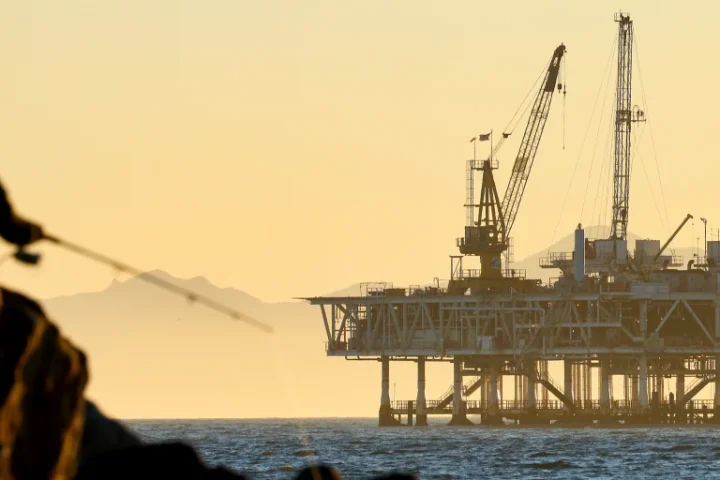
To grasp why, consider the intricate web of India’s stakes in Venezuela. ONGC, the state-run titan through its overseas arm ONGC Videsh Ltd. (OVL), has poured significant capital into the country. OVL commands a 40% participating interest in the San Cristobal oilfield, which it jointly operates, and an 11% equity stake in the Carabobo field within the oil-rich Orinoco belt. These ventures, forged in partnerships with Indian Oil Corporation (IOC) and Oil India dating back to 2010, when a 40% interest was acquired from the Venezuelan government, represent a bold bet on frontier markets. Yet, U.S. sanctions have turned them into albatrosses: Production stalled, and dividends, estimated at $500 million for ONGC alone, remain trapped in bureaucratic limbo. Oil India, with a 3.5% stake in Carabobo and an exposure of about $60 million, has voiced readiness to ramp up investments should conditions improve. IOC, too, shares in the San Cristobal project, rounding out a consortium of Indian public-sector undertakings (PSUs) eyeing revival.
Even private players like Reliance Industries stand to gain, albeit indirectly. While lacking direct upstream operations in Venezuela, Reliance has historically imported discounted Venezuelan crude to feed its sprawling refineries, the world’s largest single-site complex in Jamnagar. A post-Maduro landscape, potentially eased by U.S. involvement, perhaps through takeovers or fresh investments, could stabilize these flows, bolstering refining margins. Analysts at Chola Securities have termed the crisis “overall beneficial,” forecasting long-term gains for refiners like Reliance and explorers like ONGC. The short-term stock swoon? Attributable to reflexive caution amid headlines of airstrikes and arrests, but savvy investors see opportunity: Regime change might expedite debt recoveries and operational restarts, transforming liabilities into assets.
This optimism isn’t blind; it’s grounded in market mechanics. Venezuela’s reserves dwarf those of many OPEC peers, but output has cratered from over 3 million barrels per day in the early 2000s. A transitional government, buoyed by U.S. support, could disrupt supplies temporarily, tightening global markets and lifting prices. Historical analogs abound: The 2019 sanctions spike briefly pushed Brent higher, rewarding upstream firms. For ONGC and Oil India, whose revenues swell with elevated benchmarks, this spells enhanced valuations. GAIL, the gas pipeline powerhouse, might reap secondary benefits if associated natural gas markets firm up, though its domestic focus limits exposure. Broader trade ties amplify the upside: India’s exports to Venezuela, dominated by pharmaceuticals, could rebound, complementing energy linkages. As the Global Trade Research Initiative notes, bilateral commerce, down 81.3% in crude imports to $255.3 million in FY25, has room to grow, especially if sanctions lift.
Yet, the real prize lies beyond Caracas: in India’s own backyard. Importing 85% of its crude, New Delhi’s vulnerability to such shocks is acute, a dependency that the Venezuela saga underscores with brutal clarity. It’s a clarion call for self-reliance, accelerating the exploitation of India’s vast, underexplored hydrocarbon bounty. Across 26 sedimentary basins spanning 3.36 million square kilometers, total estimated resources hover at 25 billion tonnes of oil equivalent (BTOE). To date, discoveries tally 12.1 BTOE, leaving 12.9 BTOE, roughly 52%, undiscovered. Exploration coverage is paltry: Only 10% of basins are actively probed, with 70% of the area untouched. The lion’s share of this potential resides in Category II and III basins, partially explored or prospective zones, including offshore frontiers like Mahanadi, Andaman Sea, Bengal, and Kerala-Konkan, collectively harboring up to 22 billion barrels of untapped hydrocarbons.
These figures aren’t aspirational fluff; they’re backed by seismic surveys and policy momentum. The Andaman-Nicobar Basin, a 200,000-square-kilometer expanse, grabbed headlines in 2025 with a major gas discovery, heralding “fresh momentum” in deepwater plays. While early oil estimates of 22 billion barrels were overstated, centering instead on gas, the basin could meet half of India’s energy needs if fully tapped. Mahanadi’s “Guyana-scale” prospects, with serial finds, signal a paradigm shift. Bengal and Kerala-Konkan add heft, their combined potential rivaling America’s Permian Basin. Since 2015, 172 discoveries, 62 offshore, have materialized, propelled by the Open Acreage Licensing Policy (OALP), which democratizes bidding and woos foreign capital.
Government stewardship is pivotal. Petroleum Minister Hardeep Singh Puri’s advocacy, via official releases and social media, spotlights Andaman’s strategic edge. Projections from Rystad Energy and S&P Commodity Insights envision domestic production curbing imports by 10-20% by 2030, a buffer against Venezuela-like volatility. ONGC, spearheading Andaman efforts, and Oil India, with onshore prowess, are primed to lead. Engineers India Ltd., with Venezuelan footprints, could pivot domestically for infrastructure builds.
Challenges loom: Soaring exploration costs, environmental hurdles, and tech gaps necessitate FDI inflows and regulatory agility. Yet, geopolitical flux like Maduro’s fall could redirect global capital to stable havens like India, away from sanctioned quagmires. This dovetails with Indian Prime Minister Narendra Modi’s “Atmanirbhar Bharat” ethos, fusing energy autonomy with sustainability. The Andaman gas could fuel cleaner transitions, aligning with net-zero pledges.
Skeptics counter that negligible Venezuela trade dilutes the upside, and the stock dip hints at enduring risks. Ethical qualms persist: India’s measured neutrality on the U.S. action, avoiding outright endorsement, preserves diplomatic flexibility. But dismissing the benefits ignores precedent. Iraq’s invasion, for all its flaws, reshaped oil geopolitics; Venezuela’s tumult could similarly empower emerging players like India.
Maduro’s capture, redolent of Iraq’s ghosts, isn’t India’s crisis; it’s an inflection point. By harnessing price tailwinds, reclaiming Venezuelan stakes, and unleashing domestic reserves, New Delhi can forge resilience. Policymakers must act: Streamline approvals, incentivize tech transfers, and court investors. The market’s initial shudder? A prelude to resurgence. As global energy chess unfolds, India holds aces, and it’s time to play them boldly.
References and Further Reading
BBC News. (2026, January 3). How the US captured Maduro. https://www.bbc.com/news/articles/cdred61epg4o
CNN. (2026, January 3). January 3, 2026 — Maduro in US custody. https://www.cnn.com/world/live-news/venezuela-explosions-caracas-intl-hnk-01-03-26
CNBC. (2026, January 7). Seven U.S. troops injured while capturing Nicolás Maduro. https://www.cnbc.com/2026/01/07/us-venezuela-military-operation-maduro-injuries-casualties.html
WLRN. (2026, January 3). How the US captured Venezuelan leader Nicolás Maduro. https://www.wlrn.org/light/americas/2026-01-03/how-the-us-captured-venezuelan-leader-nicolas-maduro
CBS News. (2026, January 5). Ousted Venezuelan President Maduro arraigned in U.S. court. https://www.cbsnews.com/live-updates/venezuela-trump-maduro-charges/
Al Jazeera. (2026, January 6). US critics and allies condemn Maduro’s abduction at UN Security Council. https://www.aljazeera.com/news/2026/1/6/us-critics-and-allies-condemn-maduros-abduction-at-un-security-council
United Nations News. (2026, January 5). Maduro seized, norms tested: Security Council divided. https://news.un.org/en/story/2026/01/1166706
Euronews. (2026, January 6). US allies and foes denounce Trump’s intervention in Venezuela. https://www.euronews.com/2026/01/06/us-allies-and-foes-denounce-trumps-intervention-in-venezuela-in-un-security-council-meetin
Economic Times. (2026, January 6). Amid political shift, Venezuelan oil revival could keep global prices lower. https://economictimes.com/news/international/business/amid-political-shift-venezuelan-oil-revival-could-…
Al Jazeera. (2026, January 8). What resources does Venezuela have — apart from the world’s most. https://www.aljazeera.com/news/2026/1/8/what-resources-does-venezuela-have-apart-from-the-worlds-most
OilPrice.com. (2026, January 7). Why Trump underestimates the challenge of reviving Venezuela’s oil. https://oilprice.com/Energy/Energy-General/Why-Trump-Underestimates-the-Challenge-of-Reviving-Venezuelas-Oil.html
S&P Global. (2026, January 5). Venezuela crisis seen having minimal impact on Indian oil flow. https://www.spglobal.com/energy/en/news-research/latest-news/crude-oil/010526-venezuela-crisis-seen-having-minimal-impact-on-ind…
India Today. (2026, January 3). US control of Venezuelan oil could unlock $1 billion in dues for India. https://www.indiatoday.in/business/story/us-control-of-venezuelan-oil-could-unlock-usd-1-billion-in-dues-for-india-lift-output-2…
Telegraph India. (2026, January 4). US move in Venezuela may help India recover $1 billion oil dues. https://www.telegraphindia.com/business/venezuela-crisis-may-unlock-usd-1-billion-ongc-videsh-oil-dues-for-india-energy-sector-p…
Outlook Business. (2026, January 4). Why Indian oil cos stand to gain from a US takeover of Venezuela’s oil fields. https://www.outlookbusiness.com/corporate/why-indian-oil-cos-stand-to-gain-from-a-us-takeover-of-venezuelas-oil-fields
Fortune India. (2026, January 5). Oil stocks retreat after U.S. strikes on Venezuela. https://www.fortuneindia.com/markets/oil-stocks-retreat-after-us-strikes-on-venezuela-ongc-ioc-gail-adani-total-gas-slip-up-to-2…
Nifty Trader. (2026, January 4). US raids in Venezuela lift energy stocks with RIL at record high. https://www.niftytrader.in/markets/us-raids-in-venezuela-lift-energy-stocks-with-ril-at-record-high-and-ongc-up-2/
Business Standard. (2026, January 4). US attack on Venezuela: Impact on oil, Indian stock markets. https://www.business-standard.com/markets/news/us-venezuela-conflict-impact-oil-prices-indian-stock-markets-2026-ril-ongx-oil-in…
Hardeep Singh Puri [LinkedIn]. (2025, September 23). India’s sedimentary basins hold 25 BTOE resources. https://www.linkedin.com/posts/hardeepspuri_energysecurity-exploration-investinindia-activity-7376527810137530368-kYA2
DGH India. (n.d.). Hydrocarbon prospectivity – Indian sedimentary basins. http://online.dghindia.org/oalp/Files/pdf/Hydrocarbon_Prospectivity-Indian_Sedimantary_Basins.pdf
Discovery Alert. (2025, October 13). New gas discovery in Andaman-Nicobar basin boosts energy. https://discoveryalert.com.au/gas-discovery-andaman-nicobar-basin-2025-significance/
Rystad Energy. (2025, October 9). Andaman discovery injects new hope into India’s deepwater. https://www.rystadenergy.com/insights/andaman-discovery-india-deepwater-gas-oil-exploration
Financial Express. (2026, January 4). Will the US–Venezuela conflict spike India’s oil import bill?. https://www.financialexpress.com/business/industry-will-the-usvenezuela-conflict-spike-indias-oil-import-bill-analysts-reveal-th…
AAPG Explorer. (2025, January 10). India’s offshore frontier moves from hope to momentum. https://www.aapg.org/news-and-media/details/explorer/articleid/69350/indias-offshore-frontier-moves-from-hope-momentum