France’s budget standoff is less a technical squabble over numbers than a constitutional stress test for the Fifth Republic’s semi‑presidential model. At its core lies a familiar instrument—Article 49.3—but in an unfamiliar context: a structurally hung parliament, a swollen deficit and an electorate already convinced that fiscal policy is being set over its head.
France entered 2026 rolling over its 2025 budget rather than agreeing a new one, a stopgap that avoids a shutdown but leaves an already‑large deficit untouched. With the government lacking a stable majority, Prime Minister Sébastien Lecornu has so far failed to secure agreement on a full‑year finance bill, despite weeks of negotiations and an already “slimmed‑down” budget package.
The fiscal backdrop makes this drift more dangerous than a routine political spat. France’s general government deficit is hovering around 5–5.5 percent of GDP, while public debt is nearing 115 percent, placing Paris under an EU “excessive deficit procedure” and requiring several points of structural adjustment over the coming years. Each month without a credible consolidation path undermines market confidence and constrains France’s room for manoeuvre in Brussels, where stricter fiscal rules are returning after the pandemic-era pause.
Against this backdrop, Budget Minister Amélie de Montchalin’s refusal to rule out Article 49.3 is politically explosive. The clause allows the prime minister to adopt a budget without a parliamentary vote, unless a no‑confidence motion succeeds—an instrument designed in 1958 to tame fractious assemblies, but one that now reads as the nuclear option in a landscape of deep mistrust.
49.3 is no longer an obscure procedural tool; it is a symbol. The Macron governments used it repeatedly, including to force through the deeply contested pension reform in 2023, triggering mass protests and nearly toppling the government in a no‑confidence vote that failed by just nine votes. For many French citizens, 49.3 has become shorthand for a technocratic centre “ruling without consent,” especially on distributive issues like pensions and public spending.
Lecornu’s broken‑promise dilemma
Lecornu pledged in October not to resort to 49.3 for the 2026 budget, a commitment aimed at reassuring both parliament and the street after years of contentious executive overreach. Walking that back now would not just be a tactical U‑turn; it would reinforce a narrative of a governing class that treats promises as expendable once crisis rhetoric is invoked.
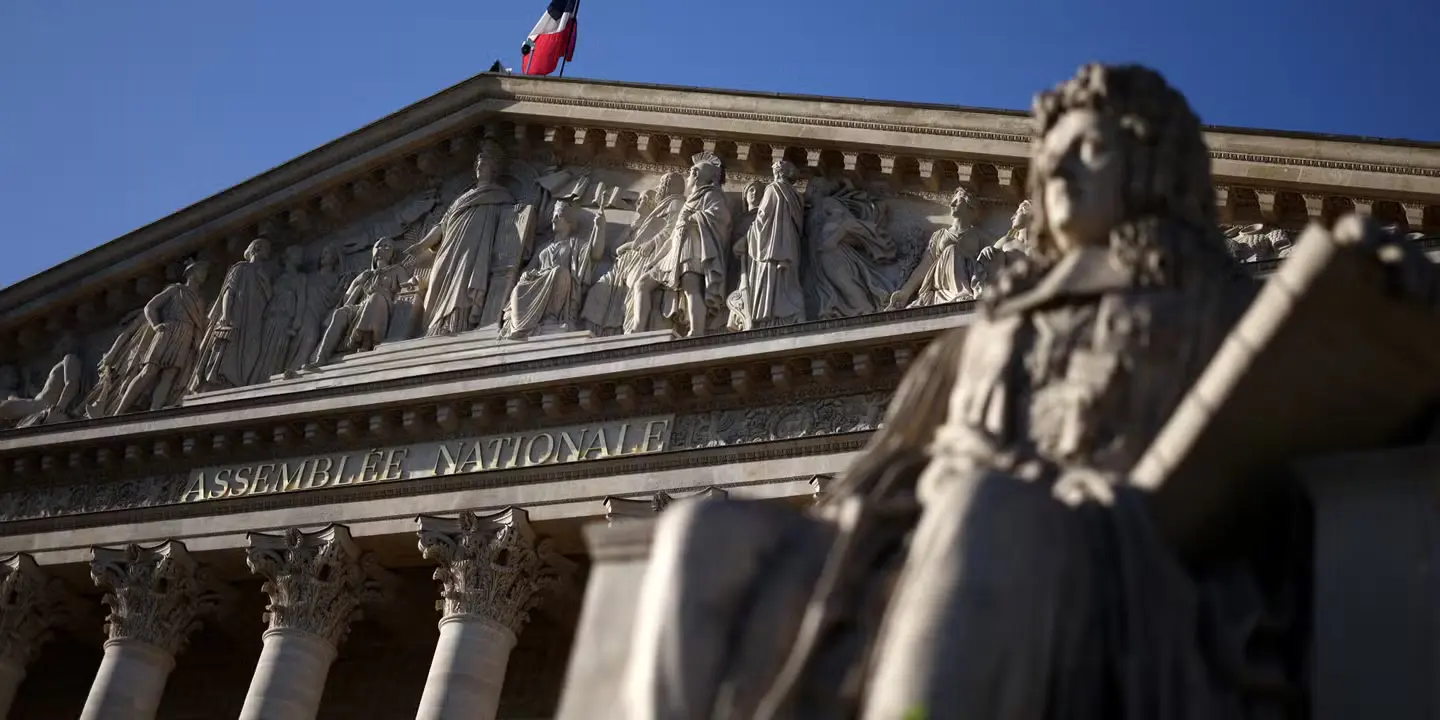
Yet his room to manoeuvre is genuinely narrow. France has a hung Assemblée nationale, fragmented among a weakened presidential camp, a strengthened far right, and a left split between more radical forces and a relatively constructive Socialist Party. The talks that collapsed in December showed that no stable coalition is willing to “own” a consolidation‑lite budget that pleases neither Brussels nor domestic constituencies.
De Montchalin’s line—“not ruling out anything that could provide France with a budget”—captures this bind: fiscal necessity is being used to justify procedural exceptionalism. But if every difficult budget becomes an “emergency,” the exception risks becoming the rule, hollowing out parliamentary debate precisely when redistribution and public services are under intense strain.
A precarious trade with the Socialists
One nuance in this standoff is the stance of the Socialists, who have hinted they could abstain on a no‑confidence vote if the government uses 49.3 but incorporates key left‑of‑centre demands. That offer illustrates both the residual centripetal pull of the old governing parties and their weakness in a polarised assembly: the PS can block a right–far‑right censure alliance, but only at the cost of co‑owning a budget crafted by a centre‑right minority.
For Lecornu, this is an attractive but risky bargain. It could produce a “Frankenstein” budget that mixes fiscal restraint demanded by Brussels with selective social concessions demanded by the PS, satisfying neither markets nor voters. It would also entrench a style of governance where key distributive choices are hammered out in back‑room deals around the threat of 49.3, rather than through transparent coalition‑building and programmatic compromise.
Meanwhile, parties further left have already signalled that any 49.3 on the budget would trigger a censure attempt, again placing France inches away from being left without both a government and a proper budget. The implied message to citizens is that the institutional machinery can deliver either democratic deliberation or fiscal stability, but not both at the same time.
France’s budget impasse is a national story with European implications. A large core‑euro country running deficits near 5 percent of GDP while struggling to pass even incremental consolidation measures is precisely the scenario the revamped EU fiscal rules were designed to avoid. If Paris responds by governing through constitutional shortcuts instead of building coalitions for reform, it will feed doubts about the enforceability—and democratic legitimacy—of those rules.
It also matters symbolically that this is happening in the Fifth Republic, whose strong executive was long held up as a cure for the paralysis of proportional parliamentary systems. Today, France looks more like Italy or Spain in its party fragmentation, but without the coalition culture that allows minority governments to function without permanent recourse to emergency tools.
The choice Lecornu and de Montchalin face is therefore larger than one budget. Either they double down on 49.3, entrenching a pattern of technocratic imposition checked only by episodic street mobilisations and near‑miss confidence votes. Or they accept a slower, messier process of assembling cross‑party compacts that share the political cost of fiscal adjustment—at the price of conceding that the presidency and government can no longer legislate as if they held a reliable majority.
For a country that has long seen itself as the laboratory of European political modernity, how France gets out of this fiscal–constitutional corner will be watched far beyond Paris. The real question is whether the French state can still deliver hard choices with the consent of the governed, rather than merely with the letter of the constitution.