When Ukrainian President Volodymyr Zelenskyy says that 15 years of security guarantees are not enough, he is not bargaining for prestige or symbolism. He is arguing from lived experience. “We are already at war,” he noted, “and it has been for almost 15 years.” In that blunt sentence lies the core problem facing the latest push for peace in Ukraine: time, not territory, is the most contested resource.
The current draft peace framework reportedly offers Ukraine U.S.-backed security guarantees for 15 years, with the possibility of extension. Kyiv, however, is pushing for 30, 40, even 50 years. To some Western ears, this may sound excessive—an attempt to bind future administrations and parliaments to a distant conflict. But from Ukraine’s perspective, anything shorter risks becoming an intermission rather than an ending.
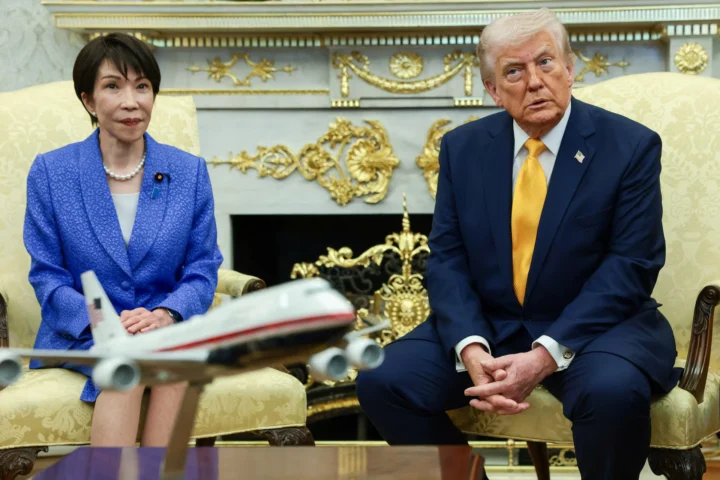
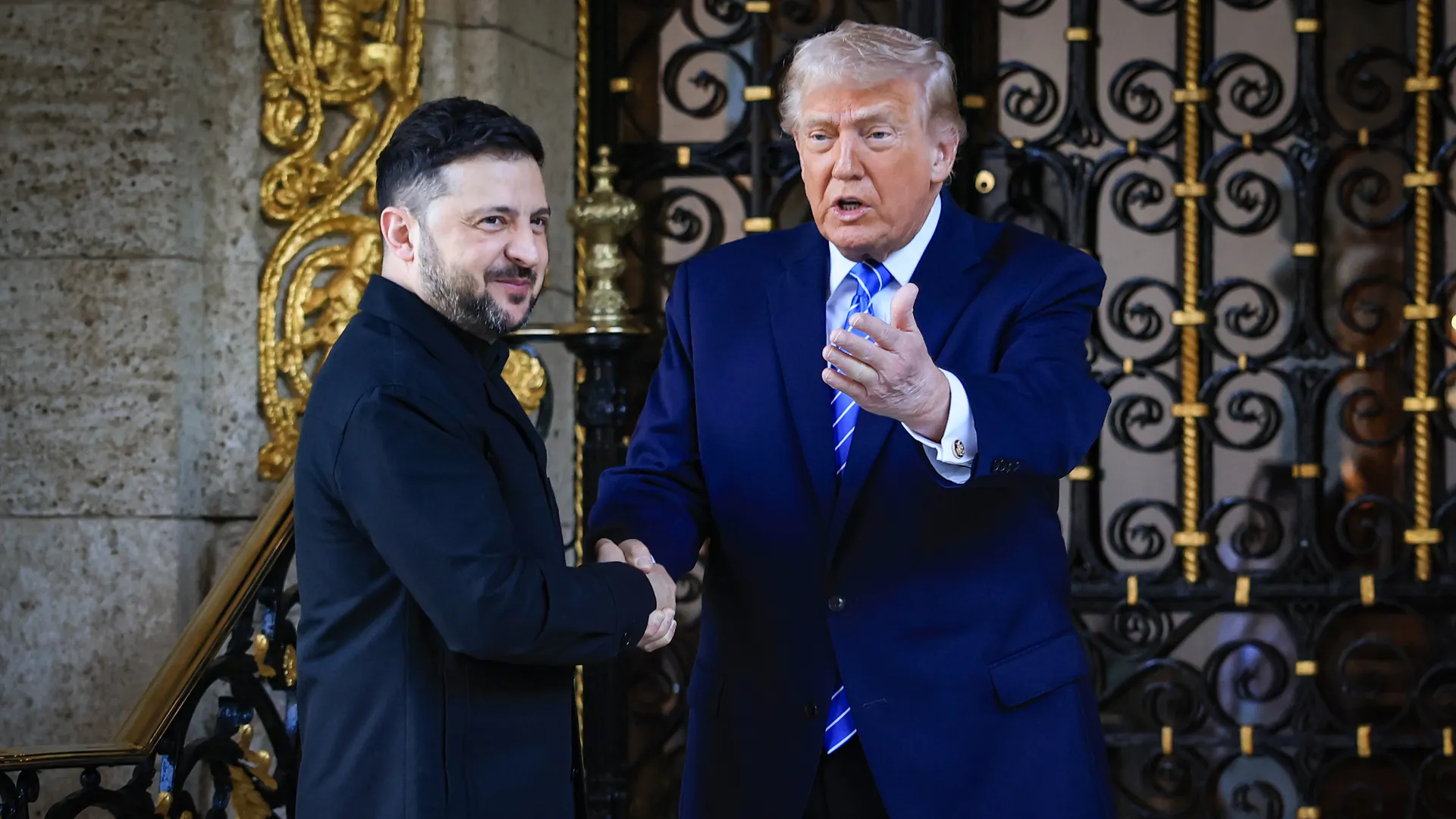
This is why the recent meeting in Florida between Zelenskyy and Donald Trump matters less for its optics than for its implications. Trump reportedly confirmed “strong security guarantees” and expressed optimism that negotiations are nearing a conclusion. Moscow echoed that optimism, with the Kremlin saying talks are in their “final stage.” History suggests caution: wars often feel closest to ending just before they take their most dangerous turn.
The question is not whether Ukraine can accept a peace deal. It is whether the deal can survive the future.
Security guarantees that resemble NATO’s Article 5 protections—where an attack on one is considered an attack on all—are often described as the gold standard of deterrence. Yet Ukraine is not a NATO member, and these guarantees would exist in a more ambiguous space: powerful, but politically contingent.
That ambiguity is precisely why Zelenskyy wants duration. Fifteen years is a single political generation in Washington and Europe. It spans perhaps three U.S. presidential terms, multiple congressional cycles, and several European governments. From Kyiv’s vantage point, that is not permanence; it is probation.
Ukraine’s recent history justifies the concern. Since 2014, ceasefires have come and gone, each framed as a step toward stability, each ultimately failing. If the war has already lasted nearly as long as the proposed guarantees, why should Kyiv trust that the next 15 years will be fundamentally different?
A longer timeframe would do more than reassure Ukrainians. It would force Western capitals to confront a reality they often defer: if Ukraine is to remain independent and secure, that commitment must be structural, not episodic.
Deterrence is NOT a Document
Zelenskyy has emphasized that guarantees only matter if they are credible, and credibility, in his view, comes from presence. International troops on Ukrainian soil, he argues, would transform paper promises into physical deterrence. This idea remains controversial in parts of Europe, where leaders fear escalation or domestic backlash. Yet deterrence without teeth is precisely what failed Ukraine in the past.
The irony is that the West already understands this logic. It is why NATO battlegroups are stationed in the Baltics and Poland. It is why U.S. troops remain in South Korea seven decades after the Korean War armistice. Long-term presence works—not because it makes war impossible, but because it makes aggression predictably costly.
Ukraine is asking to be treated not as an exception, but as a precedent.
Complicating matters is Zelenskyy’s insistence that the current 20-point plan be approved by a national referendum. Democratically, this is unassailable. Politically, it is fraught. A referendum requires 60 days of ceasefire—precisely what Russia appears unwilling to grant, as evidenced by renewed heavy attacks on Kyiv.
This creates a paradox. Ukraine cannot legitimize peace without a pause in fighting, but Russia can block that legitimacy by continuing the war. In effect, Moscow gains veto power over Ukraine’s democratic process.
If the West is serious about a negotiated settlement, it must recognize this trap and address it directly. A ceasefire is not a concession to Ukraine; it is a prerequisite for any deal that claims moral or political durability.
No peace framework can avoid the territorial question, and here the gap remains wide. Zelenskyy’s proposal to turn Donbas into a demilitarized free economic zone is a creative attempt to sidestep zero-sum logic. It suggests shared interests—trade, reconstruction, civilian stability—where there has been only militarization.
Moscow’s response has been predictably maximalist. Kremlin spokesman Dmitry Peskov reiterated that Ukraine must leave Donbas entirely to end hostilities, while remaining vague about other occupied regions. This asymmetry is telling. Russia demands clarity from Ukraine while preserving its own flexibility.
Behind this lies a deeper issue: Russia’s definition of “peace” appears closer to enforced acquiescence than mutual security. That does not mean compromise is impossible, but it does mean that any agreement relying solely on goodwill is unlikely to endure.
Europe’s Moment of Truth
Zelenskyy’s proposal to host U.S., Ukrainian, and European officials in Kyiv, alongside a planned meeting of European allies in Paris, underscores a critical point: this is not only a U.S.-Ukraine negotiation. Europe’s security architecture is directly implicated.
For too long, Europe has been both indispensable and hesitant—providing aid and rhetoric, but often deferring strategic leadership to Washington. A long-term guarantee for Ukraine would demand more: sustained funding, troop commitments, and political ownership.
If Europe believes that Ukraine’s security is inseparable from its own, this is the moment to prove it.
The rush to declare negotiations in their “final stage” reflects understandable fatigue. War exhausts publics as much as armies. But premature closure is dangerous. A peace that collapses in five or ten years would not be a failure of diplomacy alone; it would be a failure of imagination.
Zelenskyy’s push for 30, 40, or 50 years of guarantees is not a demand for eternal conflict management. It is an acknowledgment that peace, in this case, must be maintained long enough to become normal.
The real question, then, is not whether the West can afford such a commitment. It is whether it can afford not to make it. A short guarantee may end the current war. A long one might prevent the next.
In that sense, Ukraine’s insistence on time is a challenge not just to negotiators, but to the entire post–Cold War security order. Either peace is something we underwrite seriously—or it is something we rent, cheaply, until the next crisis comes due.