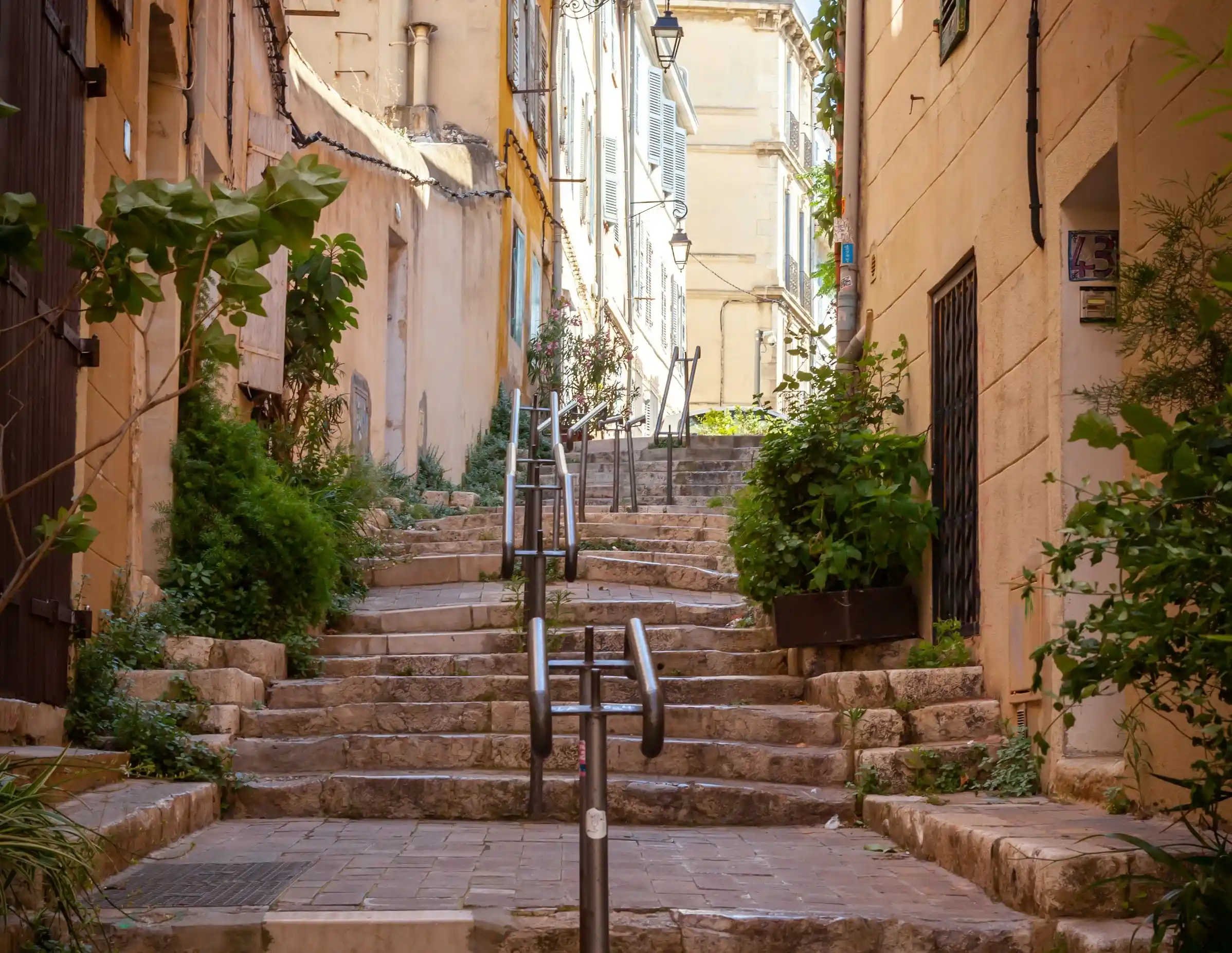
The forest-green gates of Orange’s Marseille headquarters are usually open, a familiar sight in a city where the telecoms giant’s name is stitched into everyday life — and even into the stands of its legendary football stadium. But after violent clashes linked to a nearby drug trafficking hub erupted in a neighboring social housing complex, the company shut its doors and told thousands of employees to work from home.
The decision sent a jolt through Marseille and far beyond its business district. For many residents, it captured a deeper unease: the sense that insecurity tied to the drug trade is no longer confined to certain neighborhoods but is now shaping the city’s economic life, daily routines and political future.
With municipal elections approaching in March, security has surged to the top of voters’ concerns. Candidates from across the political spectrum are scrambling to present their own solutions to a problem that has plagued France’s second-largest city for decades — and that increasingly resonates nationwide.
“People tell me they avoid going into the city center because they don’t feel safe anymore,” said Martine Vassal, the center-right candidate backed by conservatives and allies of President Emmanuel Macron. “Security is the number one issue.”
Polls suggest a tight race. Left-wing mayor Benoît Payan, seeking reelection, is narrowly ahead, while Franck Allisio of the far-right National Rally is close behind. Both hover around 30 percent support, with Vassal in third place and hard-left candidate Sébastien Delogu trailing but still competitive in a city where Jean-Luc Mélenchon’s movement has historically performed well.
For national parties, the stakes extend beyond Marseille. The contest is being watched as an early indicator of the political battles to come before the 2027 presidential election.
A City That Mirrors the Nation
Marseille’s patchwork of communities reflects France’s broader divides. Multicultural, low-income districts with strong left-wing traditions border more affluent suburbs that in recent years have drifted toward the far right. Meanwhile, the political center has struggled to maintain its footing.
The city also wrestles with long-standing structural problems: entrenched poverty, aging and unsafe housing, high youth unemployment and a reputation as a gateway for narcotics entering Europe. Supporters and critics alike argue that Marseille has failed to capitalize on its geographic advantages as a Mediterranean port with a young population and booming tourism potential.
“Marseille has always felt like the forgotten sibling of Paris,” said Allisio. “Decisions are made in the capital, promises are announced, but people here don’t always see results.”
That sentiment runs deep. Many locals believe national authorities focus on headline-grabbing police operations without tackling the social roots that make the drug trade so attractive to young people.
The killing of 20-year-old Mehdi Kessaci in November reignited that debate. Investigators are treating the murder as an act of intimidation linked to trafficking networks. Kessaci’s brother, Amine, is a well-known anti-drug activist whose family has already suffered other losses connected to the underworld.
The shock prompted visits from President Macron, Interior Minister Laurent Nuñez and Justice Minister Gérald Darmanin, all pledging tougher action against traffickers. Yet on the streets, skepticism remains.
“Repression alone doesn’t work,” said Kaouther Ben Mohamed, a former social worker who now campaigns on social justice issues. “If it did, the drug trade wouldn’t be as strong as it is today.”
Competing Visions for Safety
Despite ideological differences, the leading mayoral candidates share a basic diagnosis: crime is fueled by social neglect and limited economic opportunity. Where they differ is in how to respond.
Payan has promised to expand community policing, double the number of municipal officers and introduce free meals for 15,000 students as a way to draw young people back into school and away from the streets.
Allisio’s platform centers on tougher security measures — more surveillance cameras, additional police vehicles and specialized units targeting burglary and public disorder. He also backs tax cuts on property and short-term free parking to support small businesses and stimulate local commerce.
Vassal has proposed arming fare inspectors on public transport and making transit free for residents under 26. She blames slow housing development for trapping families in unsafe buildings and pledges to accelerate construction in struggling areas.
Delogu, by contrast, rejects increased spending on policing. He wants to redirect those funds toward housing, healthcare and anti-poverty programs, arguing that prevention, not punishment, is the real path to safety.
Behind all the proposals lies a constraint that no mayor can escape: core policing and criminal justice powers remain in the hands of the national government.
Waiting on Paris
For residents like Mahboubi Tir, who spent weeks in a coma after being assaulted during a parking dispute last year, political debates feel painfully abstract.
“I almost died,” he said. “You start to look at your city differently after that. You don’t feel protected.”
Whoever wins city hall will inherit a complex, deeply rooted crisis — and limited authority to solve it alone. Marseille’s next mayor can shape local policing, housing policy and social services, but the broader fight against organized crime will depend heavily on decisions made in Paris.
In that sense, Marseille’s election is not just about one city’s future. It is a test of whether France can find a new balance between enforcement and social investment — and whether voters believe any political camp has truly figured out how to deliver it.