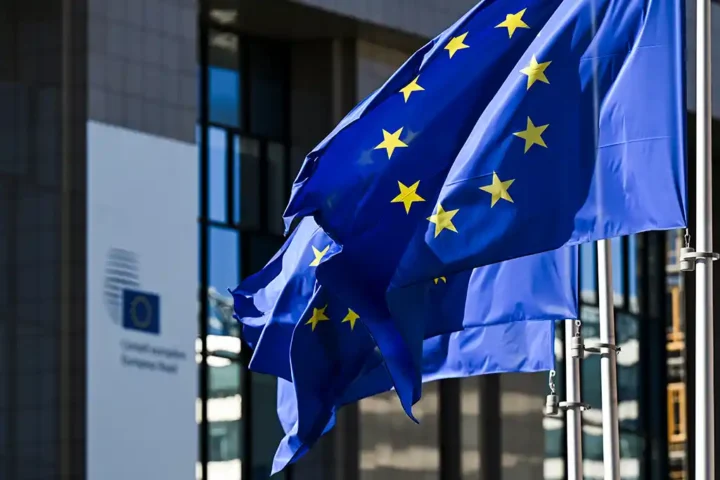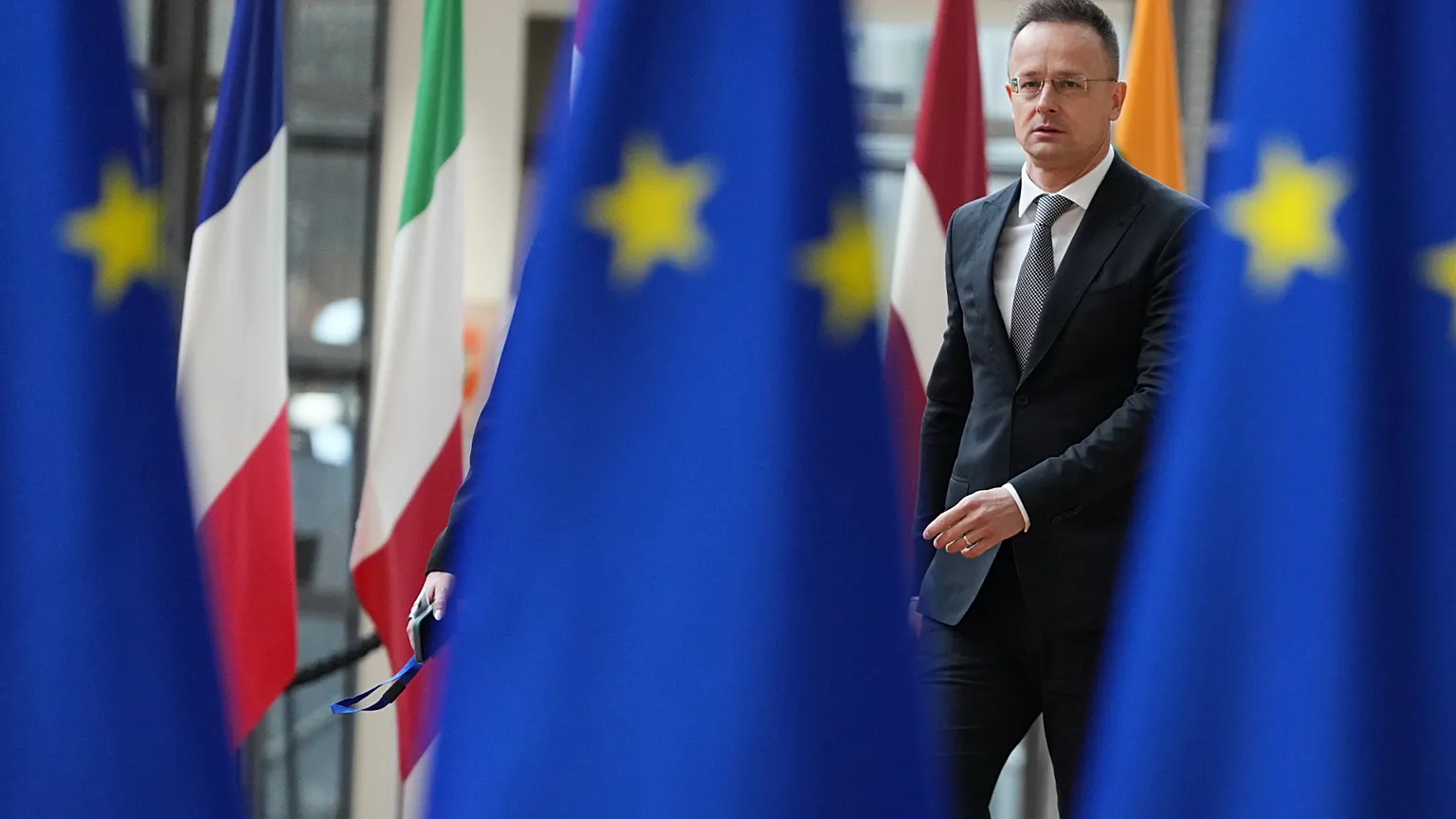
In the marble halls of Brussels, where European leaders once negotiated in presumed solidarity, a chilling new reality has emerged: one member state may have turned the tables into an open line to Moscow. On March 21, 2026, The Washington Post reported that Hungarian Foreign Minister Péter Szijjártó has for years stepped out of EU Council meetings to phone his Russian counterpart, Sergei Lavrov, delivering real-time briefings on closed-door discussions and floating possible EU responses. A European security official put it bluntly: “Every single EU meeting for years has basically had Moscow behind the table.”
The timing is explosive. Hungary heads to parliamentary elections on April 12, with Prime Minister Viktor Orbán’s Fidesz party trailing opposition leader Péter Magyar’s Tisza party in polls. Budapest immediately cried foul. Szijjártó dismissed the claims as “fake news” and “Ukrainian propaganda” designed to install a “pro-war puppet government.” Europe Minister János Bóka called it a desperate ploy to sway voters. Yet the EU’s quiet actions speak louder than the denials. According to multiple diplomats, Brussels has begun limiting the flow of confidential material to Hungary and shifting sensitive talks into smaller, exclusive formats—E3, Weimar Group, Nordic-Baltic 8, and others—precisely to starve potential leaks.
Polish Prime Minister Donald Tusk, no stranger to Russian hybrid threats, confirmed long-standing suspicions: “The news that Orbán’s people inform Moscow about EU Council meetings in every detail shouldn’t come as a surprise to anyone. We’ve had our suspicions about that for a long time.” Tusk now measures his own words in full sessions, speaking only when “strictly necessary.” Lithuania’s former foreign minister Gabrielius Landsbergis recalled similar precautions as far back as 2024, excluding Hungary from sensitive NATO summit preparations. Opposition leader Magyar went further, branding the alleged briefings “outright treason.”
This is not an isolated lapse. It fits a decade-long pattern that has turned Hungary into the EU’s most problematic member. In October 2025, investigative outlets Direkt36, De Tijd, and others exposed a Hungarian intelligence operation in Brussels dating back to 2012. Officers from the Information Office (IH), operating under diplomatic cover at Hungary’s Permanent Representation (then led by current EU Commissioner Olivér Várhelyi), systematically recruited Hungarian nationals working in EU institutions. They appealed to patriotism or offered cash and career help to extract classified documents on rule-of-law proceedings, media freedom, and EU funds. The network collapsed clumsily in 2017 after one officer was exposed, but the European Commission only launched a formal internal review last autumn.
Worse, Russian state hackers had already penetrated Hungary’s Foreign Ministry networks by 2021, accessing even encrypted channels carrying “restricted” and “confidential” diplomatic traffic. Hungarian diplomacy, in effect, became an open book for the Kremlin. Orbán himself has publicly disclosed details of confidential EU documents on Ukraine aid packages, framing them as shocking “bombshells.” And Hungary’s consistent vetoes or delays on sanctions packages, weapons deliveries, and €90 billion in loans to Kyiv have aligned suspiciously with Russian interests.
The human and strategic cost is immense. While ordinary Hungarians benefit from EU single-market access and cohesion funds, their government’s behaviour forces the rest of the bloc into contortions. Diplomats now conduct real business in ever-smaller circles, fragmenting decision-making and slowing Europe’s response to existential threats. In wartime, when unity against Russian aggression is paramount, giving Moscow a front-row seat to EU deliberations is not mere “peace advocacy”—it is active sabotage of collective security. One diplomat called it “deplorable”; another warned that without change, “the EU need[s] to find ways to deal with this in another manner.”
Hungary insists it pursues an independent foreign policy rooted in national interest, dialogue with all parties, and protection of its energy supplies. Orbán frames EU criticism as Brussels overreach. Yet the pattern—repeated intelligence operations, hacked networks, real-time briefings, and public leaks—suggests something deeper than principled dissent. It looks like a calculated choice to trade European trust for Kremlin goodwill, all while collecting EU subsidies. Sovereignty cuts both ways: a member state cannot demand solidarity on funds and market access while systematically undermining the club’s core functions.
The crisis of trust is now institutional. EU leaders are right to tread carefully before Hungary’s election; foreign interference in domestic politics would only bolster Orbán’s narrative. But post-election, regardless of the outcome, Brussels cannot pretend the problem away. Procedural safeguards—stricter classification of documents, intelligence vetting of national delegations, and perhaps treaty changes to allow qualified majority voting on foreign policy and sanctions—are overdue. The alternative is a permanently paralysed Union, vulnerable to the very authoritarian power it claims to resist.
Hungary is not the first difficult member, nor will it be the last. But when leaks and espionage become routine, the question stops being whether secrets are being shared. It becomes whether the European project can survive a member that treats its partners as adversaries. Trust, once broken, is not easily restored. Brussels must decide—before the next crisis—whether it still believes in collective defence, or whether it will keep shrinking the table until only the loyal remain.