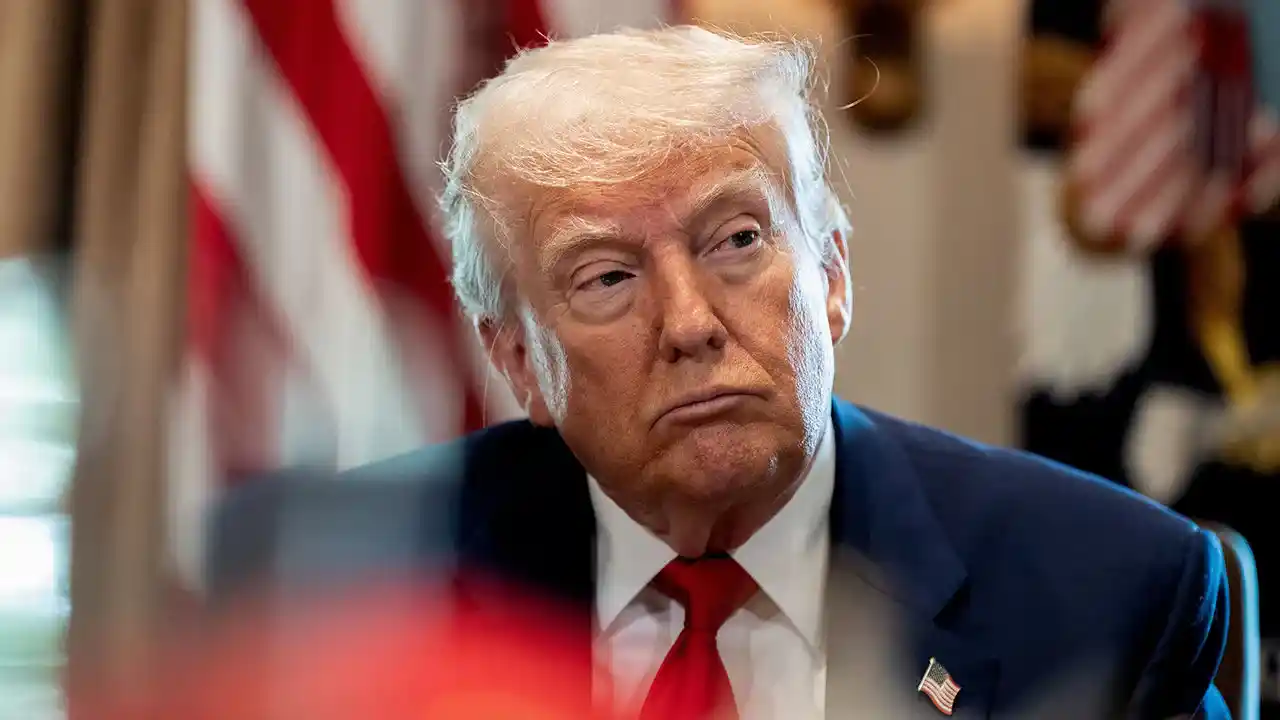
President Donald Trump campaigned twice on a promise to end “reckless” regime-change wars; in office again, he is now prosecuting one of the most ambitious regime-change projects in modern U.S. history.
In 2016, Trump built a core part of his political brand on rejecting the post-9/11 interventionist consensus. At the Republican National Convention he attacked Hillary Clinton and Barack Obama for “the failed policy of nation-building and regime change” in Iraq, Libya, Egypt, and Syria, warning that toppling governments only creates “power vacuums that are filled by terrorists.” On the campaign trail that year, he vowed to “stop the reckless and costly policy of regime change overseas” and focus on destroying ISIS instead.
As president-elect, he sharpened the message: “We will stop racing to topple foreign regimes about which we know nothing,” he told supporters in North Carolina, insisting that the United States should prioritize killing terrorists, not redesigning other peoples’ political orders. Even after ordering the killing of Iran’s Qassem Soleimani in 2020, Trump was careful to say, “We do not seek regime change,” framing the strike as limited deterrence rather than a bid for power in Tehran.
These statements were more than a rhetorical flourish. They captured a genuine mood: a bipartisan fatigue with “endless wars,” and a growing sense that the U.S. had overreached in Iraq and Libya and misread the complexities of the Arab Spring. Trump’s “America First” pitch married that weariness to a nationalist story about bringing troops home and focusing on domestic renewal.
Enter Operation Epic Fury
Fast forward to 2026, and the same president who denounced regime change has launched a sprawling military campaign aimed explicitly at overthrowing the Iranian government. In late February, U.S. and Israeli forces began what has been described as a coordinated effort to “overthrow the governing regime in Iran,” a phrase that previous administrations tended to avoid even when their policies nudged in that direction.
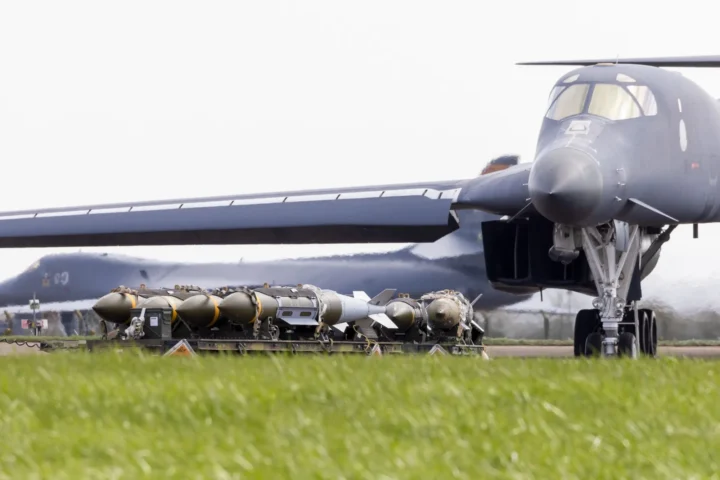
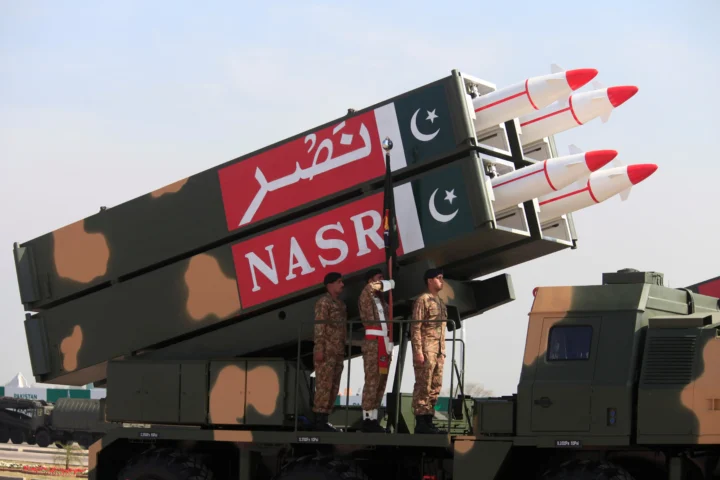
The White House has described “Operation Epic Fury” as having four objectives: degrade Iran’s missile arsenal, dismantle much of its naval capability, prevent it from acquiring nuclear weapons, and contain its network of regional proxies so they can no longer arm and direct militias abroad. Stripped of euphemism, these are the building blocks of regime change: disarm the state, break its instruments of coercion, and sever its external relationships, all while signaling that the current leadership has no future.
What makes the shift even starker is that Iran is not the only target. In the months before the strikes, Trump backed a military intervention in Venezuela that contributed to Nicolás Maduro’s ouster, then talked about the United States being “in charge” of the country’s direction. He has also mused about a “friendly takeover” of Cuba, language that echoes a long history of U.S. paternalism toward Latin America. A president who once promised to stop “racing to topple foreign regimes” is now contemplating, and in some cases executing, multiple simultaneous attempts to reorder other states’ politics.
An old playbook in new hands
In many ways, Trump is not innovating so much as returning to a well-worn American script. Since 1945, Washington has repeatedly used covert operations, economic sanctions, and overt force to change regimes perceived as hostile: the 1953 CIA-backed coup against Mohammad Mossadegh in Iran; the 1954 overthrow of Jacobo Árbenz in Guatemala; the 1963 ouster of Ngo Dinh Diem in South Vietnam; the 1973 destabilization of Salvador Allende in Chile; and, of course, the 2003 invasion of Iraq to topple Saddam Hussein.
The “playbook” has recurring features. First, Washington defines an adversary regime as not just problematic but illegitimate, often tying it to an ideological threat: Communism in the Cold War, terrorism or nuclear proliferation today. Second, it relies on a combination of pressure: sanctions, information campaigns, covert support to opposition groups: and military tools, from proxy wars and no-fly zones to full-scale invasion. Third, it tends to assume that removing the existing leadership will unleash pent-up democratic forces, underestimating how much damage the process of removal itself inflicts on state institutions and social cohesion.
Trump campaigned, in effect, against this template. Yet the contours of his Iran strategy look familiar: severe economic pressure carried over from previous administrations, military escalation justified as necessary to stop a “rogue” regime, and a hazy endgame that presumes something better will emerge after the Islamic Republic’s core power structures are broken. Even the regional logic mirrors past episodes. Proponents argue that weakening Tehran will stabilize the Middle East and curb terrorism, much as advocates of the Iraq war claimed that removing Saddam would transform the region.
The dissonance is not just between Trump and his predecessors; it is between Trump and Trump. In 2016, he held up Iraq as a cautionary tale of how “reckless” regime change breeds civil war and strengthens extremist groups. Today his administration risks turning Iran: larger, more populous, and more geopolitically central than Iraq: into the site of a similar experiment, but with higher stakes and fewer clear off-ramps.
Why the pivot?
How did a president elected twice on an anti-regime-change message end up embracing the very strategy he once scorned? The answer lies in a mix of political incentives, personnel choices, and structural inertia in U.S. foreign policy.
Politically, Trump’s “no more endless wars” slogan has always had two audiences: the base that wants troops home and the hawks who want adversaries punished without the open-ended occupations associated with Iraq and Afghanistan. Narrowly framed air campaigns, special operations raids, and covert actions offer a way to square that circle: projecting toughness without visibly repeating the large-scale ground deployments that most Americans reject. The Iran operation, marketed as a finite campaign to neutralize a threat rather than a multi-year occupation, fits that logic even as its strategic aims amount to regime change.
Personnel matter as well. Trump’s second-term national security team is stocked with figures who talk the language of “America First” but favor assertive uses of power. Loyalists such as Mike Waltz as national security adviser, Marco Rubio at State, and hawkish voices around the NSC and intelligence community have long advocated harder lines on Iran, Venezuela, and Cuba. They translate the president’s grievances: about Obama’s nuclear deal, about “socialism” in the hemisphere: into policy blueprints that look remarkably like older interventionist doctrines, just wrapped in different branding.
Finally, there is the deeper inertia of the national security apparatus. The tools that produced earlier regime changes: sanctions architecture, covert action capabilities, forward-deployed forces, standing war plans: still sit on the shelf, waiting for a president willing to sign off. Even Joe Biden, who ran on restoring restraint and diplomacy, found himself calibrating support for Ukraine and managing escalation in Gaza in ways that often nudged toward broader confrontation, despite his stated desire to avoid “wider war.” For Trump, whose instincts oscillate between deal-making and dominance, the machinery of coercion is even easier to activate.
The risks
The United States has been here before, and the record is grim. The 1953 coup in Iran helped entrench a repressive monarchy whose eventual overthrow produced the Islamic Republic; the 1954 intervention in Guatemala ushered in decades of dictatorship and civil war; the removal of Diem fed instability in South Vietnam and emboldened the Viet Cong; the invasion of Iraq shattered the Iraqi state and opened space for sectarian violence and the rise of the Islamic State.
Those episodes were not accidents but the predictable outcomes of a model that breaks states faster than it can build them. Regime change campaigns tend to underestimate the nationalism of local populations, the resilience of security forces, and the ways external meddling can delegitimize even genuine domestic opposition. In Iran’s case, memories of 1953 are already central to the regime’s narrative; another externally driven attempt to impose political outcomes risks validating its siege mentality and fracturing an opposition that has struggled to maintain unity.
The regional stakes are just as high. Iran sits at the heart of a web of conflicts stretching from Lebanon and Syria to Iraq and Yemen. A destabilized or fragmented Iranian state could unleash new proxy wars, refugee flows, and proliferation risks, even as it weakens the very institutions that might one day manage a peaceful transition. For a president who once mocked the hubris of “building democracies” at gunpoint, betting on a controlled collapse in Tehran is an extraordinary gamble.
The cost of forgetting
Trump has always been a transactional politician, and his foreign policy has never fit neatly into traditional labels. But his turn toward regime change in Iran and activism in Venezuela and Cuba exposes a deeper pattern in U.S. statecraft: the tendency to condemn yesterday’s disasters while quietly recreating their logic under new slogans. Each generation of policymakers promises to learn from the last; each insists that this time will be different, more surgical, more limited, more attuned to local realities.
What Trump once called the “reckless and costly policy of regime change overseas” has not disappeared; it has been rebranded and folded into an “America First” narrative that equates strength with the ability to reorder other societies. The irony is that his original critique: of hubris, of unintended consequences, of the limits of U.S. power: remains as valid as ever. It is his willingness to act on that insight that has evaporated.
The danger now is not only the human and strategic costs of another regime-change project gone awry, but the erosion of a rare, fragile consensus: that the United States should be more cautious about toppling governments, however odious, in regions it only dimly understands. If even the president who promised to tear up the regime-change playbook ends up following it, the question is no longer whether Washington has learned from Iraq and Libya, but whether it is capable of learning at all.