Islamabad’s declaration of ‘open war’ masks a deeper reckoning: the militants threatening Pakistan today were nurtured by its own intelligence apparatus.
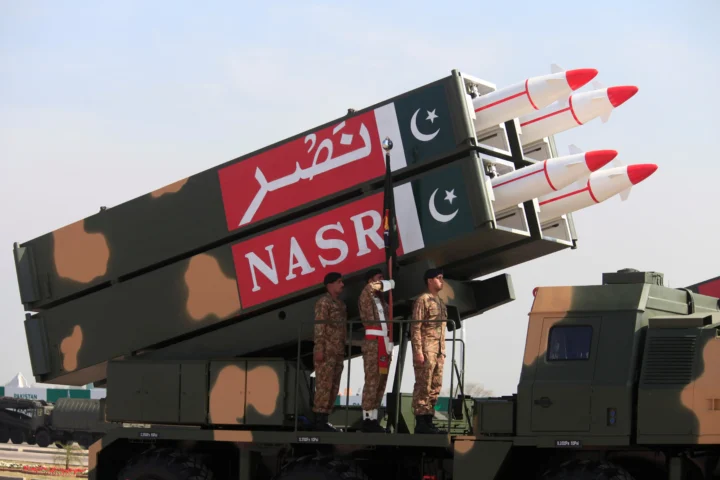
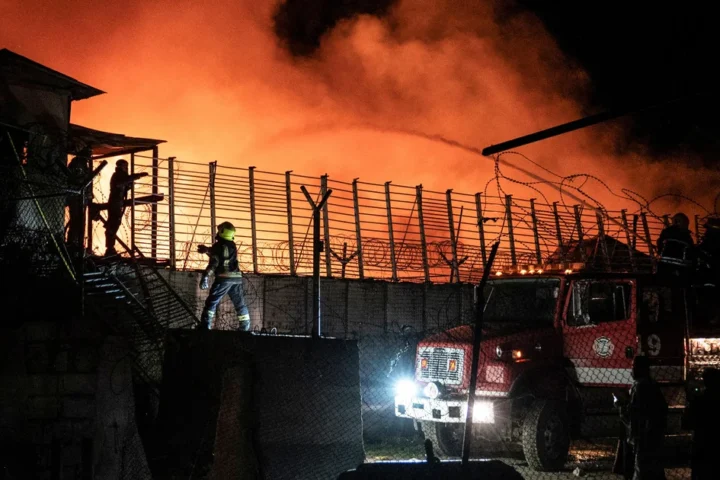
Pakistan’s Defence Minister Khawaja Asif declared this week that his country is now in a state of ‘open war’ with Afghanistan, a statement as alarming as it is revealing. Following Pakistani airstrikes on Kabul, Kandahar, and Paktia that Islamabad claims killed more than 130 Taliban operatives, and Afghan retaliatory strikes that destroyed Pakistani border posts near Paktika and Khost, the region stands at the edge of a broader conflagration. Yet to understand how two neighboring states arrived at this precipice, one must trace a decades-long arc of strategic miscalculation in which Pakistan is not the victim it claims to be, but the architect of its own crisis.
The human toll is already severe. Afghanistan reports heavy civilian casualties from the Pakistani strikes; Pakistan counts over 1,000 lives lost annually to militant violence originating from Afghan soil. A fragile ceasefire has emerged, but few are confident it will hold. What is clear is that the current escalation did not emerge from nowhere. It was built, brick by brick, by Pakistani policy choices stretching back to the era of the Afghan jihad.
Pakistan’s Self-Made Monster
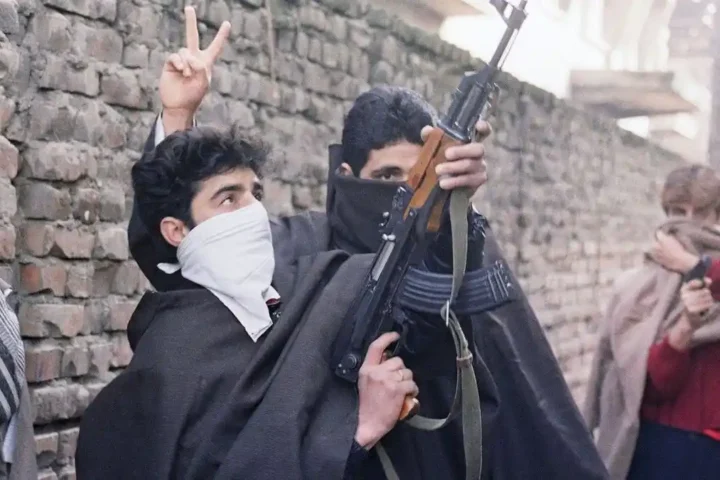
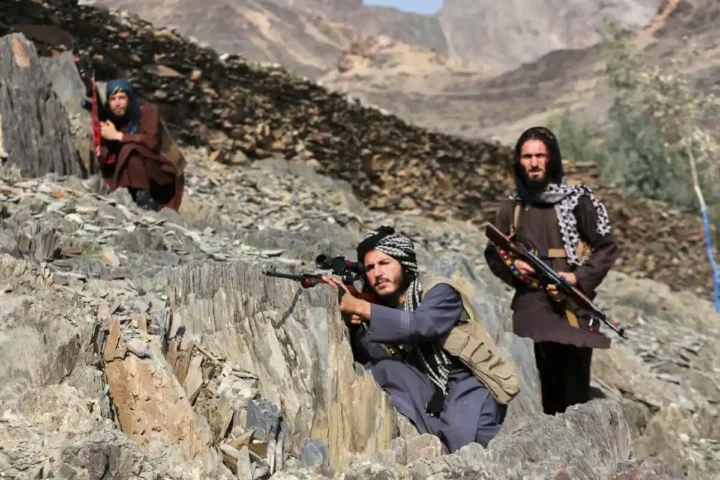
The Tehrik-i-Taliban Pakistan, or TTP, did not arise in a vacuum. Formed in 2007 as a loose coalition of militants in the Federally Administered Tribal Areas, the group drew directly from the ecosystem of jihadist infrastructure that Pakistan’s Inter-Services Intelligence helped cultivate during the 1980s and 1990s as strategic assets against India and as instruments of influence in Afghanistan. Islamabad’s doctrine of ‘strategic depth’, the idea that a pliant Afghanistan could serve as a buffer and rearguard against India, led the ISI to extend tacit support to Pashtun militant networks it believed it could control.
It could not. The TTP turned its weapons on the Pakistani state with devastating efficiency, launching thousands of attacks that have claimed thousands of lives. By 2025, TTP-led violence had surged 34%, with 699 terrorist incidents killing 1,034 people, predominantly in Khyber Pakhtunkhwa and Balochistan. The group now fields an estimated 6,000 to 6,500 fighters, exploiting safe havens across the Afghan border that became far more accessible after the Taliban’s return to Kabul in 2021. United Nations reports have documented increased Taliban support for the TTP, including training facilities and logistical assistance in Kabul itself.
The militants threatening Pakistan today were nurtured, however indirectly, by Islamabad’s own intelligence apparatus. That is not an accusation—it is a documented history.
Pakistan is now fighting a fire it helped start. That recognition is essential not to assign blame for its own sake, but because accurate diagnosis is the prerequisite for effective treatment. Any strategy that begins with Afghanistan as the sole villain and Pakistan as the aggrieved party will fail because it misreads the origins of the insurgency entirely.
Aggressor Across the Durand Line
Pakistan’s launch of Operation Ghazab lil Haq, airstrikes that penetrated deep into Afghan territory, including the capital, represents a qualitative escalation that Islamabad has not fully reckoned with. The Durand Line, that colonial relic drawn in 1893, has never been accepted by Afghanistan as a legitimate international boundary. Disputes over its status are longstanding and complex. But Pakistani jets striking urban centers in a neighboring country is a breach of sovereignty by any reasonable definition of that term, one that echoes, with painful irony, the very complaints Pakistan once leveled against American drone operations on its own soil.
Islamabad struck first in the latest round of exchanges. Afghan retaliation followed. When Defense Minister Asif characterizes this sequence as Afghan aggression requiring an ‘open war’ response, he is presenting an incomplete account that obscures Pakistan’s initiating role. The pattern is not new: Pakistani cross-border operations into Afghanistan have occurred before, and each time they have inflamed rather than resolved the underlying tensions.
Layers of Hypocrisy
Pakistan’s rhetorical posture compounds the strategic error. Accusing Afghanistan of ‘exporting terrorism’ and serving as an ‘Indian colony’ would carry more weight if Islamabad did not simultaneously host anti-India militant organizations, including Lashkar-e-Taiba, that have drawn repeated rebukes from the United Nations Security Council for state-sponsored terror. Pakistan demands from Afghanistan what it refuses to grant India: an unambiguous denial of safe harbor to groups targeting its neighbor.
India’s renewed engagement with Afghanistan since 2021, reopening its embassy and providing humanitarian assistance, is described by Pakistani officials as ‘incitement.’ New Delhi, for its part, has condemned the Pakistani airstrikes and backed Afghan sovereignty, a position that has cast India as the measured voice in this particular dispute. Pakistan’s killing of more than 1,300 militants in 2025 domestic operations is presented as evidence of counter-terrorism resolve, but it cannot paper over Islamabad’s own role in the radicalization of the tribal areas through years of selective, instrumentalized support for jihadist networks.
Regional Wounds and Self-Inflicted Pain
The consequences extend well beyond the two belligerents. The Torkham crossing, a vital artery for regional trade, has been disrupted. Refugee flows are accelerating at a moment when Pakistan’s economy is already under severe strain, inflation has exceeded 20%, and the government is navigating a difficult relationship with the International Monetary Fund. Military resources are being diverted from an already active Balochistan insurgency, where tensions remain chronically elevated.
The strategic calculus of striking Afghanistan is, on its own terms, poor. Full Taliban retaliation remains a risk. Pashtun populations on both sides of the border, bound by kinship, culture, and mutual grievance, are likely to be further alienated by Pakistani military action, and alienation is the most reliable recruiter the TTP has. History offers a cautionary precedent: Operation Zarb-e-Azb, Pakistan’s major North Waziristan campaign in 2014, achieved tactical gains but ultimately displaced militants who reconstituted across the border rather than dismantling the movement.
The regional architecture is also at risk. Afghanistan’s access to Iran’s Chabahar port, a critical outlet for a landlocked country, could be disrupted by continued instability. Chinese interests in the China-Pakistan Economic Corridor, which traverses the volatile Khyber Pakhtunkhwa province, are directly imperiled. Beijing and Tehran, both with significant equities in regional stability, will be watching developments with considerable unease.
A nuclear-armed state bombing a neighbor over blowback it helped create is not a display of strength. It is a confession of strategic failure dressed in the language of resolve.
The Path Forward
Defense Minister Asif’s bravado should not obscure what it masks: a nuclear-armed state bombing a neighbor to manage consequences that flow in significant part from its own historical choices. That is not a position of strength. It is a position of desperation, and desperate military actions in complex insurgent environments rarely produce the outcomes their architects intend.
A durable path forward requires Pakistan to do several things it has so far been unwilling to do. First, it must genuinely dismantle the militant infrastructure on its own soil, not selectively, but comprehensively, including groups that Islamabad has historically regarded as useful. Second, it must engage Afghanistan’s Taliban government through diplomatic channels rather than aerial bombardment, recognizing that the Taliban, whatever its many failings, is the governing authority in Kabul and must be treated as such. Third, Pakistan must acknowledge Afghan sovereignty over the Durand Line dispute, or at a minimum refrain from treating it as a license for military incursion.
Regional forums, including the Shanghai Cooperation Organization, to which both Pakistan and Afghanistan are members, offer potential mediation mechanisms. China and Iran, with influence over both parties, could play constructive roles if given diplomatic space to do so. But none of this is possible so long as Pakistan frames the conflict as a war of aggression imposed upon it, rather than a crisis it helped create and must help resolve. The arithmetic of this conflict is unsparing. Hundreds are dead in days. Thousands more will follow if escalation continues. Pakistan’s Frankenstein, the militant ecosystem it assembled, armed, and imagined it could direct, has turned on its creator. The only responsible response to that reality is introspection, restraint, and a willingness to pursue peace through means other than airstrikes. Islamabad has not yet demonstrated that it possesses any of those qualities in sufficient measure.