Pension funds and business summits are unleashing a torrent of investment between Canada and India, potentially unlocking $600 billion in market capitalization across energy and tech. Mark Carney’s Mumbai trip has ignited two-way FDI in the wake of a diplomatic thaw, proving that economics can trump politics.
Canada and India spent years in a deep freeze. Ties began to thaw in early 2025 with Justin Trudeau’s exit and Carney’s rise as prime minister. Carney, the unflappable ex-central banker, wasted no time: He rolled out the red carpet for Narendra Modi at the G7 in Kananaskis last June, reinstated envoys, lifted visa caps and kicked off reciprocal visits. By February 2026, Carney touched down in Mumbai—his first bilateral jaunt to India since 2018—heralding a new era of brass-tacks engagement.
Don’t mistake this for feel-good diplomacy. It’s a calculated pivot. Both nations, squeezed by global supply-chain snarls and protectionist gusts, need reliable partners. India hungers for capital and tech; Canada craves markets for its resources and expertise. Carney’s playbook—blending statecraft with dealmaking—shows how leaders can engineer economic liftoffs where others floundered.
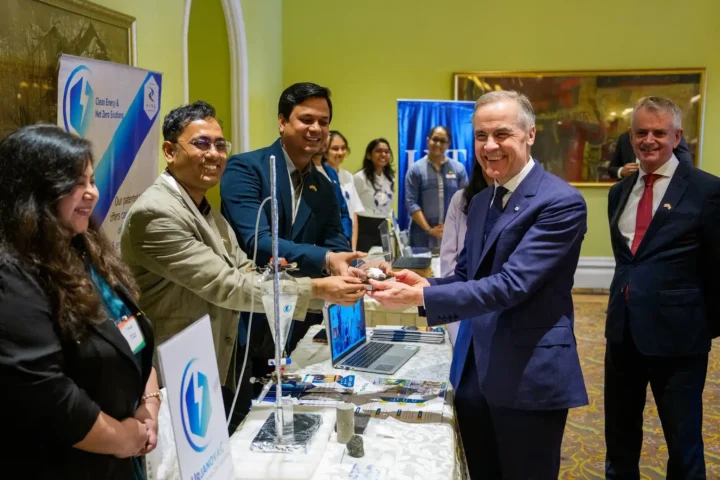
Picture this: Carney strides into Mumbai’s Canada-India Growth and Investment Forum on February 27, flanked by cabinet ministers, MPs and bosses from Canada’s nine biggest pension funds. Their pitch? Canada’s prowess in energy, critical minerals, AI and quantum computing—ripe for Indian cash. The haul: 10 deals totaling $5.5 billion in infrastructure, mining and defense exports. It’s the kind of tangible output that turns summits from talk shops into transaction engines.
Carney didn’t just glad-hand. He spotlighted India’s renewable binge, pegged at C$332 billion over the next decade, as a gold mine for Canadian pension giants. This isn’t charity; it’s shrewd allocation. These funds, flush with retiree dollars, chase yield in high-growth frontiers. India’s stability post-thaw makes it a standout bet versus jittery emerging markets.
Pensions Power the Pipeline
Canadian pensions have already funneled over $110 billion into India—direct and indirect—grabbing 30% of their Asia-Pacific kitty. The Canada Pension Plan Investment Board alone dropped $144 million into ReNew Power last year. Now, India wants in: It’s pushing to grant these funds sovereign-wealth perks, leveling the field against Singapore or Dubai.
This mutual wooing unlocks that $600 billion prize. Canadian pensions eye India’s energy boom; Indian firms covet Canada’s tech edge. It’s symbiotic capitalism at work—long-horizon investors bankrolling the green and digital transitions both countries desperately need.
Energy: The Heavy Lift
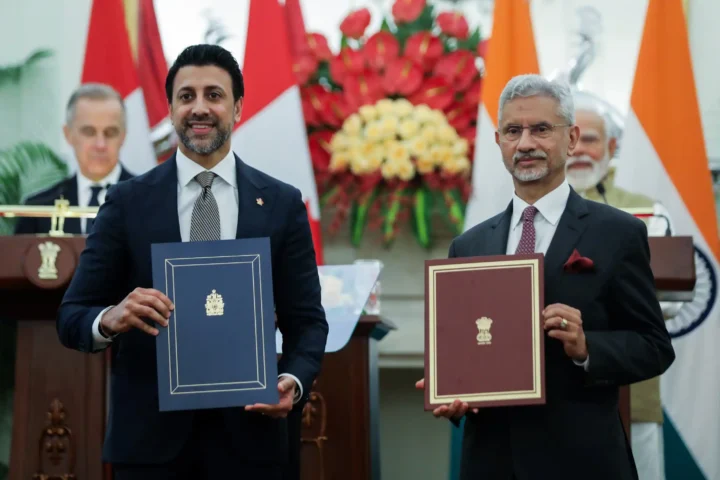
India’s power thirst rivals China and Southeast Asia combined. Enter the new Strategic Energy Partnership: A $2.6 billion Cameco uranium pact for 22 million pounds through 2035, plus MOUs on minerals, solar, wind, biofuels, hydrogen and LPG. Bilateral trade, $30.8 billion in 2024 (India is Canada’s No. 7 partner), aims for $70 billion by 2030 via a CEPA deal wrapping next year.
Forget the geopolitics. This is about pragmatism. Canada sits on vast clean-energy reserves; India needs them to fuel its 8%-plus GDP sprint. Pensions bridge the gap, de-risking projects that governments alone can’t scale.
Tech Ties That Bind
Tech is the other dynamo. HCL Technologies vows a 75% head-count ramp in Canada by 2030, minting thousands of jobs. AI pacts via the Australia-Canada-India troika, quantum ventures and ISRO-CSA space deals round it out. Add 13 university links, $25 million in scholarships for 220 students and cultural olive branches. Canadian FDI into India ticked to $0.2 billion in FY2024-25; India’s Q1 inflows jumped 15% to $18.62 billion, tech-led.
Over 600 Canadian outfits thrive in India already. Carney’s government has inked $85 billion in global pacts in 10 months. The thaw has supercharged two-way FDI, turning rivals into rivals-with-benefits.
The Bigger Bet
Economics is winning. Canada and India are recasting themselves as anchors in a fracturing world order. Pensions and summits aren’t just grease; they’re the gears.
Policymakers elsewhere should take notes. When diplomats thaw the ice, investors flood in. Carney’s Mumbai moment proves it: Smart statecraft begets market cap booms. For two democracies eyeing the 21st century, $600 billion is just the start.