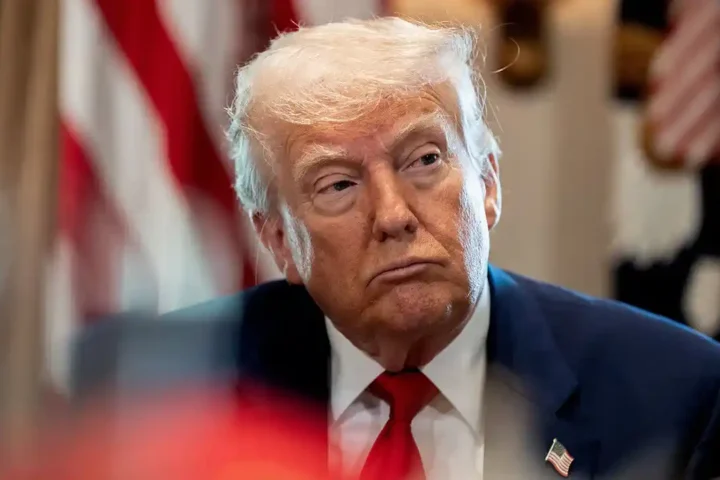
In the frigid expanse of the Arctic, where ice sheets crack and geopolitical fault lines shift, President Donald Trump’s renewed obsession with Greenland has thawed out old tensions—and ignited a firestorm on Wall Street. On January 20, 2026, the markets reopened after a holiday weekend to a brutal reality: the Dow Jones Industrial Average plunged over 850 points, shedding nearly 1.8% in a single session. The S&P 500 tumbled 2.1%, closing at 6,796.86, while the tech-heavy Nasdaq Composite dropped 2.4% to 22,954.32. This marked Wall Street’s worst day since October, wiping out more than $1.2 trillion in S&P 500 value as investors fled American assets in a classic “Sell America” trade. The culprit? Trump’s weekend threats to slap 10% tariffs on eight European nations starting February 1, escalating to 25% by June, unless they back his bid for U.S. control over Greenland.
This isn’t just market jitters; it’s a seismic reaction to the intersection of raw ambition, strategic necessity, and economic recklessness. Trump’s Greenland fixation, first floated during his initial presidency as a real estate-style “purchase,” has evolved into a national security imperative. He argues that the island’s vast mineral reserves—rare earth elements critical for everything from electric vehicles to fighter jets—and its strategic Arctic position are essential to counter Russian and Chinese encroachments. Yet, by weaponizing tariffs against NATO allies like Denmark, France, and the UK, he’s not just bargaining; he’s bulldozing alliances. The sell-off underscores a harsh truth: in a multipolar world, America’s bold plays can backfire spectacularly, but retreating from them might cost even more in the long run.
Let’s rewind to understand the stakes. Greenland, an autonomous territory of Denmark with a population of just 56,000, sits atop the world’s largest untapped reserves of rare earth metals, estimated at over 11 million tons. These minerals power the green energy transition and advanced weaponry, sectors where China currently holds a near-monopoly, controlling 60-70% of global supply. Trump’s push isn’t whimsical; it’s rooted in Arctic realpolitik. Russia has militarized the region with new bases and icebreakers, while China eyes mining investments through its “Polar Silk Road.” Acquiring or influencing Greenland would give the U.S. a foothold to secure shipping lanes, bolster missile defense, and dominate resource extraction. As Trump posted on Truth Social, “The World is not secure unless we have Complete and Total Control of Greenland.”
But the market’s verdict was swift and unforgiving. Tech stocks, the darlings of the bull run, led the decline: Nvidia fell 4.32%, Tesla 4.17%, as investors priced in supply chain disruptions from a potential EU trade war. The U.S. dollar, typically a safe haven, slid 0.8% against major currencies, while Treasury yields rose as bonds sold off. Gold and silver surged to all-time highs, signaling a flight to tangible assets amid uncertainty. European markets echoed the pain: the DAX and CAC 40 dropped over 1.5%, with fears of retaliatory tariffs on American goods like French wines facing 200% levies.
Critics decry this as Trumpian hubris, a “man-made crisis” that could fracture NATO and ignite a broader trade conflict with the EU, America’s largest trading partner. European leaders, from French President Emmanuel Macron calling the threats “unacceptable” to Denmark deploying more troops to the island, have vowed unity. Polls show 84% of Greenlanders oppose U.S. control, viewing it as colonial overreach. And the costs? Developing Greenland’s infrastructure could run $150 billion in taxpayer funds, subsidizing corporate mining giants while ignoring the island’s stable $3.3 billion economy. If Europe pivots to autonomy—restricting U.S. bases, shifting defense procurement, or deepening ties with China—the U.S. loses leverage, intelligence sharing, and economic clout.
Yet, here’s the politically inconvenient truth: the sell-off is overblown hysteria from a market addicted to stability at any cost. Trump’s Greenland gambit, while brusque, addresses a glaring U.S. vulnerability. For decades, America has outsourced critical supply chains to adversaries, only to wake up to the perils of dependency. The Arctic is the new frontier—melting ice opens shipping routes that could shave 40% off transit times between Europe and Asia, routes Russia and China are already claiming. Without a stake in Greenland, the U.S. risks being sidelined in the 21st century’s great game, much like it was in the early days of the Space Race.
Wall Street’s reaction exposes deeper frailties. The “Magnificent Seven” tech giants, which drove much of the post-pandemic rally, are hypersensitive to trade disruptions. Rare earth shortages could hamstring chip production, EV batteries, and renewables, sectors where U.S. firms like Tesla and Nvidia lead but rely on global inputs. But short-term pain often precedes long-term gain. Remember the 2018-2019 trade war with China? Markets tanked initially, yet it forced diversification and bolstered domestic manufacturing. Similarly, pressuring Europe over Greenland could accelerate U.S. resource independence, creating jobs in mining and tech while deterring Beijing’s ambitions.
Skeptics point to the human element: Greenlanders aren’t pawns. Their indigenous Inuit communities, already grappling with climate change—rising seas and thawing permafrost—deserve self-determination, not to be bartered like a Monopoly property. Trump’s rhetoric, tying the push to petty grievances like not winning the Nobel Peace Prize, undermines credibility. A smarter approach would blend diplomacy with incentives: joint development deals, environmental protections, and revenue sharing that respects Greenland’s autonomy. Instead, tariffs risk alienating allies at a time when unity against Russia in Ukraine and China in the Indo-Pacific is paramount.
From Davos to Wall Street, the fallout is palpable. Asian markets slipped in sympathy: the Nikkei down 0.66%, ASX 200 by 0.46%. Betting markets like Polymarket now price a 36% chance of U.S. partial control over Greenland this year, with wagers spiking. Analysts whisper that tensions may cool—Trump’s bluster often precedes deals—but the damage is done. The VIX, Wall Street’s “fear gauge,” spiked, reminding us that markets loathe uncertainty more than bad news.
In the end, this sell-off isn’t just about tariffs or ice; it’s a referendum on American exceptionalism in a contested world. Trump is right to prioritize strategic assets, but his sledgehammer tactics amplify risks. Congress should step in, demanding transparency on costs and benefits, while urging negotiations that preserve alliances. If we fumble Greenland, we hand the Arctic—and its riches—to rivals. Wall Street’s meltdown is a costly lesson: power plays require finesse, not force. But ignore the imperative at our peril—the ice is melting, and so is U.S. dominance.
As the dust settles, expect volatility to persist until a resolution emerges. Investors should diversify beyond tech, eyeing commodities and defense stocks poised to benefit from Arctic focus. For America, the choice is clear: secure Greenland thoughtfully, or watch the world pass us by. The markets have spoken; now it’s time for policy to listen.