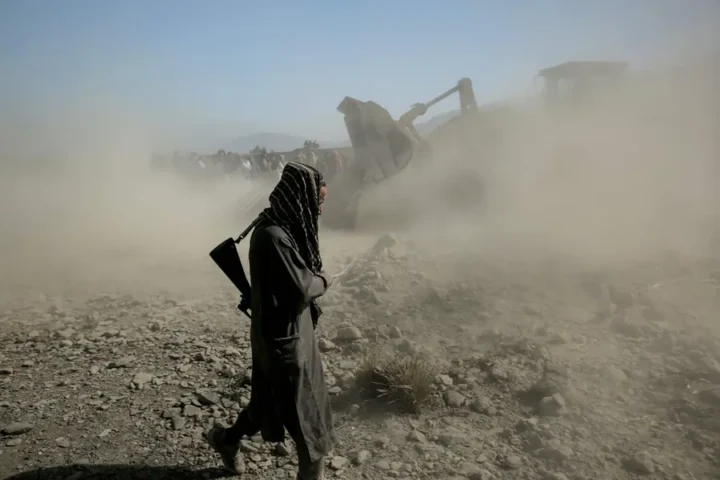
South Asia is slipping toward a second front in a wider regional war, and Washington is looking the other way. Over the past week, Pakistan and Afghanistan have traded their most ferocious blows in years, airstrikes on Kabul and Kandahar, Taliban assaults on Pakistani border posts, airstrikes on Kabul and Kandahar, Taliban assaults on Pakistani border posts, just as the United States and Israel have opened a far larger campaign against Iran. If this collision of crises continues unchecked, the result will not just be another familiar round of cross-border skirmishing. It could be the unraveling of a nuclear-armed state at the hinge of the Middle East and South Asia, with direct consequences for global lives and interests.
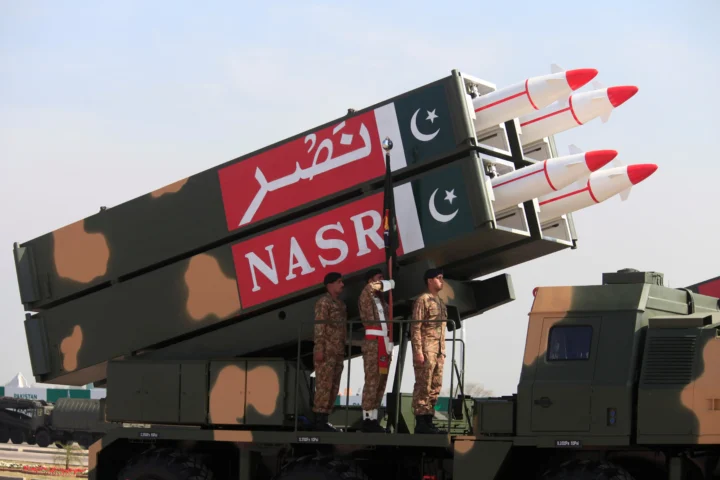
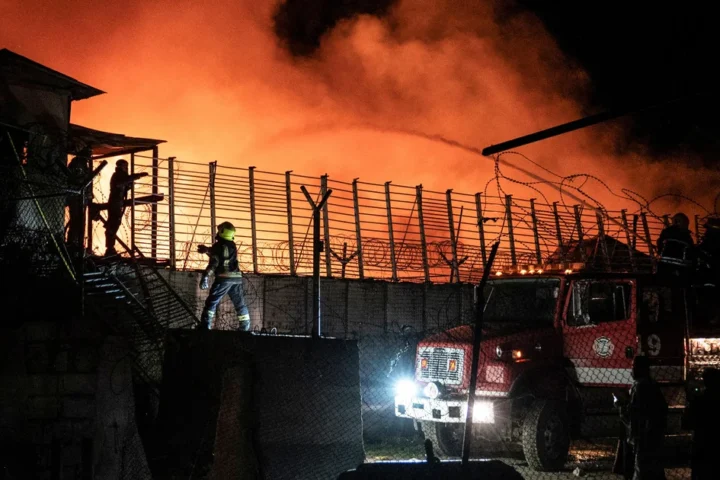
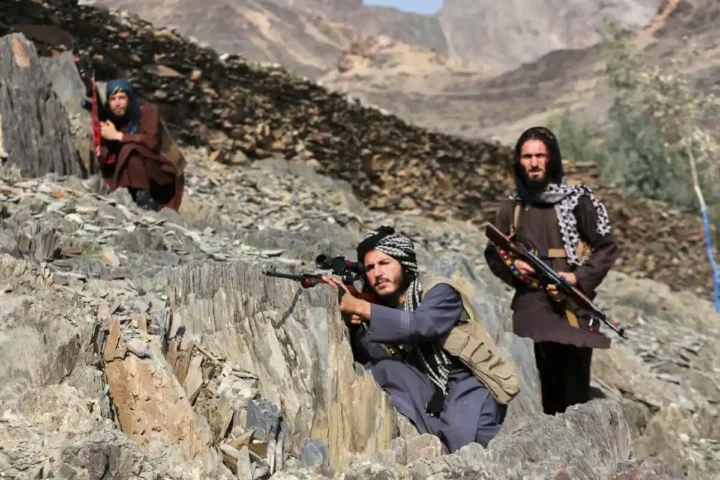
Last weekend’s violence marked a turning point. On Friday, Pakistan launched coordinated airstrikes in more than twenty locations across Afghanistan, hitting not just rugged border districts but also the capital, Kabul, and the southern hub of Kandahar. Taliban forces answered with a barrage of attacks on Pakistani border posts, and by Sunday, Pakistani jets were again striking in and around Kabul in an operation Islamabad insists was aimed at “terrorists” and Taliban military facilities. Taliban officials counter that the bombs hit civilians, a claim impossible to verify but politically devastating in a region where images of dead children travel faster than any formal communiqué.
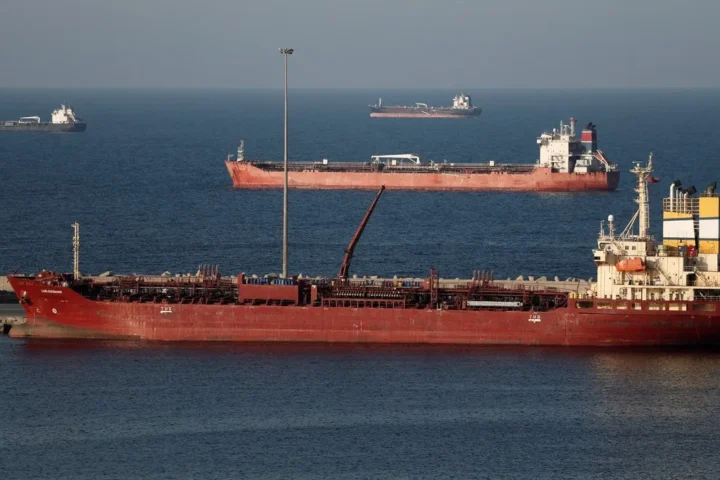
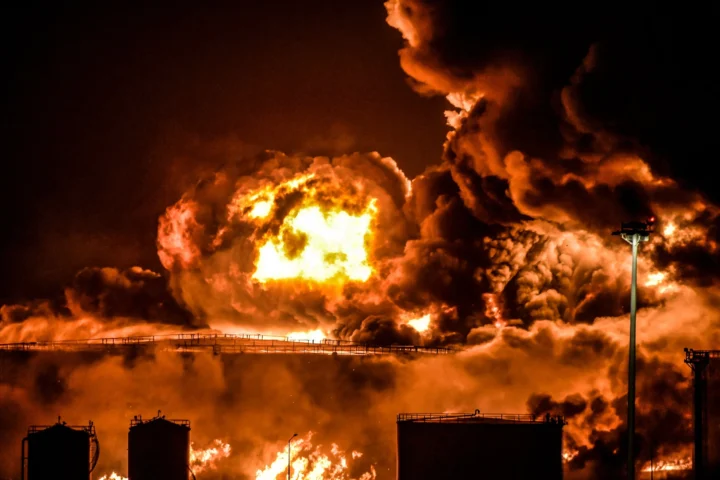
These exchanges came even before U.S. and Israeli forces struck Iranian targets in late February, igniting what is fast becoming a multi-theater war in the Middle East. As missiles fly over the Strait of Hormuz and drones crisscross the Gulf, it is tempting in Washington and European capitals to treat the Afghanistan-Pakistan front as a sideshow. It is not. The Iran war and the Afghanistan-Pakistan crisis are already feeding into one another, and together they threaten to turn Pakistan into the next, and far more dangerous, weak link.
The roots of today’s crisis lie in a bitter irony. For two decades, during the U.S.-led war in Afghanistan, Pakistan was the Taliban’s indispensable rear base, providing sanctuary, logistics, and, at critical moments, diplomatic cover. Islamabad gambled that once the Americans left and the Taliban returned to Kabul, it would enjoy unrivaled influence over its “strategic depth” to the west. Instead, it has discovered that its former proxy has become an unmanageable neighbor.
The core of the current rupture is Pakistan’s insistence that the Taliban are sheltering the Tehreek-e-Taliban Pakistan (TTP), a jihadist group ideologically aligned with the Afghan Taliban but focused on toppling the Pakistani state. Since the Taliban’s victory in Kabul in 2021, the TTP has sharply increased its attacks on Pakistani security forces and civilians, resurrecting the specter of the brutal campaign it waged between 2007 and 2014 before Pakistani military operations pushed many of its fighters into Afghan territory. Data compiled by conflict monitors and Pakistani think tanks show hundreds of TTP attacks since 2021, with a marked surge in 2024 and 2025.
Taliban authorities in Kabul deny that they host the TTP, but the denial is not credible. The two organizations fought side by side for years; the TTP’s founding leader, Baitullah Mehsud, was part of the Haqqani network, one of the Taliban’s most hard-line factions. The Taliban has a long record of refusing to abandon jihadist allies, most famously when it chose to keep sheltering Al Qaeda after the Sept. 11 attacks despite the certainty of a U.S. invasion. Today, expelling or disarming the TTP would not only risk a revolt within the Taliban’s own fighting ranks, it could drive disgruntled militants into the arms of the Islamic State Khorasan Province, the Islamic State affiliate in South Asia that has repeatedly attacked Taliban targets.
In other words, even if the Taliban wanted to accommodate Pakistan’s demands, doing so would threaten the stability of their own regime. But the uncomfortable truth for Islamabad is that the Taliban no longer have much reason to want that. Despite the history of dependence and collusion, Taliban leaders have always harbored deep mistrust of Pakistan’s generals, whom they see as manipulating their movement for Pakistani interests. With the American occupation over, Kabul no longer needs Pakistan as a patron or conduit; Pakistan’s leverage has evaporated just as its security threats from Afghan soil have multiplied.
The result is a dangerous asymmetry of fears and incentives. Pakistan’s generals view the TTP as an existential menace and the Taliban’s refusal to rein it in as intolerable, especially after a string of spectacular attacks on army and police installations. The Taliban, for their part, see Pakistan as a declining and overextended neighbor whose demands can be resisted and whose airstrikes, while painful, can be absorbed or answered with cross-border raids and the calibrated use of deniable proxies.
The Iran war now threatens to pour gasoline on this smoldering fire. Pakistan’s restive Balochistan province borders Iran and has been the site of a long-running separatist insurgency, which both Tehran and Islamabad accuse each other of silently abetting. As U.S. and Israeli strikes hit Iranian territory and Iran retaliates across the region, unrest in Iran’s own borderlands is likely to intensify. If that turmoil spills into Balochistan, it could embolden Baloch separatists on both sides of the frontier and stretch Pakistan’s already thin security forces even further.
The TTP, sensing an overstretched state, would be quick to exploit the moment. The group has already stepped up attacks in recent years, and a simultaneous crisis on Pakistan’s western and southwestern flanks could offer it unprecedented operational and propaganda opportunities. All this would unfold while Pakistan’s eastern border with India remains tense: last May, India and Pakistan fought their most serious confrontation since the 1971 war, reminding the world that the subcontinent’s nuclear flashpoint never truly sleeps.
India stands to gain strategic breathing room from this brewing crisis between Pakistan and Afghanistan. A distracted Islamabad, forced to commit scarce resources to its western front, would struggle to sustain aggressive posturing along the Line of Control or in Kashmir, building on the momentum India seized during last May’s confrontation. Balochistan’s unrest further erodes Pakistan’s cohesion, indirectly bolstering a reliable gateway to Afghanistan and Central Asia that sidesteps a faltering foe. With the Taliban-TTP entanglement tying down jihadist energies away from Indian targets, New Delhi can deftly balance its Iran ties amid the wider war, securing energy flows while advancing U.S. partnerships, positioning itself as South Asia’s preeminent power in a fractured neighborhood.
Diplomacy has so far failed to get ahead of this convergence of risks. Last year, after a round of Afghanistan-Pakistan clashes, Turkey, Saudi Arabia and Qatar convened multiple sessions of mediation, producing little more than fragile cease-fires and vague promises. Those understandings have now been obliterated by the latest aerial barrage. Even if the guns fall silent in the coming days, the pattern of the past two years is clear: a major TTP attack in Pakistan prompts Pakistani strikes, which provoke Taliban retaliation, which in turn inflames Pakistani public opinion and hardens the resolve of the army to “finish the job” next time.
It is possible to sketch three rough trajectories, none of them reassuring.
The first is a thin, fragile “best case.” Pakistan and the Taliban could be cajoled back into internationally mediated talks, perhaps in Doha or Ankara, leading to a new cease-fire and a set of verbal assurances on both sides. But such a band-aid would leave the basic drivers of conflict untouched. The TTP would remain armed and active. Pakistan would retain both the capability and the political incentive to strike across the border after the next massacre of its soldiers or citizens. The Taliban, under pressure not to appear weak, would feel compelled to answer in kind.
The “mid-range” scenario is the de facto status quo: both sides reject serious talks while continuing to calibrate their violence just below the level of full-scale war. In this version of events, Pakistan’s air force periodically hits Taliban and TTP positions in Afghanistan, while the Taliban authorizes limited border incursions and looks the other way as TTP cells mount attacks inside Pakistan. The latest round of strikes, however, suggests that even “limited” hostilities can be destabilizing when they expand into major cities and strategic sites. After Kabul and Kandahar, Pakistan has reportedly targeted Bagram air base, a symbolically freighted asset once used by U.S. forces, underscoring how quickly tactical decisions can have strategic ramifications.
The “worst case” is no longer unthinkable: Pakistan opts to “go all in,” launching a sustained campaign of airpower across Afghanistan not only against the TTP but against Taliban command centers and military infrastructure, openly treating the Kabul regime as an enemy government. In response, the Taliban escalate dramatically, mobilizing the TTP and allied jihadist factions to carry out mass-casualty attacks deep inside Pakistan’s cities while stepping up conventional operations along the border. In such a scenario, the Afghan-Pakistani frontier would become a free-fire zone and Pakistan’s internal security would be tested as never before.
This is where the United States comes back into the picture, whether it wants to or not. A metastasizing war between Pakistan and Afghanistan would directly threaten U.S. personnel and facilities in the region and create new space for transnational jihadist networks that Washington spent two decades trying to uproot. It would unfold while the Trump administration is already deeply engaged in major combat operations against Iran, with U.S. forces and allies under fire from Iranian missiles and drones from the Gulf to the Levant.
The administration’s bandwidth is finite. Yet simply writing off the Afghanistan-Pakistan theater as “someone else’s problem” would be a profound mistake. Saudi Arabia and Qatar, two of the few states that enjoy working relationships with both Islamabad and the Taliban, are themselves consumed by the fallout from the Iran war and are unlikely to invest the political capital required to mediate effectively. Turkey’s regional ambitions have outstripped its capacity to manage a crisis of this complexity on its own. That leaves Washington, however distracted, as perhaps the only actor with enough leverage in Pakistan and enough convening power with regional and extra-regional players to stabilize the spiral, even temporarily.
What would a serious American strategy look like? It would begin with a sober admission: there are no clean solutions here, only less disastrous outcomes. The United States should resist the illusion that it can “solve” the TTP problem from afar or engineer a grand bargain between Pakistan and the Taliban. But it can do at least three things.
First, Washington should make clear in private, and if necessary in public, that a sustained Pakistani air campaign deep into Afghanistan is unacceptable, not out of concern for the Taliban regime, but because it is likely to trigger the very state-weakening blowback Pakistan fears and open space for anti-American terrorism. That message must be paired with tangible support, intelligence, limited security assistance, and multilateral financial backing, to help Pakistan manage the TTP threat without resorting to indiscriminate cross-border bombing.
Second, the United States should work with a coalition that includes Turkey, Saudi Arabia and Qatar to revive a structured, sequenced dialogue between Islamabad and Kabul, focused not on grand recognition or sanctions debates but on specific, verifiable steps: relocation of certain TTP cadres away from the border, information-sharing mechanisms, and mutual restraints on cross-border fire. Progress will be slow and reversals inevitable, but sustained external pressure can raise the political cost, for both sides, of walking away from the table.
Third, U.S. policymakers must finally abandon the compartmentalized thinking that treats Afghanistan, Pakistan, Iran and the Gulf as separate problem sets assigned to different desks. The Iran war is already reshaping calculations in Islamabad and Kabul, just as the Afghanistan-Pakistan crisis will shape the environment in which any eventual U.S.-Iran settlement is reached. A strategy that chases fires one theater at a time will always be behind the curve in a region where actors and conflicts are tightly interlocked.
Worst-case scenarios are not destiny, but they do become more likely when they are ignored. Analysts have warned that, given the failures of recent diplomacy, the Taliban’s refusal to curb the TTP, Pakistan’s increasing alarm about Afghanistan-based terrorism, and the steadily rising tempo of cross-border violence, an all-out war between Pakistan and Afghanistan is now a distinct possibility. In the shadow of a raging conflict with Iran, it is easy for Washington to tell itself that this is a secondary concern.
It is not. A spiraling war between Pakistan and Afghanistan would sit astride the energy arteries of the Gulf, the trade corridors of Central Asia, and the nuclear standoff with India. It would inject new life into the very transnational jihadist movement that three American presidents vowed to contain. And it would do all of this at a moment when U.S. forces are already stretched across a wider Middle Eastern battlefield.
The choice facing the United States is not between ending “endless wars” and getting dragged into new ones. It is between investing in messy, imperfect crisis management now or paying a far higher price later when a neglected frontier explodes. The Afghanistan-Pakistan crisis is not a distraction from the war with Iran; it is part of the same widening arc of instability. Treating it as anything less is a luxury Washington, and the world, can no longer afford.