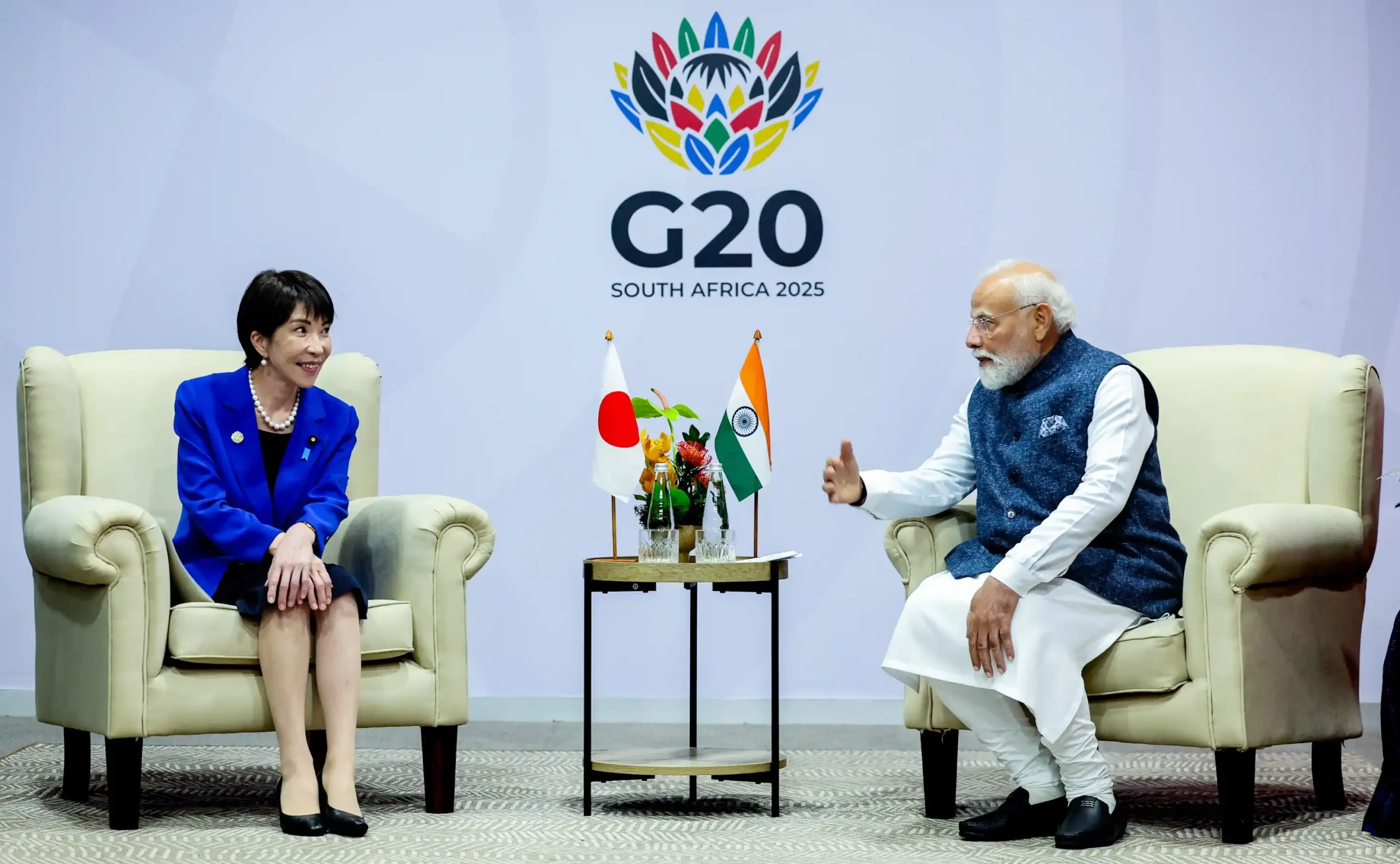
When Japan’s Ministry of Foreign Affairs announced the establishment of a dedicated office to oversee relations with India, it wasn’t just a bureaucratic reshuffling—it was a statement. A quiet but unmistakable signal that Tokyo sees its partnership with New Delhi not merely as regional diplomacy, but as a cornerstone of its economic future and the evolving architecture of Asia.
For decades, Japan’s foreign relations orbit revolved around its ties with the United States and China, both economic giants with whom Tokyo has complex histories. But now, amid intensifying geopolitical competition and supply chain realignments, Japan is turning decisively toward India—a country with parallel democratic values, a rising technological landscape, and an appetite for infrastructure investment that has few parallels in the developing world.
The new Foreign Ministry office is expected to streamline coordination across trade, technology, and security sectors, helping Japanese businesses navigate India’s intricate regulatory environment while aligning government-level collaboration on issues ranging from clean energy to semiconductor manufacturing. Yet the deeper story here lies in how this institutional move mirrors Japan’s evolving strategy for global competitiveness.
Pragmatism and Promise
Japan and India have, in fact, been edging closer for years. Bilateral trade crossed $25 billion in recent years, a relatively modest figure compared to Japan’s trade with China but growing steadily from less than half that amount a decade ago. Japanese companies—from Suzuki to Hitachi and Toshiba—have invested heavily in India, making it one of the largest destinations for Japanese foreign direct investment. Suzuki’s long-standing presence in India’s automobile sector, through Maruti Suzuki, remains a textbook case of successful multinational-corporate partnership, transforming India’s middle-class mobility and embedding Japanese manufacturing ethos in a vastly different market.
But today’s cooperation extends far beyond car factories. Japan has become a central player in funding India’s infrastructure—high-speed rail corridors, urban transit systems, and smart city projects—symbols of not only economic engagement but also technological transfer and cultural integration. The Mumbai-Ahmedabad bullet train project, backed largely by Japanese financing and expertise, embodies this partnership’s ambition: merging Japan’s engineering pedigree with India’s developmental appetite.
As Tokyo’s economy matures and faces demographic decline, India offers access to something Japan increasingly needs—scale. A nation of 1.4 billion people, hungry for digital infrastructure and clean energy innovation, is the kind of market Japanese firms see as the next frontier. The Foreign Ministry’s new office is, in essence, a gateway—to nurture, manage, and accelerate this wave of collaboration.
Strategic Economics Meet Shared Geopolitics
This isn’t just business; it’s strategy. Japan’s recalibration toward India mirrors a wider concern among democracies over China’s assertiveness. Tokyo has found in New Delhi a partner that complements its security priorities and balances Beijing’s influence without mirroring its confrontational posture.
Both nations are key architects of the Quadrilateral Security Dialogue—the “Quad”—alongside the United States and Australia. But the Quad’s true test lies not only in defense but in economics: building alternative supply chains, clean energy grids, and data governance frameworks that reduce dependence on Chinese systems. Japan’s focus on semiconductors and critical minerals dovetails seamlessly with India’s push for tech independence, forming what could become a powerful axis of innovation.
The office in Tokyo isn’t expected to make headlines in Washington—but it should. For the U.S., whose Indo-Pacific strategy increasingly relies on coalition-building rather than unilateral power, Japan’s deepening bond with India strengthens the region’s connective tissue. American investors, too, are watching closely. A stronger Japan–India link means a more diversified set of opportunities for U.S. businesses seeking stability outside China, especially in high-tech manufacturing and climate technologies.
A Cultural and Generational Bridge
Economic diplomacy often sounds sterile—numbers, treaties, and supply chains. Yet Japan and India’s growing relationship is also cultural. For a young generation of Indians, Japan represents discipline, precision, and efficiency—values aspirational for a country racing toward modernity. Conversely, for Japanese industries, India’s entrepreneurial energy and digital prowess offer new sparks of innovation.
The social web between both countries is thickening through education and labor mobility. Japanese universities are partnering with Indian technical institutions, while Japan’s companies are recruiting skilled labor from India’s vast IT and engineering pool. In Tokyo, India’s cultural presence is increasingly visible—restaurants, academic forums, and technology conferences celebrating the connection between the two Asian democracies. The new Foreign Ministry office will likely serve as a nerve center for deepening these people-to-people ties, which often underpin economic trust more than any treaty.
The Economic Future of a Multipolar Asia
The timing of Japan’s decision couldn’t be more deliberate. Asia is rapidly becoming multipolar, defined less by a single hegemon than by coalitions of states balancing each other through commerce and innovation. Japan and India, despite differing scales and economic models, share a pragmatic vision of this new order—one that prizes stability, sustainability, and shared technological progress over ideological competition.
In this context, the partnership offers a blueprint for how mature economies can collaborate with rising ones without falling into paternalism or dependency. Japan brings experience, technology, and capital; India brings scale, creativity, and youthful dynamism. Together, they model an economic relationship that is grounded in mutual interests yet transcends transaction.
If Japan’s new Foreign Ministry office succeeds, it will become more than an administrative hub—it will be the institutional heartbeat of one of Asia’s most consequential alliances. Tokyo’s quiet bet on New Delhi may turn out to be one of the most farsighted moves of its foreign policy in decades.
Watching from afar, this alignment offers both lesson and opportunity: that global stability in the twenty-first century will likely emerge not from dominance, but from durable partnerships born of shared purpose and complementary strengths. Japan and India, though different in history and temperament, are shaping that lesson every day—with the steady patience that defines both their cultures.