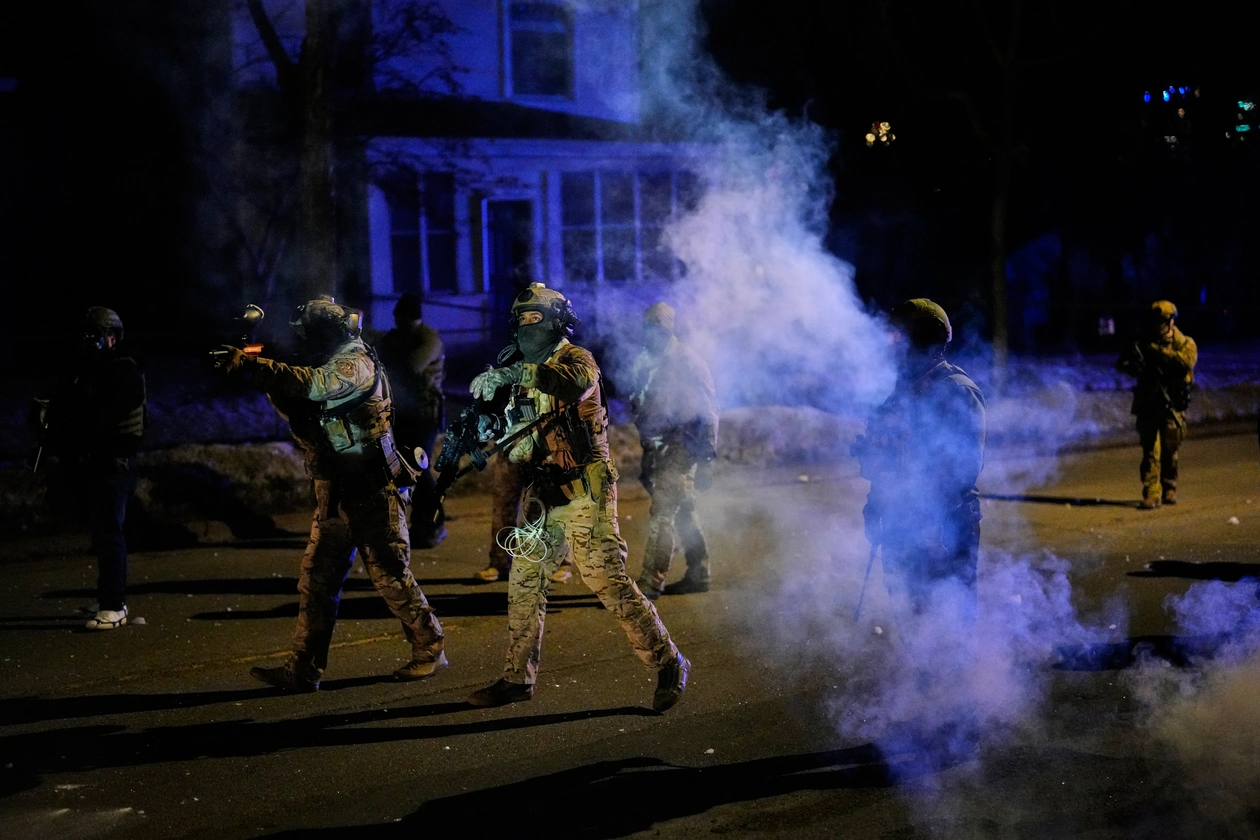
In the wake of a tragic shooting that has inflamed tensions across Minneapolis, a federal judge has issued a preliminary injunction that significantly curtails the crowd control tactics available to Immigration and Customs Enforcement (ICE) agents. On January 16, 2026, U.S. District Judge Kate Menendez barred federal officers participating in Operation Metro Surge — the Trump administration’s massive deployment of nearly 3,000 ICE and Border Patrol personnel to the Twin Cities — from arresting or detaining peaceful protesters, using pepper spray or other nonlethal munitions against those engaged in “peaceful and unobstructive protest activity,” or stopping vehicles that safely follow agents at an appropriate distance.
This decision comes just days after an ICE agent fatally shot Renee Good, a 37-year-old mother of three, during what federal officials describe as an attempt to obstruct their operations. Good was part of a community patrol monitoring ICE activities when the incident occurred on January 7. Video footage and eyewitness accounts have raised serious questions about whether her vehicle posed an immediate threat, fueling widespread outrage and protests that have at times turned chaotic.
The ruling stems from a lawsuit filed in December by the ACLU on behalf of protesters who alleged repeated unconstitutional arrests, excessive force, and retaliation for exercising First Amendment rights. Judge Menendez, a Biden appointee, found that many of the observed activities — documenting operations, criticizing agents, and trailing vehicles without forcible interference — constituted protected speech rather than criminal obstruction.
A Necessary Check on Federal Overreach
This injunction is a vital reaffirmation of core constitutional principles at a moment when federal power is being wielded aggressively against local communities. Operation Metro Surge has flooded Minneapolis with armed federal agents, outnumbering local police and creating an atmosphere of fear and intimidation. Residents, including U.S. citizens, have reported warrantless stops, racial profiling, and aggressive tactics that chill free expression and assembly.
By prohibiting retaliation against peaceful observers and limiting the use of chemical irritants and arrests absent probable cause, Judge Menendez has drawn a clear line: the First Amendment does not vanish when federal immigration enforcement enters the picture. The judge explicitly recognized that safely following agents to monitor their activities — a tactic born of community self-defense amid distrust of federal operations — does not justify traffic stops or detentions. This protects a form of citizen oversight that is essential in any democracy, especially when trust in law enforcement is eroded.
Minnesota leaders, including Governor Tim Walz and Mayor Jacob Frey, have decried the federal presence as an “occupation” that sows chaos rather than safety. Their calls for ICE to leave the city reflect legitimate concerns about public order and community well-being. The DOJ’s subsequent investigation into these officials for potential obstruction — described by Walz as “weaponizing the justice system” — only heightens the appearance of political retribution.
The Other Side: Risks to Officer Safety and Enforcement
Critics of the ruling, including DHS officials, argue that it ties the hands of agents facing genuine threats. Federal authorities have described hostile crowds, thrown objects, and attempts to impede operations, pointing to a second recent shooting where an agent wounded a suspect after allegedly being attacked with makeshift weapons. They maintain that Good’s actions constituted “domestic terrorism” by endangering officers.
Yet the judge’s order is narrowly tailored: it does not prohibit responses to actual violence or forcible obstruction. It requires reasonable suspicion or probable cause before acting against protesters. If federal agents are encountering real dangers, they retain tools to address them — provided they respect constitutional boundaries.
A Moment for Reflection
The Minneapolis events highlight a deeper national divide over immigration enforcement, federal authority, and the right to dissent. Judge Menendez’s decision does not halt Operation Metro Surge, but it demands that it be conducted lawfully and without trampling on fundamental freedoms.
In a time of heightened polarization, this ruling serves as a reminder that no administration — regardless of its mandate — is above the Constitution. Peaceful protest and observation are not crimes; they are the lifeblood of accountability. By upholding these principles, the court has taken a measured step toward de-escalation and justice in a city still grieving and on edge. The challenge now is for all sides to honor the rule of law as the path forward.