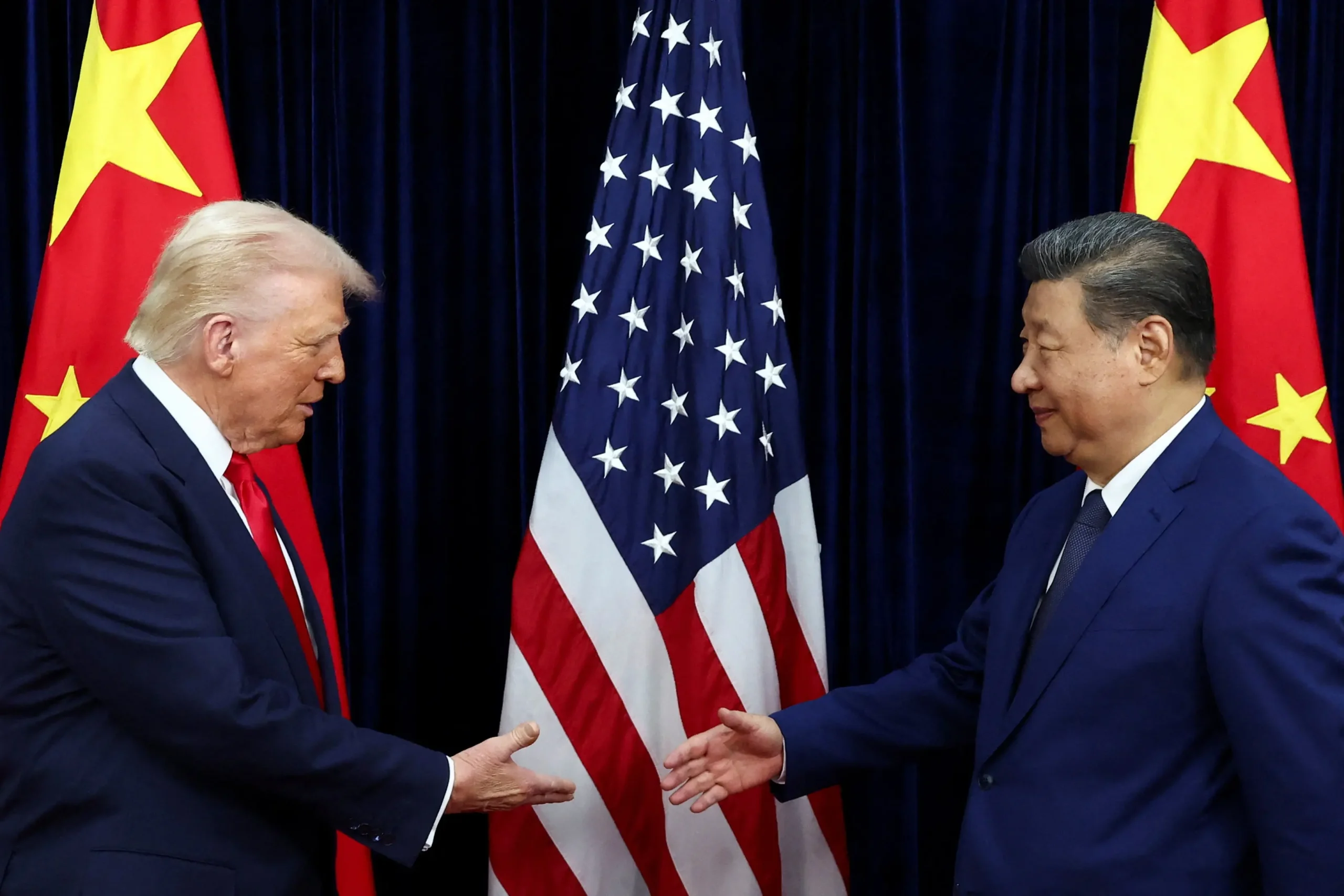
The recent meeting between Donald Trump and Xi Jinping in Busan, South Korea — their first face-to-face encounter since 2019 — reignited talk of a revived “G2” model, where the United States and China would jointly manage global stability as co-equal powers. Just ahead of the talks, Trump posted on Truth Social to say “THE G2 WILL BE CONVENING SHORTLY!” Later, he himself hailed the meeting as a “12 out of 10,” positioning it as a diplomatic breakthrough that reaffirms the partnership and competition between the world’s two largest economies. Yet, upon closer examination, this model is inadequate and even misleading for understanding the reality of international relations today, which is increasingly defined by multipolarity rather than a bipolar or duopolistic order.
Transactional Gains, Not a Strategic Reset
Trump’s negotiation style remained consistent with his transactional approach to foreign policy: trading tariff reductions for limited Chinese concessions, such as pledges to maintain rare earth mineral exports for a year and some promises on opioid trafficking. Rare earth minerals, critical for advanced technology and military manufacturing, had been China’s leverage in the trade dispute, and this temporary thaw in export restrictions was hailed by Trump as a win. However, no substantial agreement was reached on removing China’s deeper export controls or technological constraints. Moreover, China continues to wield dominance in critical supply chains, underscoring the limits of this transactional détente.
The optics of mutual respect and restraint shown between Trump and Xi, contrasting with Trump’s normally abrasive style, suggested an underlying awareness that neither side could afford further destabilization. But beneath the handshake and compliments lies a fundamental divergence: China pursues a long-term generational strategy aimed at incremental global leadership and self-reliance, while the US administration is driven by domestic political imperatives and short-term electoral calculations.
This fundamental difference limits the durability of any so-called “truce” reached in Busan. As expert Tom Harper noted, China’s strategy focuses on managing its rise methodically and sharing development opportunities globally, while Trump’s agenda attempts to frame deals as immediate political victories ahead of US midterms. This imbalance between long-term vision and transactional politics further weakens the notion of a stable G2 partnership.
The Reality of Multipolarity
While the idea of a G2 made sense during the early 2000s when China’s rise was projected as the US’s inevitable co-manager of global affairs, the world today is far more complex. Multiple global powers — including the European Union, India, Japan, Russia, and emerging middle powers — jostle for influence. India alone, under sustained tariff pressures from the US and growing economic weight, complicates the neat G2 framework, forming what some scholars call a “G2.5” or even a broader multipolar order.
Critically, the G2 paradigm assumes a duopoly where US-China relations dictate global governance. In contrast, the current international system features a distribution of power that makes such a bipolar or duopolistic order untenable. For instance, China today accounts for about 35% of global manufacturing output, while the US accounts for only 16%, signaling a shift in economic weight that influences multiple global trade and technology networks independently of direct US-China management.
Beyond economic power, technology competition, especially in AI and semiconductors, illustrates the multipolar challenges. Trump’s concessions did not include the export of the most advanced US chips to China, highlighting continuing rivalry. Furthermore, China’s supply chain initiatives and investment in technology alliances beyond US influence show that the global order cannot be monopolized by a simple G2.
The Limits of the G2
The Trump-Xi dialogue omitted key strategic flashpoints such as Taiwan and human rights, topics routinely central to US-China tensions. This omission signals that the meeting’s purpose was damage control rather than a broad strategic partnership. Moreover, US alliances and partnerships, such as with India, Japan, and Southeast Asian states, remain vital for American strategic calculus, signaling the US’s acknowledgment that it cannot “go it alone” or rely solely on China in a G2-style world.
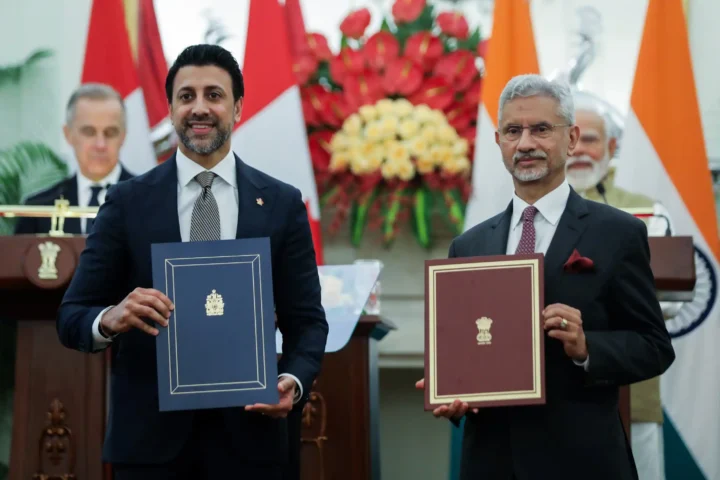
India’s role in this calculus is particularly telling. With US tariffs on India now highest among major trade partners, bilateral ties remain complicated despite a 10-year defense framework solidifying strategic partnerships. India does not fit neatly into a G2 framework as either a subordinate or partner; it is instead an independent actor shaping a multi-aligned geopolitics. The US’s engagement with India and other middle powers within forums like the Quad reflects a broader multipolar reality that eludes a simple dual-power narrative.
Trump’s rhetoric about the G2 informs a worldview that sees US-China rivalry as the defining axis of global order — a zero-sum competition where one must assert dominance or risk decline. This mindset is at odds with the actual evolving international system where power is not concentrated but dispersed across multiple centers.
The world is no longer one or two great powers wielding global governance alone. It is a fluid, decentralized arena shaped by regional powers, transnational institutions, multinational corporations, and technological diffusion beyond the control of any bilateral duo. This multipolarity demands cooperation across diverse actors with overlapping interests rather than a hegemonic competition focused exclusively on managing China-US relations.
Embracing Multipolar Realities
The Busan meeting between Trump and Xi, while momentarily easing tensions through tactical deals, does not herald a return to or reaffirmation of a sustainable G2 world order. The transactional gains mask deeper structural shifts: the decline of unipolar dominance and the rise of multiple influential actors that complicate any simple dual power management of global affairs.
In a multipolar world, the US must move beyond framing its China policy as a binary contest and acknowledge the complex web of regional powers, economic interdependencies, and technological rivals shaping the 21st-century order. Likewise, China’s ambitions, though expansive, must reckon with a global environment far more networked and dispersed than the narrow G2 lens suggests.
The path forward requires multilateral engagement, alliance building beyond bilateral ties, and flexible diplomacy that accommodates multiple centers of power, rather than a nostalgic and incomplete reversion to a US-China duopoly as the defining world order.