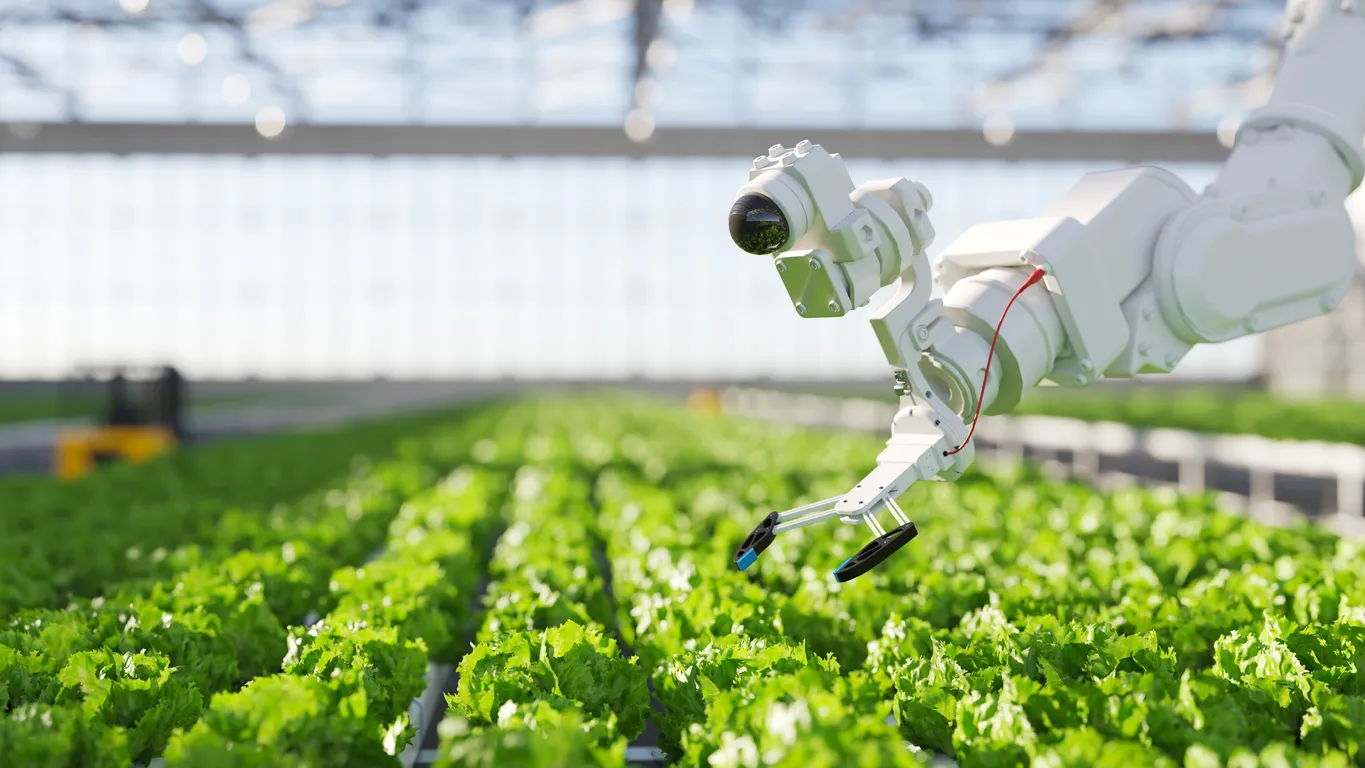
Canadian agri-tech is already shaping how Indian farmers grow, store, and process food, and if we are serious about global food security, we should treat these partnerships not as charity or “market diversification,” but as a strategic extension of Canada’s own food system.
For decades, the Canada–India food story has been told in tonnage: lentils from Saskatchewan to Indian ports, and tariff disputes when politics intrudes. But beneath the headlines about duties on peas or stalled trade talks, a more interesting architecture is emerging, one built around research labs, state governments, and agri-tech firms on both sides.
In 2023, Saskatchewan alone shipped more than 700 million dollars’ worth of agri-food to India, accounting for roughly a quarter of Canada’s total exports to the country and dominated by lentils, peas, wheat and potash. At the same time, Pulse Canada has stressed that the relationship with Indian buyers is “built on mutual respect and trust” and must endure beyond any given diplomatic spat because pulses remain an essential protein source for hundreds of millions of Indians.
That long-term logic is now being translated into institutional arrangements designed to push Canada–India ties up the value chain, away from bulk commodities and toward co-developed technologies, improved processing, and climate-resilient crops.
Universities and state governments as the new bridge
The most visible example arrived this month: a five‑year memorandum of understanding between India’s National Institute of Food Technology Entrepreneurship and Management at Kundli (NIFTEM‑K) and the University of Saskatchewan (USask). Signed in the presence of Saskatchewan Premier Scott Moe and senior Indian food-processing officials, the agreement goes far beyond symbolic cooperation.
The MoU creates a framework for joint research projects, integrated degree programs in food processing technology, and faculty and student exchanges, while also promising industry-oriented short courses and collaborative funding bids in areas like sustainable food systems and value-chain development. At its core is a jointly supported Centre of Excellence in Pulse Protein that Indian and Canadian leaders have already flagged as a flagship of their agricultural partnership.
For Canadian readers, the real significance lies in geography and governance. NIFTEM‑K’s natural partners are not only New Delhi ministries but state food parks and industrial clusters in places like Haryana and Uttar Pradesh, where cold chains and processing capacity are still catching up to production. On the Canadian side, USask sits in a province that has deliberately placed India at the centre of its trade missions and pitches itself in New Delhi and Mumbai as a partner in “food and energy security goals.” This is sub‑national diplomacy in action: provinces and states using universities and research institutes as beachheads for deeper economic and technological ties.
Climate resilience: where Canadian science meets Indian risk
The other pillar of this emerging ecosystem is crop resilience, an area where Canadian public science is quietly world‑class, and India’s climate exposure is acute. Agriculture and Agri‑Food Canada scientists, for instance, have been screening large numbers of canola lines to find those that use water and nitrogen more efficiently under combined drought and heat stress, a combination that can hammer yields and profits. Similar work on wheat in semi‑arid southern Saskatchewan focuses on varieties that are more resilient, productive and disease-resistant, including efforts to tackle mycotoxin contamination like deoxynivalenol.
India’s own research system, anchored by the Indian Council of Agricultural Research (ICAR), has long collaborated with international partners on topics such as dryland agriculture, water management and rainfed cropping systems. As both countries confront more extreme weather, these streams of research are increasingly convergent. When Canadian breeders develop stress-tolerant cereals or oilseeds, they are not just future-proofing Prairie farms; they are creating genetic and agronomic insights that can be adapted, through joint projects, germplasm exchange, and state-level trials, for Indian conditions from Punjab to Telangana.
For Canada, there is a hard-nosed reason to lean in. Indian policymakers have signalled that they want long-term assurances that Canadian growers will continue to produce pulses and other crops critical for Indian food security, and have even floated the idea of guaranteed purchase mechanisms or tariff quotas to lock in supply. A food-security relationship that rests solely on fluctuating world prices and periodic tariff interventions will always be brittle. A relationship grounded in co‑developed climate-resilient varieties and agronomic practices is harder to unwind.
Beyond the farm gate: food processing and digital agritech
Food security is not just about what grows in the field; it is also about what rots on the road. India still loses substantial shares of its horticultural output post-harvest due to inadequate storage, logistics and processing, and both Indian state governments and Canadian institutions have begun to frame cooperation around this chokepoint.
The NIFTEM‑K–USask agreement explicitly emphasises research-driven industrial growth, entrepreneurship and value-chain development in food processing, including industry-oriented training and outreach. This dovetails with Canadian provincial trade missions that highlight “agri‑value”, everything from ingredients and processing equipment to sustainable packaging, as key export opportunities in India. For Canadian agri-food firms, particularly small and medium-sized technology providers, partnering with state-backed food parks or Indian startups offers a way to test and refine solutions in some of the world’s most demanding conditions.
Digital agriculture is another frontier where Canada has started to plant flags. A series of workshops convened by Canada’s Digital Technology Supercluster and IIT Madras in 2020 brought together Canadian firms and Indian institutions to explore precision agriculture applications using AI, robotics, and computational chemistry, including projects led by Canadian companies working on more targeted crop-protection products. These are not yet mainstream on smallholder plots in Bihar or Maharashtra, but they point toward a model in which Canadian data science and sensing technologies are applied to Indian agronomic problems, from pest pressures to input-use efficiency, in partnership with state agencies and local startups.
Interestingly, the flow of innovation is not one-way. A Pune-based company, Globe Florex, has supplied its energy-efficient Revoponics vertical farming system to Queen’s University’s Phytotron facility in Canada to support research on AI-integrated, climate-resilient urban agriculture, boasting up to 95 per cent less water use than conventional farming. That Canadian labs are now testing Indian-designed controlled-environment systems underscores how a supposedly “traditional” sector like agriculture is becoming a genuinely two-way innovation corridor.
Why this matters
For Canadian readers, the temptation is to treat all this as niche, a matter for trade commissioners and agricultural attachés. That would be a mistake.
First, India’s food security is increasingly intertwined with our own rural economies. Canadian lentil and pea growers know from experience that Indian tariff decisions can swing prices and planting intentions in Saskatchewan and Alberta almost overnight. Locking in more predictable, long-term demand through deeper technological ties, from joint pulse protein research to collaborative crop-breeding, is insurance for Canadian farm incomes.
Second, these partnerships are a test case for the kind of middle-power diplomacy Canada says it wants to practice. Prime Minister Mark Carney’s government has promoted a “ambitious new partnership” with India that highlights agriculture alongside energy and critical minerals as strategic pillars of engagement. Showing that we can move beyond commodity sales to co‑creation of sustainable farming systems, resilient crops and efficient processing is a way of proving that rhetoric.
Third, and perhaps most importantly, climate change will not respect national borders or tariff lines. The knowledge generated when a Canadian scientist in Saskatoon screens heat-tolerant canola or wheat, or when Canadian and Indian engineers co-design AI tools for precision agriculture, is part of a global public good: a toolbox that farmers from Manitoba to Madhya Pradesh will need as temperatures and variability rise.
Canadian agri-tech firms and research institutions are already embedded in this work; Indian states are increasingly ready partners. The question is whether Canada will choose to see these collaborations as a core instrument of national strategy, integral to our own food security and climate resilience, or leave them as underfunded pilots and photo‑op MoUs while the world’s agricultural map shifts beneath our feet.