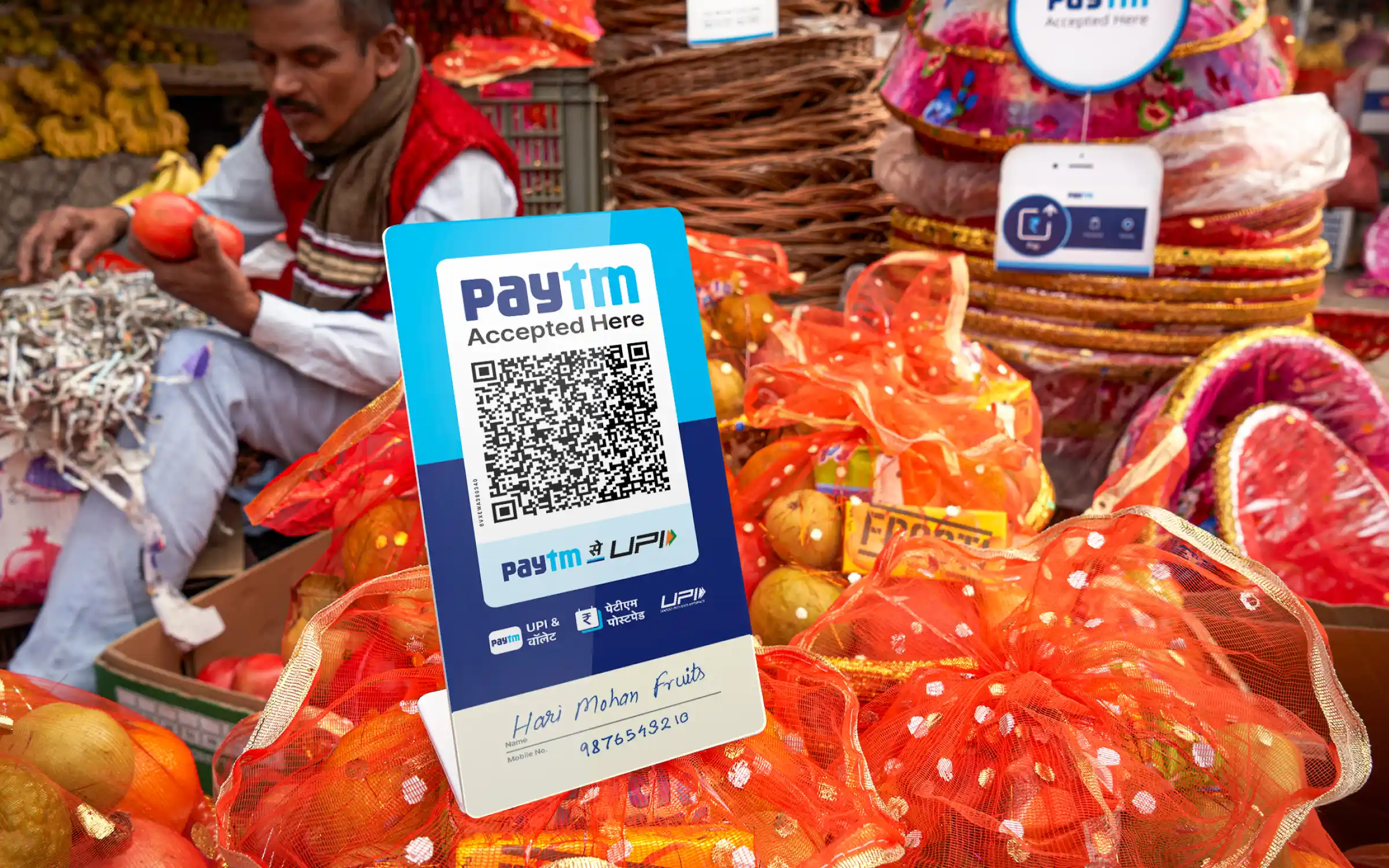
In the bustling chaos of a Delhi diner, I recently experienced a fleeting moment of sheer panic. Midway through devouring a hearty sandwich and sipping on green tea, I reached for my wallet to pay, only to realize I’d left it in the car. Visions of washing dishes to settle the bill flashed before my eyes, a relic of an era when cash was king and cards were cumbersome. But the dread vanished almost instantly. I pulled out my phone, scanned the QR code with the Paytm app, and completed the transaction in seconds via UPI. No fuss, no delay. This seamless rescue wasn’t just personal luck; it’s a testament to how India’s fintech ecosystem has rewired everyday life, turning potential embarrassments into effortless triumphs.
Over the past decade, India’s fintech sector has exploded from a nascent experiment into a global juggernaut, driven by innovation, inclusion, and sheer scale. What began as a push for digital payments amid demonetization in 2016 has evolved into a resilient ecosystem valued at over $110 billion in 2024, projected to reach $420 billion by 2029 at a blistering 31% compound annual growth rate (CAGR). This growth isn’t accidental, it’s fueled by a confluence of government initiatives, private ingenuity, and technological leaps. The number of registered fintech startups has surged fivefold, from 2,100 in 2021 to over 10,200 in 2024, making India the third-largest fintech hub globally. Investments tell a similar story: between 2014 and 2023, the sector attracted $30.9 billion across 3,257 funding rounds, peaking at $8.3 billion in 2021 alone. In 2021-2022, fintech funding exceeded $19 billion, birthing 18 unicorns and cementing India’s place as a breeding ground for financial disruption.
Key to this transformation is the “JAM Trinity” – Jan Dhan accounts for banking access, Aadhaar for identity verification, and mobile connectivity, coupled with the Unified Payments Interface (UPI), launched in 2016 by the National Payments Corporation of India (NPCI). These digital public infrastructures (DPIs) have democratized finance, extending services to tier-II and tier-III cities where traditional banking lagged. Fintech adoption stands at 87%, the highest worldwide, far surpassing the global average of 64-67%. Segments like digital lending, insurtech, wealthtech, and blockchain have flourished, with payments leading the charge. By 2026, the market is expected to hit $51.3 billion, growing to $109 billion by 2031 at a 16.27% CAGR. Regulatory support, including the RBI’s fintech department in 2022 and innovations like the Unified Lending Interface (ULI) in 2024, has further accelerated this resilience.
At the heart of India’s fintech story is UPI’s meteoric rise, turning it from a novelty to an indispensable utility. Transaction volumes have skyrocketed: from a mere 0.02 billion in FY 2016-17 to 186 billion in FY 2024-25, with values jumping from Rs 0.07 lakh crore to Rs 261 lakh crore. By FY 2023-24, annual transactions reached 131.16 billion, a CAGR of about 129% since 2017-18. In 2025, monthly averages hovered around 18 billion, with March alone clocking 18.3 billion worth Rs 1830.151 crore. Fast-forward to January 2026: a record 21.7 billion transactions valued at Rs 28.33 lakh crore, up 28% year-on-year. From FY 2025-26 till December, volumes hit Rs 230 lakh crore, underscoring UPI’s role in powering India’s digital economy.
This ubiquity isn’t just numerical, it’s cultural. UPI processes over 443 million daily transactions across 350 million users, handling everything from street vendor chai to high-value remittances. Its interoperability, linking apps like PhonePe (leading with 8.1 billion transactions in a recent period), Google Pay (6.18 billion), and Paytm (1.15 billion), has made it seamless. Digital payments surged from 21 billion in FY18 to 228 billion in FY25, a 41% CAGR. India now commands 48.5% of global real-time payments, per the IMF’s acclaim as the world’s largest such system. This shift has boosted financial inclusion, reduced cash dependency, and enhanced transparency, with low-value P2M incentives sustaining merchant adoption in rural areas.
People in India now effortlessly pay via UPI for transactions as tiny as ₹5 or as substantial as ₹1 lakh, turning every purchase, big or small, into a frictionless QR scan.
UPI’s success isn’t confined to India’s borders; it’s becoming a blueprint for global fintech. Launched internationally in Bhutan in 2021, it’s now operational in eight countries: Bhutan, France, Mauritius, Nepal, Singapore, Sri Lanka, UAE, and Qatar. Indian travelers can scan QR codes abroad using familiar apps, easing cross-border commerce. For instance, France integrated UPI at the Eiffel Tower, while Qatar’s rollout targets Duty Free outlets. NPCI aims for 20+ countries by FY29, focusing on East Asia and beyond, as part of RBI’s Payments Vision 2025. Nations like Brazil, Bahrain, Saudi Arabia, the US, and the EU are exploring UPI-like systems. Recent integrations, such as with Singapore’s PayNow for remittances and PayPal for global transactions, highlight “fintech diplomacy.”
Talks with Ant Group’s Alipay+ could supercharge this, linking UPI to 150 million merchants in 100+ markets without per-country infrastructure. This expansion isn’t mere export, it’s economic strategy. With 777 million Indians shopping cross-border in 2021, UPI reduces remittance costs, boosts tourism, and challenges giants like Visa and Mastercard. As UPI evolves with features like credit lines and AI-driven fraud detection, it promises to transform global payments, making them faster, cheaper, and more inclusive.
India’s fintech journey shows that with bold innovation and strategic vision, a simple diner payment can symbolize a nation’s leap toward a $5 trillion economy. UPI isn’t just a tool, it’s India’s gift to the world, proving that in the digital age, convenience knows no borders.