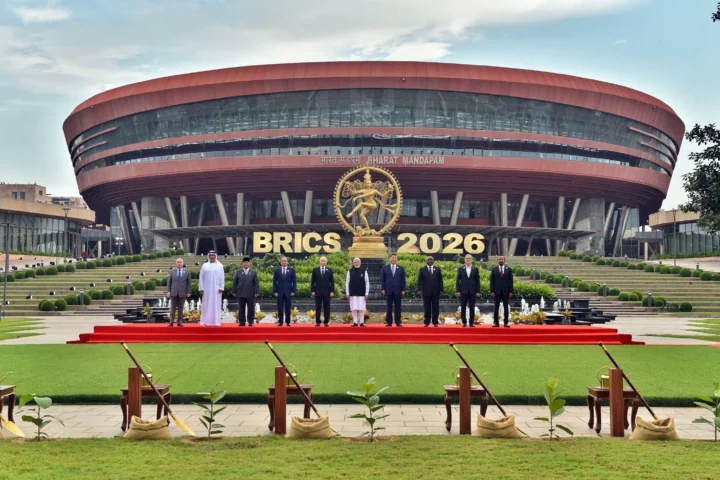
India’s recent diplomatic push into Jordan, Ethiopia, and Oman, with the Indian Prime Minister Narendra Modi’s visit from December 15-18, 2025, reveals a strategic realignment that prioritizes energy security, African influence, and West Asian stability. This three-nation tour, elevating ties through pacts and partnerships, signals New Delhi’s multi-alignment in a multipolar world. For the United States, these moves offer convergence on shared threats but also competition in critical regions where Washington cannot afford to cede ground.
Jordan: Bolstering a Key U.S. Ally
India’s engagement with Jordan underscores a shared interest in stabilizing a volatile West Asian hub. Bilateral talks produced five memorandums of understanding on defense, renewable energy, water management, and cultural exchanges, while trade—already at $2.8 billion—targets doubling to $5 billion. Jordan’s phosphates and potash are lifelines for India’s agriculture, and Indian firms leverage Amman’s U.S. free-trade agreement to export textiles.
From Washington’s vantage, Jordan remains a linchpin: a moderate Sunni power hosting U.S. troops, countering Iran, and mediating regional flashpoints. India’s deepened counter-terrorism cooperation here aligns with American priorities, enhancing intelligence flows without the friction of great-power politics. As President Trump recalibrates Middle East policy, India’s non-ideological approach in Jordan amplifies U.S. leverage—provided Washington integrates New Delhi into trilateral frameworks like expanded I2U2 initiatives.
Ethiopia: Countering Rivals in Africa’s Core
India’s elevation of ties with Ethiopia to a strategic partnership, via eight MoUs and lines of credit exceeding $1 billion, positions it as the top investor with $6.5 billion from 650 firms. This builds on ancient links, with India exporting machinery and steel for Ethiopian pulses and leather, while supporting infrastructure in power and agriculture.
Ethiopia’s African Union headquarters makes it a vote-bank for Global South agendas, where U.S. interests clash with Chinese loans and Russian arms. New Delhi’s backing of Addis Ababa’s BRICS entry checks Beijing’s dominance in dams and ports, aligning with America’s Prosper Africa strategy. For the U.S., India’s soft power—via scholarships and ITEC training—complements hard-power gaps, fostering a democratic counterweight in the Horn of Africa amid Red Sea disruptions.
Oman: Safeguarding the Hormuz Chokepoint
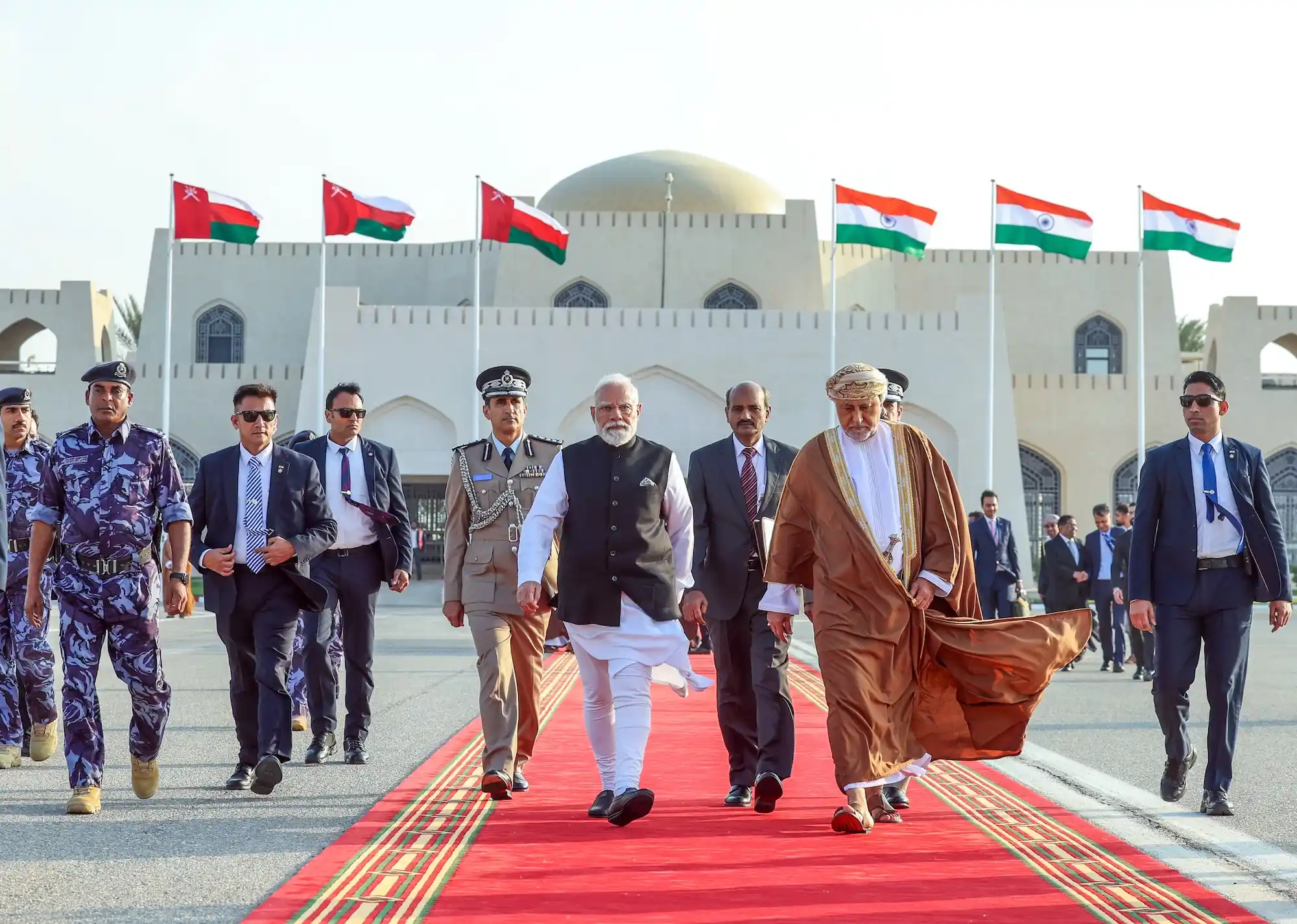
The tour’s capstone in Oman yielded a Comprehensive Economic Partnership Agreement, slashing tariffs on $10.6 billion in trade dominated by Omani oil, LNG, and fertilizers—70 percent of India’s imports from there. Access to Duqm Port and joint military drills secure India’s Indian Ocean flanks.
Oman’s perch at the Strait of Hormuz, through which 20 percent of global oil flows, is vital for U.S. energy markets. India’s CEPA stabilizes these flows, mitigating risks from Iran or Houthi threats that spike prices stateside. With 700,000 Indian expatriates fueling people-to-people ties, New Delhi’s foothold rivals China’s Gwadar push—offering Washington a Quad ally to balance the Gulf without overextension.
Strategic Geometry for U.S. Interests
This “triangle” links West Asia’s anchors (Jordan), Africa’s gateway (Ethiopia), and energy corridors (Oman), diversifying India’s chains from China amid BRICS expansion. Civilizational framing masks hard economics: food security, anti-piracy patrols, and UN influence.
America benefits where paths converge—countering autocratic inroads, securing chokepoints for Indo-Pacific freedom of navigation, and stabilizing oil-fertilizer supplies post-Ukraine. Yet risks loom: Untapped synergy lets rivals fill voids, as in Ethiopia’s debt traps or Oman’s neutral balancing.
Washington must pivot from bystander to partner. Expand I2U2 to include Jordan for tech-defense hubs; launch trilateral energy forums with Oman to hedge Hormuz volatility; and coordinate AU advocacy via India in G20. Shared values—democracy, counter-terror—position the U.S. to harness India’s rise, not compete in zero-sum games.
In a fracturing order, India’s alignment isn’t anti-American but bloc-agnostic, prioritizing outcomes over ideology. Trump-era realism demands engagement: Joint ventures in Jordan’s Qualified Industrial Zones, co-investments in Ethiopian manufacturing, and naval interoperability off Oman. Ignoring this cedes strategic space to Beijing and Moscow, undermining U.S. primacy. Proactive diplomacy ensures mutual gains, anchoring India as a net security provider aligned with American ends.