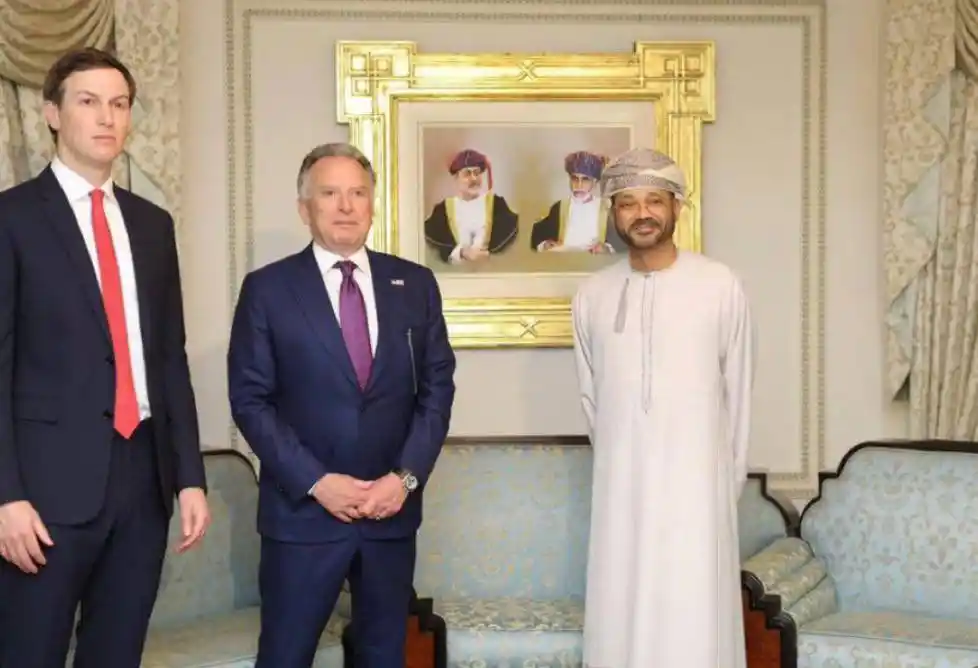
The latest round of indirect U.S.-Iran talks, held in Oman and mediated by Omani officials, ended without meaningful progress toward resolving the nuclear standoff. Iranian Foreign Minister Abbas Araghchi described the discussions as a “good start” and “positive,” emphasizing a focus solely on Iran’s nuclear program, while noting deep mistrust as a major hurdle. Both sides agreed to consult their capitals and potentially continue, but no concrete commitments emerged, no limits on enrichment, no sanctions relief framework, and no timeline for further meetings. The U.S. delegation, including special envoy Steve Witkoff and Jared Kushner, brought maximalist demands that Tehran immediately rejected.
This outcome was predictable, even inevitable, given the chasm separating the two sides. At the heart of the impasse lies President Trump’s insistence on “zero enrichment”, a complete dismantling of Iran’s uranium enrichment capability, down to zero percent. As one U.S. official framed it earlier, Washington cannot tolerate “even 1 percent” of enrichment capacity. This position, articulated repeatedly by Trump and his envoys, represents a red line far beyond the 2015 Joint Comprehensive Plan of Action (JCPOA), which permitted limited low-level enrichment under strict monitoring. For Iran, enrichment is not merely a technical process but a symbol of national sovereignty and scientific achievement. Tehran has long maintained that its program is peaceful and that any deal must preserve at least some domestic enrichment for civilian purposes. Surrendering it entirely would be politically suicidal for the regime, especially after the June 2025 U.S.-Israeli strikes that damaged key facilities but left ambiguity about the program’s residual capacity.
The talks’ narrow scope further doomed substantive headway. Iran insisted on limiting discussions to the nuclear issue alone, refusing to address its ballistic missile program, support for regional militias such as Hezbollah and the Houthis, or its domestic human rights record, including the brutal suppression of recent nationwide protests sparked by economic collapse. The U.S., however, views these elements as inseparable from the nuclear threat. Secretary of State Marco Rubio has publicly argued that no viable agreement can ignore Iran’s missile arsenal or its proxy network, which extend Tehran’s reach across the Middle East. By confining the agenda, Iran avoided broader concessions while the U.S. saw the format as evasive, reinforcing perceptions that Tehran is negotiating in bad faith.
Compounding these substantive divides is a profound trust deficit, deepened by recent history. Trump’s first-term withdrawal from the JCPOA in 2018, followed by a “maximum pressure” campaign of sanctions, set the stage for Iran’s stepwise breaches of the deal, enriching uranium to near-weapons-grade levels before the 2025 war. The U.S. and Israeli airstrikes in June 2025, which targeted enrichment sites amid an escalating Israel-Iran conflict, obliterated much of Iran’s declared infrastructure but also suspended IAEA access to bombed facilities. Iran has since refused full cooperation with inspectors, prompting censure from the agency’s board and raising fears of hidden stockpiles or covert activity. For Washington, this opacity justifies skepticism; for Tehran, the strikes, coupled with ongoing U.S. military buildup, including an aircraft carrier group in the Arabian Sea, confirm that diplomacy occurs under the shadow of coercion.
Trump’s approach blends threats with outreach, a tactic familiar from his first term. He has repeatedly warned of bombing if no deal materializes, while dispatching envoys to Oman. Yet this carrot-and-stick strategy has backfired. The military posturing alarms regional allies wary of wider war, while hardening Iran’s resolve to avoid appearing weak. Tehran’s leadership calculates that time may favor it: domestic unrest notwithstanding, the regime has weathered protests before, and ambiguity over its post-strike nuclear status provides leverage. Some analysts suggest Iran is deliberately maintaining strategic opacity to deter further attacks.
The failure also reflects broader flaws in the current diplomatic architecture. Indirect format, reliance on Omani mediation, and exclusion of other powers limit depth and verification mechanisms. Previous rounds in 2025 collapsed similarly, culminating in war. Without direct engagement, phased confidence-building measures, or involvement from Europe, Russia, India, or China, breakthroughs remain elusive.
Ultimately, these talks stalled because neither side can accept the other’s core demand without upending its strategic posture. Trump’s zero-enrichment goal demands capitulation Iran cannot afford politically or ideologically. Iran’s nuclear-only focus ignores the regional security concerns driving U.S. policy. Absent compromise, perhaps a phased return to limited enrichment with intrusive monitoring, tied to sanctions relief and missile restraints, the impasse persists. The risk now is escalation: another round of strikes if diplomacy falters entirely, or a de facto acceptance of a threshold nuclear Iran. For a region scarred by recent conflict, the cost of continued deadlock is painfully high.