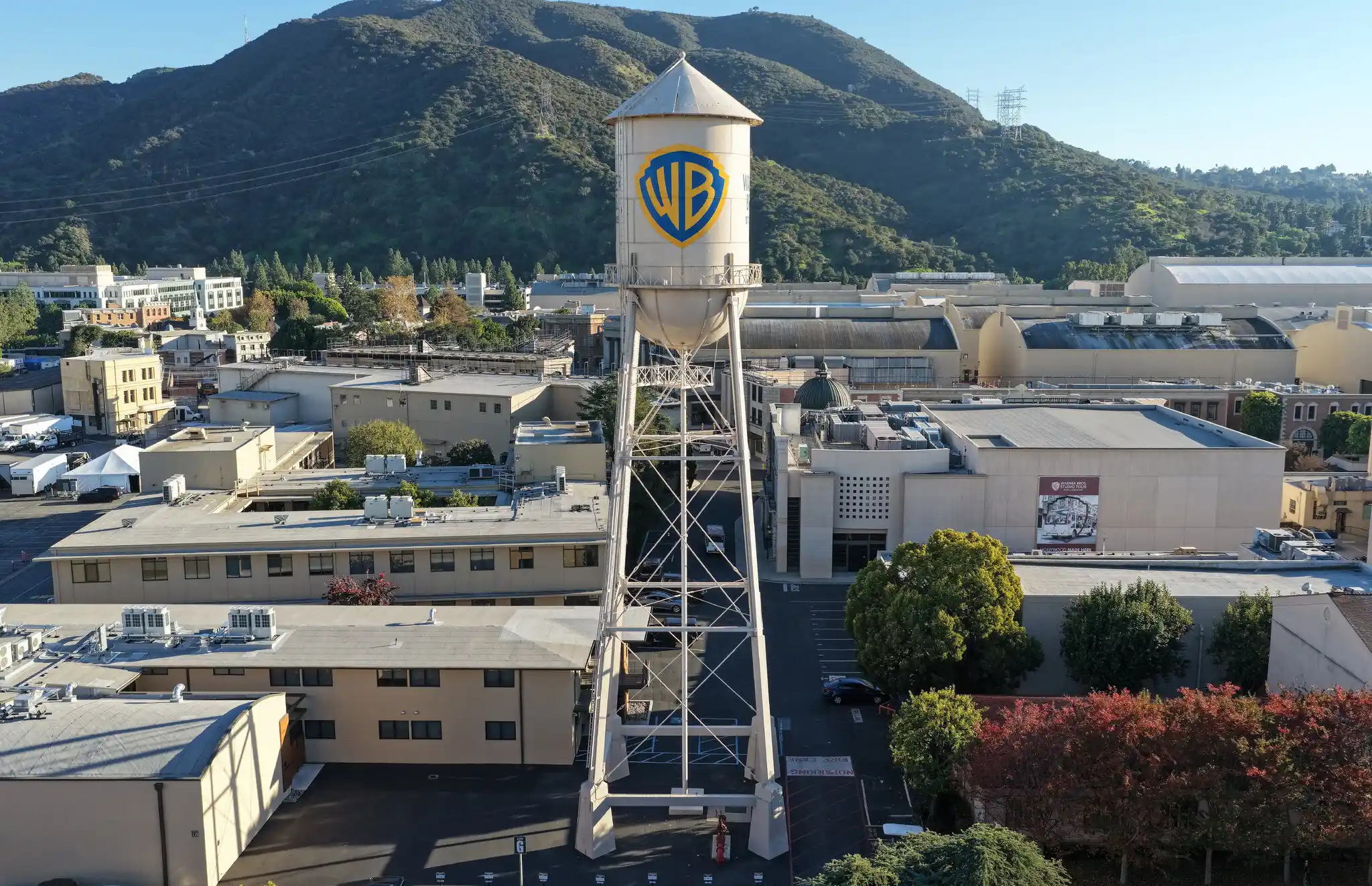
Hollywood has seen its share of wild deals, but the Warner Bros saga stands apart because it has compressed a quarter-century of corporate whiplash into a single, messy, open-ended story arc. From AOL Time Warner to AT&T to Discovery and now competing takeover bids, almost every big bet on the studio that gave the world Casablanca has turned into a referendum on whether Hollywood’s legacy giants can survive the streaming age. The result is a studio that is both a crown jewel and a distress asset – courted by rivals, crushed by debt, and trapped between its past and an uncertain platform-first future.
The first reason the Warner Bros acquisition story feels like a roller coaster is that it never really ends; each “transformative” merger only sets up the next reversal. The AOL Time Warner deal at the turn of the century was supposed to create a converged media-tech titan, but it became one of the most notorious failures in corporate history and was eventually unwound. AT&T’s purchase of Time Warner in 2018 was pitched as a way to fuse 5G pipes with premium content, but within a few years the telecom giant admitted defeat and spun off its media arm.
The Discovery tie-up in 2022 looked, on paper, more coherent: a pure-play media company with a deep library, strong nonfiction brands, and Warner’s scripted IP under one roof. Yet only a few years later, Warner Bros. Discovery is itself preparing a split into two entities – one focused on streaming and studios, the other on global linear networks – in a move explicitly framed as a way to “unlock shareholder value” and manage an unwieldy structure. Add to that the current bidding war, with Netflix and Paramount making rival offers, and the plot feels less like a corporate plan than a serialized drama that writers are improvising in real time.
The weight of $40‑plus billion in debt
If narrative volatility is one track on this coaster, leverage is the other. Warner Bros. Discovery inherited a massive debt load when the deal closed, and despite steady deleveraging, the company still carries on the order of $36–44 billion in gross or long‑term debt, depending on the period and measure. That balance sheet reality sits uneasily atop a business facing cord‑cutting, cyclical ad downturns, and an expensive shift to streaming, creating constant pressure to squeeze costs, write down content, and chase quick cash flow wins.
The numbers tell the story more bluntly than any spin. WBD has managed to generate positive free cash flow – around $4–5 billion in 2024 by one analysis – and has reduced long‑term debt by more than $11 billion since 2022. Yet the company still recorded a net loss of more than $11 billion in 2024 and sports leverage metrics that would make a tech platform blush, with a net‑debt‑to‑EBITDA ratio above 18x in one recent assessment. That combination of strong cash conversion and heavy structural drag explains why Wall Street remains nervous and why management keeps reaching for “strategic” moves – splits, cost cuts, price hikes – to placate investors.
Hit franchises, bruised relationships
On the creative side, Warner Bros is not a basket case; it has some of the most valuable IP in the industry, from DC and Harry Potter to Game of Thrones and across a deep film and TV catalog. Its Max streaming service has pushed toward profitability earlier than expected, and the broader direct‑to‑consumer segment has at points reached scale with more than 100 million global subscribers and its strongest quarter‑on‑quarter growth in 2024. In theory, this is exactly the kind of portfolio a global media leader needs: tentpoles that travel, a foothold in prestige, and a big enough customer base to amortize costs.
But the way the company has tried to hit its numbers has repeatedly undercut its relationships with talent and audiences. The aggressive post‑merger cost‑cutting – from shelving nearly finished films to large‑scale write‑offs of library titles and thousands of layoffs – has made Warner Bros a symbol of the cold calculus of the streaming era. Internally, successive restructurings and the overlay of the 2023 Hollywood strikes have left staff and creators navigating a constantly shifting map of priorities, divisions, and greenlight philosophies. As a result, even when the company produces hits, it struggles to turn them into a stable, confidence‑inspiring story for those who work with it.
Streaming scale without streaming security
The most striking thing about the Warner Bros ride is that, on the surface, many metrics look like progress, yet the ground always seems to move underfoot. WBD has pushed its streaming business toward breakeven and even profitability earlier than forecast, raised prices, and worked to integrate HBO Max and Discovery+ into a single Max platform. The service has grown its global subscriber base into the low nine figures, and management frames it as a core engine of the future “Streaming & Studios” company.
However, the underlying economics are fragile. Streaming ARPU remains under pressure amid competition from Netflix, Disney+, and Amazon, while the legacy cable networks that still supply a large share of WBD’s revenue are shrinking as cord‑cutting accelerates. That leaves Warner Bros in a structurally awkward position: big enough that it must spend heavily to stay in the streaming race, but not big enough – or asset‑light enough – to carry its debt and legacy operations without constant financial engineering. Every new plan, from the current split to prospective acquisitions, is therefore interpreted less as bold strategy than as another turn on a track built by forces outside the company’s control.
The hostile bidding war as third act
The latest twist – competing bids from Netflix and Paramount, with Paramount reportedly going hostile with a roughly $74.4 billion all‑cash offer that tops Netflix’s prior $72 billion agreement – is what elevates this from an industry case study to a Hollywood spectacle. This is not just another merger; it is a fight over what kind of company gets to own the Warner Bros legacy: a global tech‑style streamer chasing pure scale, or a legacy media group trying to bulk up to remain relevant. Each scenario carries different implications for jobs, content strategy, and the broader balance of power between Silicon Valley and the old studio system.
For shareholders, it looks like vindication – the market finally putting a takeover premium on assets that have been trapped inside one misaligned structure after another. For employees and creative partners, it is another lurch into uncertainty: new owners, new cultures, and almost certainly another wave of integration, cost‑cutting, and slate rationalization. And for Hollywood, it is an admission that even a studio with Warner’s scale, catalog, and brand equity cannot, on its own, escape the gravity of a streaming economy dominated by a handful of global platforms.
In that sense, the Warner Bros acquisition saga has become the industry’s defining roller coaster not just because of its dizzying sequence of deals, but because every plunge and partial recovery reveals a larger structural truth. Hollywood’s old center of gravity – the standalone major studio – is being suspended between mountains of debt, volatile subscriber markets, and the relentless logic of platforms. Warner Bros happens to be the car in front, but the rest of the industry is strapped into the same ride.