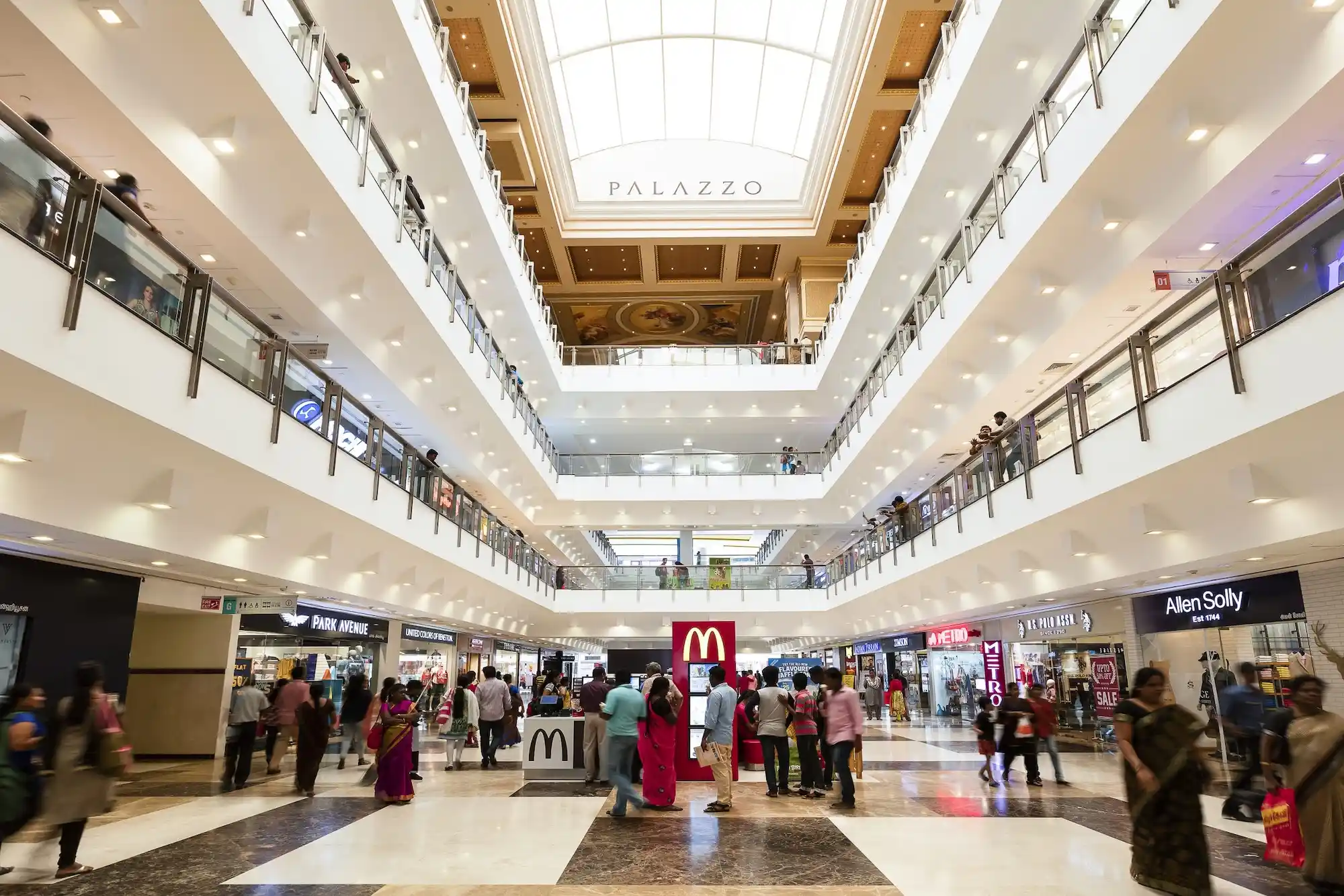
India’s consumer spending surge is fueling economic growth and emboldening the nation’s Prime Minister Narendra Modi’s government to stare down U.S. President Donald Trump’s tariff threats. Recent data show private consumption driving GDP gains above 7% in key quarters, with policy tweaks like tax cuts and monetary easing lifting household wallets.
India’s economy posted 7.8% GDP growth in the April-June quarter of fiscal 2025-26, beating expectations and marking a sharp rebound from prior softness. Private final consumption expenditure, the largest component, surged on the back of festive-season demand, rural wage gains, and urban credit expansion. Deloitte projects 6.7%-6.9% growth for the full year under baseline assumptions, with domestic demand offsetting potential export drags from U.S. tariffs.
Consumer spending now accounts for 60% of GDP, up from pre-pandemic levels, signaling a shift toward internal engines of expansion. Trading Economics data confirm spending hit record highs in late 2024, with projections holding steady into 2026 despite inflation pressures. Government releases highlight an 8.2% real GDP rise in Q2 FY 2025-26, crediting consumption and investment alike.
This uptick arrives at a politically opportune moment. As Trump’s administration imposed tariffs on Indian goods, New Delhi points to its 1.4 billion consumers as a counterweight. India argues that access to this market outweighs export frictions, positioning India as a resilient partner rather than a supplicant.
Policy Pump Priming Demand
India has engineered this consumption revival through targeted fiscal and monetary levers. The FY 2025-26 budget delivered over ₹1 trillion in income-tax relief, slashing rates for earners up to ₹12 lakh annually and exempting lower brackets entirely. These measures directly juice disposable incomes, spurring retail sales in durables like appliances and vehicles.
Complementing this, the Reserve Bank of India cut rates thrice in late 2024 and early 2025, easing borrowing costs amid cooling inflation. GST rationalization—slashing rates on essentials and mid-tier goods—further bolstered real purchasing power, with rural demand showing particular vigor.
Rural-focused initiatives amplified the effect. Higher minimum support prices for crops, expanded MGNREGA outlays, and direct benefit transfers lifted farm incomes, narrowing the urban-rural spending gap. MSMEs, which underpin 30% of GDP and 45% of exports, benefited from credit guarantees and digital onboarding, aiding their role in supply chains for consumer goods.
These steps echo successful emerging-market playbooks, where demand stimulus bridges investment lags. India’s variant emphasizes middle-class expansion, with projections from PwC and KPMG forecasting sustained consumption-led growth if reforms persist.
Trade Leverage in the Trump Era
The consumer boom hands India a stronger hand against Trump’s protectionism. Unlike export-reliant China, India’s growth now hinges less on shipments to America—merely 18% of total exports—allowing defiance without catastrophe. Officials tout the domestic market’s allure: U.S. firms like Apple and Tesla eye local assembly to tap spending power, even amid duties.
This dynamic surfaced in late 2025 negotiations, where India rebuffed steep U.S. demands on intellectual property and market access. Deloitte notes a potential U.S. trade deal could add 0.2-0.4 percentage points to growth by easing tariffs, but baseline forecasts assume no deal and still deliver mid-6% expansion.
Geopolitically, the pivot works. Trump’s “America First” prioritizes bilateral deals with big markets; India’s 240 million-plus middle class offers reciprocity that smaller economies can’t match. Yet success depends on perceptions: Investors must believe the boom endures, not just a cyclical blip fueled by pre-election largesse.
Building Lasting Resilience
To convert today’s sugar rush into enduring strength, India must prioritize supply-side fixes over demand pumps. Labor and land reforms would unlock manufacturing scale, creating jobs that sustain spending cycles. MSME productivity demands digital acceleration, credit derisking, and cluster investments—steps already showing promise in leading states.
Broadening the consumer base requires inclusive growth: Skill programs for 500 million workers, rural digitization, and women’s workforce participation could add 1-2% to annual GDP. Trade diversification—deals with the EU and UK underway—spreads risks beyond the U.S.
Fiscal discipline matters too. Phasing out inefficient subsidies while ringfencing productive capex would stabilize debt and fund human capital. If executed, these shifts position India not just to weather Trump 2.0, but to lead as the world’s consumption powerhouse.
India’s gambit, wielding consumer might against trade coercion, buys time and headlines. But true superpower status demands transforming fleeting demand into deep structural power. Half-measures risk a rude correction; bold reforms promise a decade of dominance. India stands at the cusp; execution will decide if this is a prelude or a plateau.
References and Further Reading
- Deloitte. (2025, October). India economic outlook. https://www.deloitte.com/us/en/insights/topics/economy/asia-pacific/india-economic-outlook.html
- Press Information Bureau, Government of India. (2025, August 24). India’s GDP surge: Driving the growth story. http://pib.gov.in/PressNoteDetails.aspx?NoteId=155121&ModuleId=3
- Reuters. (2025, February 28). India’s economic growth picks up on rising government, consumer spending. https://www.reuters.com/world/india/indias-economic-growth-picks-up-rising-government-consumer-spending-2025-02-28/
- The Wall Street Journal. (2026, January 1). Modi taps India’s consumer power in trade fight with Trump [LinkedIn post]. https://www.linkedin.com/posts/the-wall-street-journal_modi-taps-indias-consumer-power-in-trade-activity-7412799056231493632-HrJ
- HDFC Mutual Fund. (2025, July 15). Indian consumption – A gradual revival in the making? https://www.hdfcfund.com/learn/deep-dives/tuesday-talking-point/indian-consumption-gradual-revival-making
- KPMG. (2025, January 30). Unlocking India’s consumption potential: Budget 2025. https://kpmg.com/in/en/blogs/2025/01/unlocking-indias-consumption-potential-budget-2025.html
- Trading Economics. (n.d.). India consumer spending. Retrieved January 6, 2026, from https://tradingeconomics.com/india/consumer-spending
- Statista. (2024, October 20). India: Consumer spending 2025. https://www.statista.com/statistics/233108/india-consumer-spending/
- Press Information Bureau, Government of India. (2025, November 19). Real GDP has been estimated to grow by 8.2% in Q2 of FY 2025-26. http://pib.gov.in/PressReleasePage.aspx?PRID=2195851®=3&lang=2
- India Brand Equity Foundation. (2025, October 13). About Indian economy growth rate & statistics. https://www.ibef.org/economy/indian-economy-overview
- S&P Global. (2025, September 16). Indian economic growth outlook: Shifting horizons. https://www.spglobal.com/en/research-insights/special-reports/india-forward/shifting-horizons/how-indian-economic-growth-realign
- Eastspring Investments. (2023, December 21). Why India’s consumer boom may be the next big thing for investors. https://www.eastspring.com/insights/thought-leadership/why-indias-consumer-boom-may-be-the-next-big-thing-for-investors