
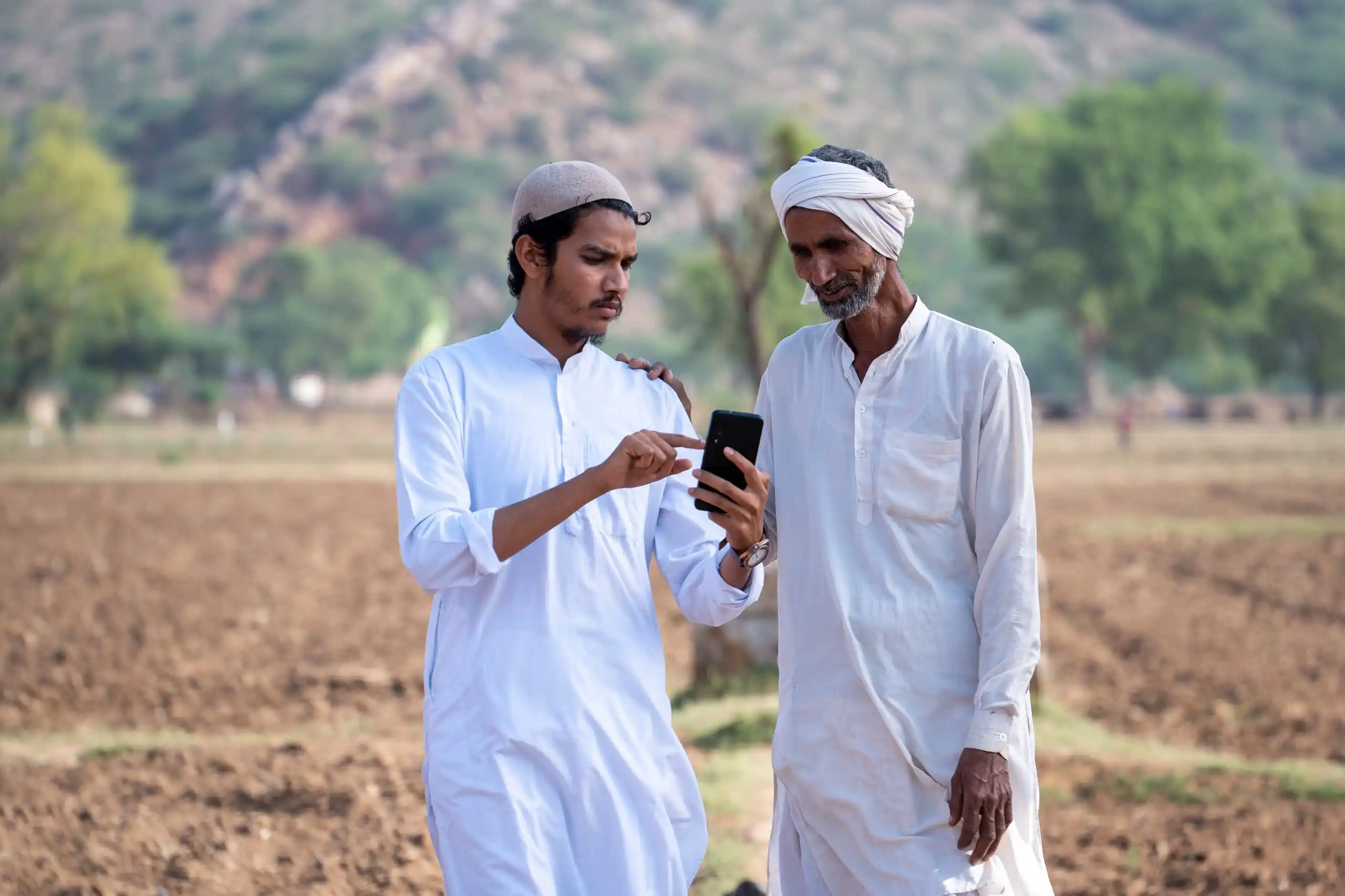
Ajay Banga’s point at the IMF Spring Meetings is best read as a challenge to move beyond AI as an urban-centric productivity tool and make it a rural equalizer. India now has a credible answer: it is pairing AI with digital public infrastructure, local-language systems, and governance safeguards so that farmers, women, and village institutions can use it directly rather than through urban intermediaries.
India’s recent rural-AI push rests on a simple idea: AI should augment human capability, not replace it. The government’s own framing now links AI to agriculture, healthcare, skilling, local governance, and welfare delivery, while the India–AI Impact Summit 2026 emphasizes rural livelihoods and service delivery as core priorities. That marks a shift from scattered pilots to system-wide implementation, backed by the IndiaAI Mission and Digital India.
This matters because rural India has long faced a double disadvantage: weak physical infrastructure and high friction in language, literacy, and access. AI can reduce all three when it is embedded into services people already use, such as WhatsApp-style interfaces, voice tools, and panchayat systems. India’s emerging model is therefore less about flashy chatbots and more about making everyday public services legible, local, and usable.
Why Banga’s remark matters
Banga’s emphasis on “small AI” is especially relevant to India because rural adoption depends on low-cost, low-compute, high-utility systems. His broader argument, as reflected in his India interviews, is that AI should solve concrete problems like farm productivity, crop disease detection, and access to markets, not just impress with scale. That is precisely the logic visible in India’s current rural AI architecture.
The significance of his comment is also political. It frames AI not as a luxury import from the global North, but as an instrument of development that can be adapted to India’s social realities, especially where women may be illiterate, connectivity is uneven, and public services are mediated through local institutions. In that sense, rural AI in India is becoming a test case for whether emerging economies can shape AI on their own terms.
The policy architecture
India’s policy response now has two pillars: strategy and governance. The National Strategy for AI, launched by NITI Aayog, positions AI as a tool for inclusive growth in underserved sectors, especially agriculture, healthcare, and education, while the 2025 India AI Governance Guidelines focus on fairness, accountability, transparency, and India-specific risk assessment. Together, they aim to prevent AI from becoming a black box in welfare or a bias machine in rural decision-making.
That governance layer is not decorative; it is essential. In rural settings, automated systems can influence who gets benefits, which assets are monitored, and which communities are seen by the state. India’s approach therefore ties AI deployment to grievance redressal, human oversight, and local-language accessibility, so that inclusion is built into the system rather than added later.
Where AI is working
The most visible gains are in service delivery and local governance. Tools such as SabhaSaar can generate structured minutes from Gram Sabha and panchayat meetings, reducing paperwork and making records more consistent, while eGramSwaraj and Gram Manchitra strengthen planning, budgeting, and spatial decision-making at the village level. AIKosh also lowers the barrier for developers by offering datasets and models for public-sector use.
In agriculture, AI is being used for weather guidance, pest detection, irrigation planning, and scheme information through tools such as Kisan e-Mitra and crop-health systems. In education, DIKSHA now includes AI-enabled features like read-aloud tools and keyword search, while YUVAI introduces schoolchildren to foundational AI skills. These are not isolated experiments; they are part of a broader attempt to make AI a rural public utility.
Case study one
One strong example is BhuPRAHARI, launched by the Ministry of Rural Development with IIT Delhi to monitor assets built under MGNREGA and related missions. By combining satellite imagery, ground data, and AI analytics, it improves real-time tracking of rural assets and helps reduce leakage, delay, and weak monitoring. That is important because rural development often fails not at the planning stage, but at the verification stage.
The deeper value of BhuPRAHARI is institutional. Instead of asking village officials to do more manual inspection, it gives them a better information system, which improves transparency without stripping away local accountability. This is the kind of AI that matters most in rural India: quiet, practical, and embedded in existing workflows.
Case study two
A second case study is the Suman Sakhi WhatsApp chatbot in Madhya Pradesh, which provides maternal and newborn health information to women and families in accessible conversational form. The design choice is significant: WhatsApp works because it is familiar, light on training, and compatible with low-friction, last-mile communication. In rural health, usability can matter more than sophistication.
This is also where Banga’s point about empowering men and women resonates most clearly. An AI system that helps an illiterate woman farmer identify a crop disease from a phone photo, or helps a mother find nearby health support, is not abstract digital inclusion; it is practical agency. The value of AI here is measured in time saved, errors avoided, and confidence gained.
What still stands in the way
India’s progress is real, but the challenge is scale and quality. Many rural AI projects still depend on local connectivity, clean datasets, and training that cannot be assumed everywhere. If those foundations are weak, AI can reproduce exclusion instead of reducing it, especially for tribal communities, women, and low-literacy users.
There is also a risk of overpromising. AI cannot compensate for missing roads, absent health workers, or underfunded schools; it can only make those systems work better when they already exist. The best Indian examples succeed because they are embedded in institutions, not because they try to replace them.
The larger significance
India’s rural AI story is important because it is redefining what “developmental AI” looks like. The country is showing that AI can be multilingual, voice-first, governance-aware, and designed for public systems rather than just consumer markets. That is a more mature vision than the usual tech narrative, which often assumes that innovation automatically trickles down.
Taken together, the evidence suggests that Banga’s remark captures a broader transition already underway: AI in India is moving from spectacle to service, from urban labs to village institutions, and from narrow efficiency to social inclusion. If India sustains this direction, it could become the clearest global example of how AI can expand rural opportunity without demanding that rural citizens first become tech experts.