Peru is living a political thriller worthy of a Netflix series, but without the tidy resolution. Since 2016, the Andean nation has churned through nine presidents. Some resigned under scandal, others were impeached on vague charges of “permanent moral incapacity,” a few lasted mere days or months, and one even attempted a self-coup before landing in prison. As Peruvians went to the polls on April 12, 2026, in a first round marked by logistical chaos and a record 35 candidates, the country stood on the brink of installing its tenth leader in a decade. The question hanging over Lima’s plazas and the remote villages of the Andes is simple yet ominous: Who will be next—and will this one finally bring stability?
The numbers tell a story of institutional vertigo. Ollanta Humala completed a full term until 2016, the last president to do so. Pedro Pablo Kuczynski (PPK) resigned in 2018 amid Odebrecht bribery allegations. Martín Vizcarra, who replaced him, dissolved Congress in a dramatic 2019 power play only to be impeached in 2020 over pandemic-related contract scandals. Congress then installed Manuel Merino, who survived just five days before massive protests—fueled by two protester deaths—forcing his resignation. Francisco Sagasti steadied the ship as a transitional figure until 2021.
Then came Pedro Castillo, the rural teacher and unionist who rode populist anger to victory. His chaotic term ended in December 2022 with a botched self-coup attempt: he tried to dissolve Congress, only to be impeached, arrested, and imprisoned on rebellion charges. Vice President Dina Boluarte assumed office, but her tenure unraveled amid deadly protests (nearly 50 deaths in the crackdown), corruption probes involving luxury watches, and plummeting approval ratings near single digits. Congress removed her in October 2025 via impeachment. José Jerí, the congressional president who succeeded her, lasted only four months before being ousted in February 2026 over undisclosed meetings with Chinese businessmen. Congress swiftly elected José María Balcázar, an 83-year-old from the left-leaning Perú Libre party, as interim leader—Peru’s ninth president since the post-Humala era.
This revolving door is no accident of personality or bad luck. It stems from the 1993 Constitution, drafted under Alberto Fujimori’s authoritarian rule, which grants Congress sweeping powers to remove presidents for ill-defined “moral incapacity.” In a hyper-fragmented Congress—where no single party dominates and alliances shift like desert sands—lawmakers have weaponized this clause against executives they dislike. The result is a de facto parliamentary system in presidential clothing, where the legislature acts as both judge and executioner. Presidents arrive with weak mandates, face obstruction, and often govern with approval ratings below 10-15%. Public trust has collapsed: surveys show record dissatisfaction with democracy, and roughly 90% disapprove of Congress.
Yet the drama plays out against a backdrop of surprising economic resilience. Peru’s central bank has maintained macroeconomic stability—low inflation, manageable debt, and growth driven by mining exports. The sol has held firm even as presidents come and go. This “Peruvian paradox” highlights a deeper truth: while politics devours itself in Lima, technocratic institutions like the Banco Central de Reserva have prevented total collapse. But resilience has limits. Chronic turnover erodes policy continuity, deters long-term investment, weakens regulatory oversight, and fuels corruption. Organized crime has surged—homicides have more than doubled, extortion cases exploded from about 3,200 to over 26,500 annually. Illegal mining, gang violence, and extortion now top voter concerns, overshadowing ideology.
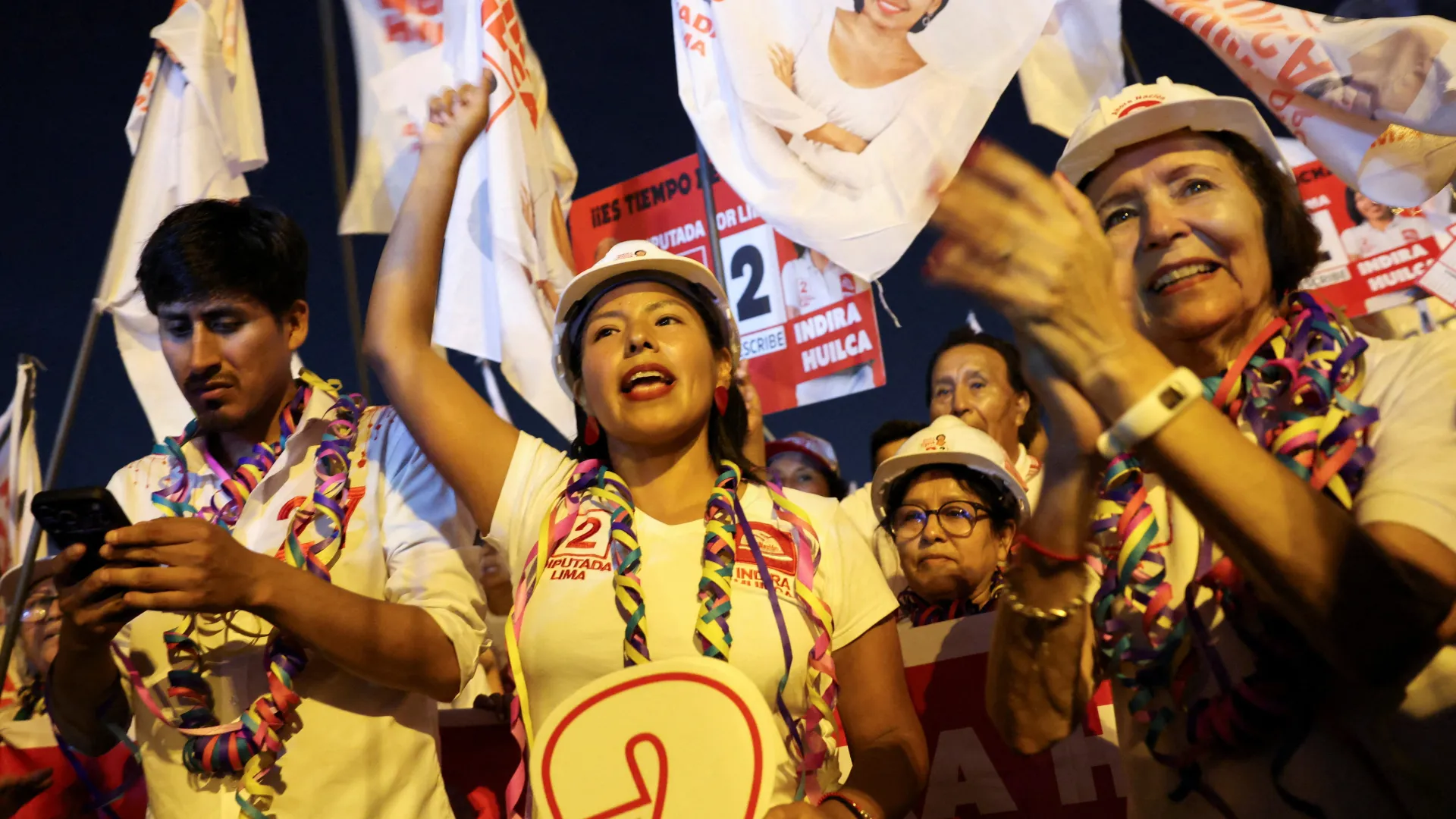
The 2026 election encapsulated the crisis. A supersized ballot—nearly half a meter long—listed 35 presidential hopefuls, reflecting extreme fragmentation rather than vibrant pluralism. No candidate polled above 20% in the final stretches; Keiko Fujimori of Fuerza Popular led with conservative support, trailed by figures like Rafael López Aliaga and others spanning populists, centrists, and leftists. A runoff on June 7 seemed inevitable. Voters, weary after years of scandal and insecurity, sought not grand visions but basic competence: someone who can confront crime without triggering more protests or impeachments. Technical glitches delayed voting and counting, sparking fraud claims and protests outside electoral offices—another layer of distrust in the system.
Peru’s instability is not unique in Latin America, where weak parties, populism, and polarization have strained democracies from Bolivia to Argentina. But Peru’s case is extreme. The 1993 charter, intended to prevent executive overreach after earlier crises, has instead empowered a Congress often more interested in patronage and score-settling than governance. Reforms—strengthening parties, clarifying impeachment rules, perhaps shifting toward greater executive authority or bicameral balance (as recently introduced)—are long overdue. Yet Congress, the main beneficiary of the status quo, has little incentive to change.
For ordinary Peruvians, the costs are tangible. In rural areas, where Castillo drew support, frustration brews over neglected infrastructure and inequality. In cities, businesses grapple with extortion rackets while foreign investors hedge bets. The constant drama distracts from real challenges: diversifying beyond mining, improving education, and rebuilding trust in institutions. The “presidential curse” has turned governance into short-term survival theater.
As ballots were counted in mid-April 2026, Peru stood at another crossroads. The winner—likely emerging from a polarized runoff—will inherit a fractured Congress, sky-high expectations for security, and a public exhausted by the thriller. History suggests caution: without deeper institutional repair, the next president may join the list of the fallen rather than break the cycle. Peru deserves better than endless episodes of chaos. Its people, rich in history and resources, have shown remarkable patience. The real plot twist would be a leader and legislature finally choosing stability over spectacle—before the credits roll on yet another failed administration.