Europe is speaking in Washington, but nobody in the Trump White House is really listening. During a recent flurry of high‑profile meetings in Washington, European leaders tried to rally shared values, coordinate responses on Ukraine and Iran, and negotiate a more balanced transatlantic economic relationship. Yet the Trump administration, laser‑focused on the economic arms race with China and its own transactional foreign‑policy agenda, treated their overtures as background noise rather than binding commitments.
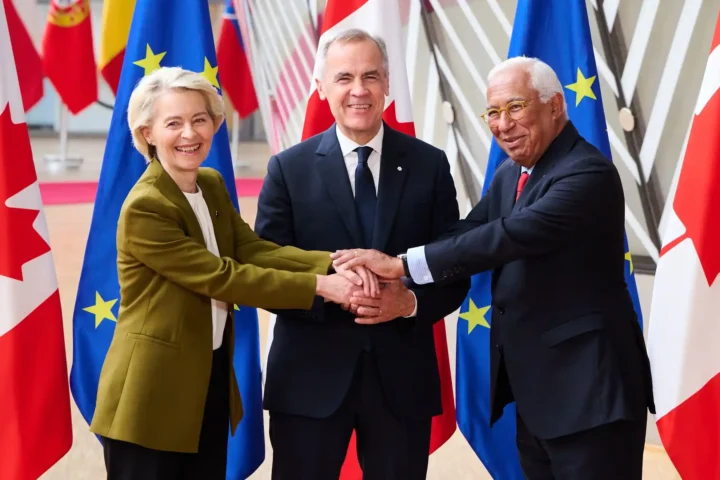
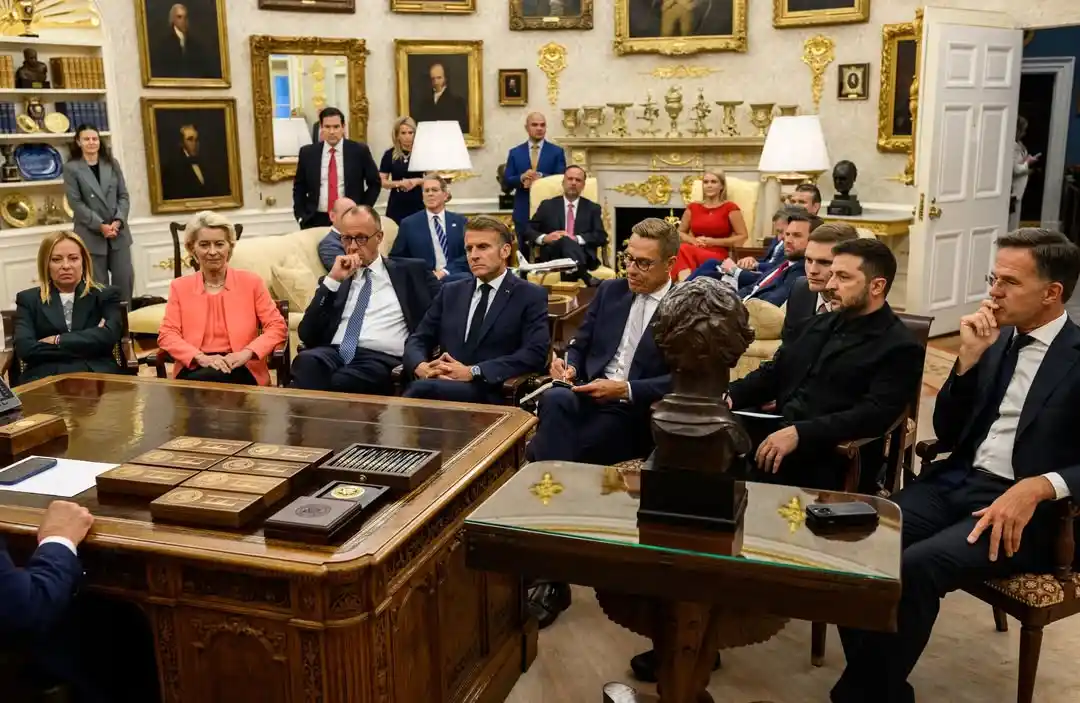
Over the past year, European leaders have repeatedly traveled to Washington to signal that Europe is not Washington’s extras in the showdown with China or Moscow. In 2025, seven European heads of state joined Ukrainian President Volodymyr Zelenskyy at the White House to back Kyiv’s security‑guarantee demands, underscoring that Europe now provides the majority of military and financial aid to Ukraine even as U.S. support grows more conditional. In early 2026, European Council President António Costa declared that “competitiveness” and “One Europe, One Market” would be central themes of the bloc’s agenda, implicitly pushing back against Washington’s demands that Europe subordinate its own industrial and regulatory interests to U.S. security and trade priorities.
At the same time, European leaders have tried to push back against Trump’s unilateral threats—such as demands that NATO help unblock the Strait of Hormuz and reopen major shipping lanes, or that European countries pay up for American weapons at five percent of GDP. In Brussels, EU leaders have repeatedly rejected U.S. pressure to abandon their own sanctions and trade rules, while still insisting that the transatlantic relationship remains indispensable.
What Washington is focused on
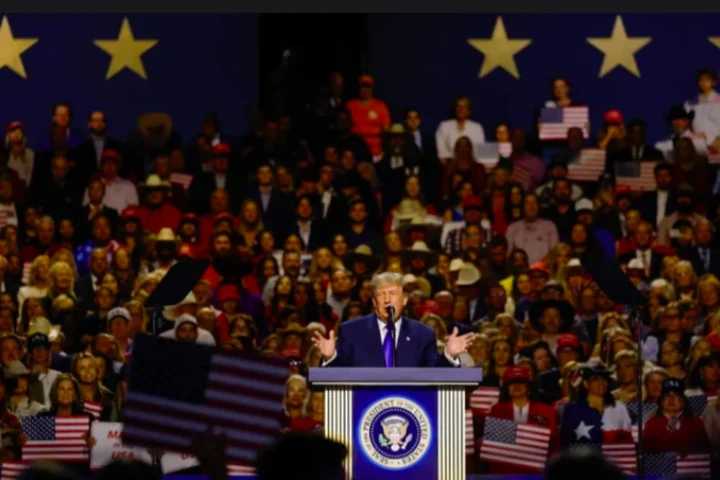
The Trump administration, by contrast, has a different mental map of the world. According to the 2026 U.S. National Defense Strategy, protecting the “homeland” and the Western Hemisphere is the top priority, with countering China in the Indo‑Pacific second; Europe is implicitly treated as a secondary theater where allies must shoulder more of the burden. At the same time, enlarged tariffs and strong‑arm trade tactics—such as threats of 50 percent duties on China and arbitrary levies on other partners—have become the default tools of American foreign economic policy.
None of this is lost on Europe. A 2025–26 analysis by the Carnegie Endowment notes that the Trump “2.0” White House runs a “billion‑dollar diplomacy,” dangling trade incentives and punishment in Greenland, the Middle East, and Eastern Europe, while explicitly seeking to weaken the EU’s rule‑making role and empower nationalist “patriotic” parties across the continent. From this perspective, European treaty‑style appeals to shared values or multilateral institutions simply do not compute; what matters is leverage, not loyalty.
Europe’s message is “lost in translation”
Europe’s core problem is that it is negotiating in a language the White House does not respect: the language of long‑term alliances, rules‑based institutions, and collective security. The Trump administration treats Europe as a source of leverage over China and Russia, not as an equal partner. For example:
- The U.S. has imposed steep tariffs on European exports while simultaneously pressuring Europe to cut trade with China, even though Brussels often lacks the industrial or political capacity to replace American arms or energy imports.
- At the same time, Washington has made grand bargains with Beijing—such as rolling back punitive tariffs in exchange for Chinese concessions on chips and shipping—without giving Europe a meaningful say in the terms.
- When European leaders line up in Washington to defend Ukraine or to push back on Iran‑related risks, the administration often responds with transactional rhetoric (“you need to pay more”) or unilateral threats, rather than a coordinated strategy.
In short, Europeans are trying to save a “community of values” that the Trump White House no longer believes in.
What Europe should do differently
If Europe wants to be heard, it must stop briefing Washington and start bargaining with it. Some analysts inside and outside the EU argue that Europe still has real leverage: as a major buyer of U.S. weapons, energy, and financial services, and as a critical stakeholder in NATO and global supply chains. Instead of simply pleading for unity, Europeans could threaten to condition continued procurement from U.S. defense firms, or to slow‑walk new trade and security agreements, unless Washington lifts punitive tariffs and abandons coercive tactics toward member states.
More fundamentally, Europe must stop treating appeasement as strategy. The 2025–26 pattern—trip after trip to Washington, followed by U.S. concessions to China and new pressures on Europe—shows that goodwill alone will not bend Trump’s calculations. If Europeans want their voice to matter in this new era of great‑power competition, they first have to build genuine strategic autonomy, and then use it as leverage, not as apology. Until that happens, every visit to Washington will remain an exercise in diplomacy lost in translation.