In the longer term, the balance of leverage in Hormuz is tilting decisively toward Iran—not the United States.
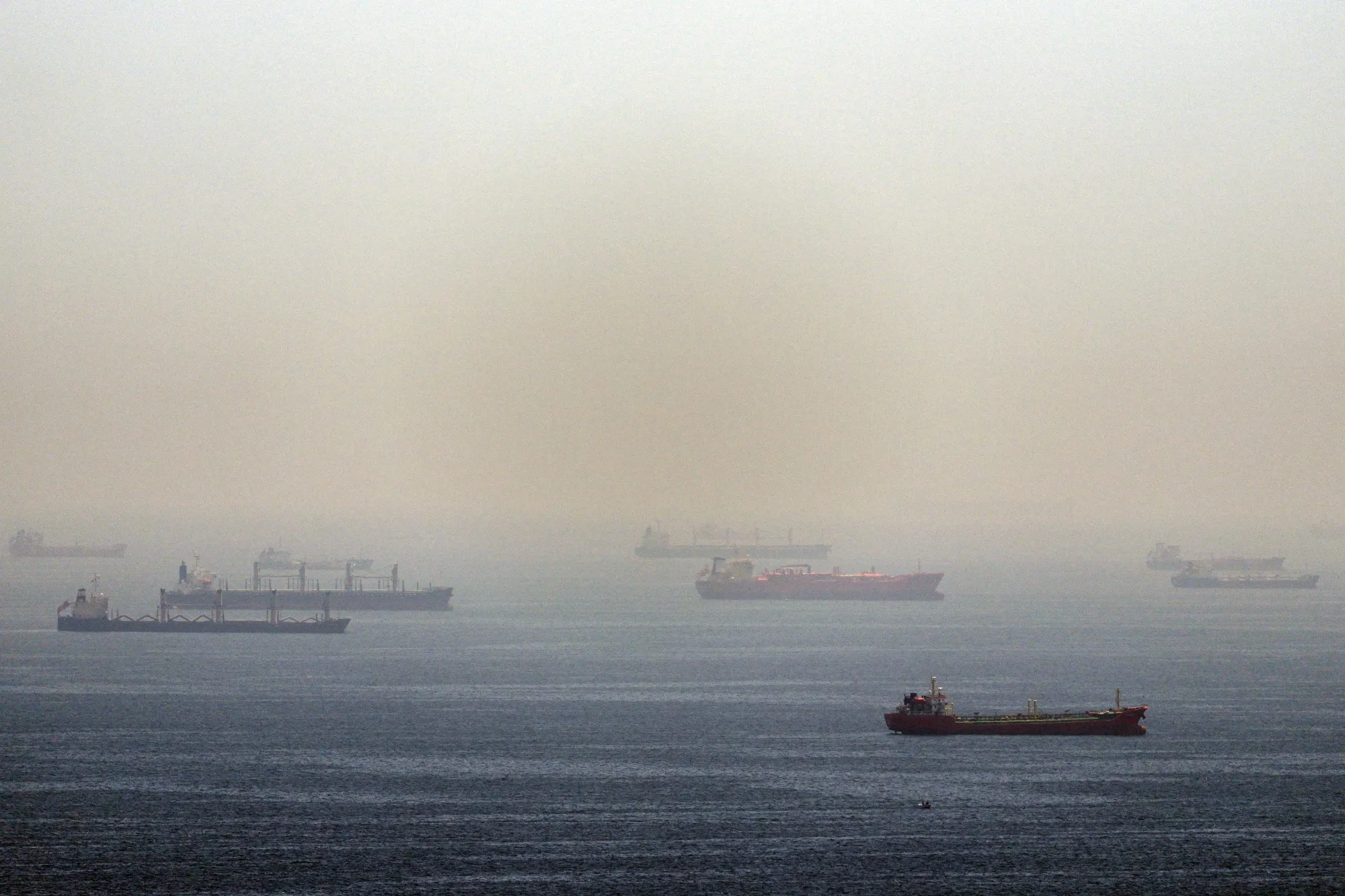
At first glance, Washington’s move appears bold. The Strait of Hormuz is the world’s most critical energy chokepoint, with roughly a fifth of global oil passing through it. Any attempt to control or disrupt traffic there reverberates across global markets. Yet this very importance exposes the limits of American power. A blockade in international waters is inherently fragile: costly to sustain, diplomatically contentious, and economically self-defeating. Iran, by contrast, operates from geography and proximity—advantages no external power can replicate.
More importantly, the current conflict has transformed Hormuz from a latent threat into an active instrument of Iranian statecraft. For decades, Tehran hinted it could close or control the strait but stopped short of doing so. Now, under existential pressure, it has operationalized that leverage. In doing so, Iran has gained something arguably more valuable than missiles or nuclear capability: a persistent, scalable tool of economic coercion.
This newfound leverage serves multiple purposes. First, it creates a steady revenue stream. By imposing relatively modest transit fees—small enough to be tolerated but large enough to accumulate—Tehran can extract billions annually. Crucially, much of this burden falls not on distant adversaries but on neighboring Gulf states, subtly shifting the economic balance in Iran’s favor.
Second, control of the strait acts as a deterrent. Iran no longer needs to rely solely on military retaliation to dissuade attacks; it can threaten global economic disruption. This raises the stakes for any adversary contemplating escalation. The message is clear: any strike on Iran risks consequences far beyond the battlefield.
Third, Hormuz strengthens Iran’s geopolitical hand, particularly with energy-dependent nations in the Global South. By regulating access, Tehran can incentivize cooperation, encourage sanctions evasion, and deepen economic ties. This is not just about controlling ships—it is about reshaping alliances.
The United States, in attempting to counter this leverage, faces structural constraints. Sustaining a blockade requires constant naval presence, allied coordination, and political will—all of which are uncertain. Moreover, such actions risk alienating neutral countries whose economies depend on uninterrupted energy flows. What begins as a show of force can quickly become a liability.
There is also a historical echo worth noting. Strategic chokepoints have a way of humbling great powers. The Suez Crisis of 1956 revealed the limits of British and French influence in a changing world. Hormuz may serve a similar function for the United States—a reminder that control over global systems is no longer uncontested.
China’s response further underscores this shift. Despite rhetorical opposition to the blockade, Beijing has largely adapted to Iran’s new “rules of the game.” Its willingness to comply, at least temporarily, reflects both pragmatism and preparation. China has diversified energy sources and built reserves, insulating itself from short-term disruptions. At the same time, it has little incentive to side with Washington if doing so jeopardizes stable access to energy.
Indeed, the broader geopolitical landscape is evolving in ways that favor Iran. Gulf states, long reliant on American security guarantees, are reassessing their positions. The realization that alignment with Washington does not guarantee stability is prompting a search for alternatives. China, with its growing economic ties and diplomatic engagement, is well positioned to fill part of that vacuum.
The implications are profound. If regional actors begin to coalesce around a security framework less dependent on the United States—and if Iran leverages Hormuz as both carrot and stick—then the strategic architecture of the Middle East could shift fundamentally. Washington would not be expelled overnight, but its dominance would erode.
None of this means the United States is powerless. It retains unmatched military capabilities and significant economic influence. But power in the modern world is not just about force—it is about resilience, adaptability, and the ability to shape systems rather than merely disrupt them. On that front, Iran has gained an unexpected advantage.
The blockade of the Strait of Hormuz may yield short-term tactical wins. But in the longer arc of geopolitics, it risks reinforcing the very dynamic it seeks to counter: a more assertive, more strategically empowered Iran, and a world less responsive to American pressure.